Showing posts with label Book Reviews. Show all posts

17 June 2008

BOOK REVIEW: The geopolitics of oil


Two books analyse the outlook of international oil and the shifting terrain of world power.


17 June 2008
The Hindu

The geopolitics of oil


Siddharth Varadarajan

UNITED STATES FOREIGN OIL POLICY SINCE WORLD WAR I — For Profits and Security
: Stephen J. Randall; McGill-Queen’s University Press, 3430 McTavish Stree, Montreal, Quebec H3A 1X9, Canada. (U.S.) $ 24.95.

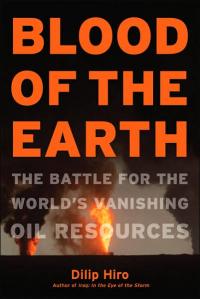
BLOOD OF THE EARTH — The Battle for the World’s Vanishing Oil Resources
: Dilip Hiro; Penguin, 11, Community Centre, Panchsheel Park, New Delhi-110017. Rs. 450.

More than any other mineral in the 20th century, crude oil has been central to the shifting distribution and balance of global power. As both of the books under review emphasise, the importance of oil was known to every major and presumptive power ever since the invention of the internal combustion engine allowed the conversion of merchant and military fleets from coal to diesel from the 1890s onwards. The race for oil was a fact of international geopolitics in the interwa r years and was deemed to be of sufficient significance for the post-Second World War era that Roosevelt took a secret detour after meeting Stalin and Churchill at Yalta in 1945 to rendezvous with Ibn Saud in the Suez Canal. There, the two leaders discussed the terms of an enduring grand bargain Washington was to strike with Saudi Arabia involving oil and security.

And yet, as late as 1951, the 28-nation International Materials Conference hosted by the U.S. in Washington, D.C., could conclude its deliberations by not including petroleum among the commodities the Western powers considered “strategic raw material critical for defence and economic stability.” What explains this paradox? Optimism about the overabundance of the resource? Or American complacency in the face of the size and reach of its own multinational petroleum corporations? Stephen. J. Randall leans towards the latter answer, though his finely detailed book provides adequate evidence of the seriousness with which successive generations of policymakers took the question of U.S. foreign oil policy.

Shortage

Whether that policy was effective or not is a different matter. Whenever there were shortages or huge increases in price, legislators and officials tended to introspect about the nature of America’s international oil policy. The first full-blown international oil crisis of 1973-4 triggered an inquiry by the Senate Foreign Relations Committee (SFRC) into the history and operations of the multinational oil companies. The question the committee asked was why the U.S. — which was the world’s major domestic producer of oil and oil products — had ended up with an apparent shortage of the resource despite the global involvement and reach of its oil MNCs. And the answer they came up with was that the U.S. lacked a coherent and aggressive oil policy.

Randall’s research grew out of a desire to test the SFRC’s analysis with reference to the new era which began after World War I. His book was first published in 1985, in the aftermath of the Iranian revolution and the oil price spike which followed. The new, expanded second edition brings the story forward to the present, though its most rigorously argued and documented sections are still the ones dealing with the interwar years.

U.S. oil policy

Contrary to the SFRC’s assessment, Randall argues that U.S. foreign oil policy had been remarkably coherent and aggressive over a long period of time. This is not to say there had not been pushes and pulls in different directions at different times. One fault line in the policy matrix was between the U.S. government and American corporations. Another was between laissez-faire bureaucrats and statist policymakers like Harold Ickes, who oversaw the Petroleum Administration for War and later the short-lived Petroleum Reserves Corporation. Ickes believed that the purely free-enterprise approach to foreign oil development was inadequate to securing America’s interests abroad. In institutional terms, he lost the debate, but the rise of a new global adversary in the form of the Soviet Union by the end of World War II saw the barriers between private enterprise and state initiative — if ever they existed in a serious form at all — dissolve at least as far overseas oil interests were concerned.

According to Randall, American foreign oil policy always emphasised three goals: the acquisition of foreign petroleum reserves, the breaking down of traditional spheres of interest of competing international powers, and the containment of nationalism in the oil producing states. Here, there was remarkable continuity between the administrations of Wilson, Coolidge, Hoover and Roosevelt in the interwar years. The same pattern persisted throughout the Cold War and broadly speaking, one could argue that U.S. oil policy continues to be animated by these three concerns today.

Dilip Hiro’s book is a remarkably broad and well-written account of the state of the play in the international oil arena today. He devotes considerable space to the historical evolution of the industry. Much of this material would be familiar to readers of Daniel Yergin’s seminal The Prize (Free Press, 1993), though Hiro’s contemporary, journalistic treatment will perhaps prove more accessible to the lay reader.

Three challenges

Blood of the Earth is filled with the kind of reportage and factual detail that have helped cement Hiro’s position as one of the world’s most competent chroniclers of contemporary events. Though Hiro does not reference Randall, it is clear that modern oil geopolitics must continue to negotiate its way through the three challenges – the race for reserves, the rise of producer nationalism and the rivalry between established and rising powers – which the U.S. successfully overcame in the last century in order to establish its global hegemony. That is why the most important and fascinating sections of his book are those dealing with the rise of China and India, the myth of the Caspian oil bonanza and the struggle over competing pipeline routes. Hiro is also alive to the role the U.S. military has played in protecting American overseas oil interests. The fearsome war-making architecture of U.S. Central Command in the Middle East, for example, grew out of the “Rapid Deployment Force” set up by the Carter and Reagan administrations to deal with the risk of oil resources in the region falling into the hands of a hostile regime. As the oil resources of Central Asia opened up in the 1990s, Centcom’s mandate was expanded to cover the Caspian littoral.

Despite their wide-ranging narratives, neither Hiro nor Randall addresses the issue of the link between oil geopolitics and the role of the dollar as an international reserve currency. David E. Spiro’s The Hidden Hand of American Hegemony: Petrodollar Recycling and International Markets (Cornell University Press, 1999) is still perhaps the only book-length treatment of a question whose importance has been rising in recent years as a number of oil producing states such as Iran seek to break the link between oil pricing and the dollar.

The last section of Hiro’s book deals – and this is unusual for a book on oil – with alternative sources of energy. Barring the curious omission of ethanol, the discussion here is workmanlike and up-to-date. This reviewer, however, would have preferred the focus to have remained on hydrocarbons, whose geological and geopolitical context make them unique from other forms of non-renewable and renewable energy.

22 April 2008

Neither flat nor round but bound

REVIEW: Ties that bind the world may not be easy to sever but global connections can be mediated.

22 April 2008
The Hindu

Neither flat nor round but bound

SIDDHARTH VARADARAJAN

Ties that bind the world may not be easy to sever but global connections can be mediated

BOUND TOGETHER — How Traders, Preachers, Adventurers and Warriors Shaped Globalization
: Nayan Chanda; Penguin-Viking, 11, Community Centre, Panchsheel Park, New Delhi-110017. Rs. 525.

Positioning himself somewhere between the irrational exuberance of Thomas Friedman and the rational scepticism of Joseph Stiglitz, Nayan Chanda has written a remarkable book on the multilayered history of what has come to be known as “globalisation” in today’s world.

Moving back and forth through space and time, Chanda presents the reader with a bewildering assemblage of facts to press home his point about the truly “global” nature of human interaction since time immemorial. From cotton and spices to sugar and slaves, Buddhism and Christianity to Islam and human rights, the movement of goods and humans across land and sea also led to the migration of ideas, religion, culture and technology. In every historical period, there were forces which contested this movement or benefited from it but the inevitability of human interaction triumphed over all attempts to close societies off from outside influence.

Agents of globalisation

In Chanda’s narrative, the agents of globalisation are of four broad types – traders, preachers, adventurers and warriors. The division is somewhat arbitrary and whimsical but it works well in the main. The first traders travelled to Çatalhöyük in Turkey in the 8th millennium BCE to buy obsidian for use as scythes. Eventually, trading routes opened all the way from Anatolia to Mesopotamia, India and China. Fast forward to the 21st century and you have call centres being opened in Senegal. If the Buddha’s message was the first manifestation of global evangelism, Christian and Islamic preachers quickly established a worldwide presence as well. But Chanda reminds us that not all preaching is necessarily benign, as the messages beamed out by al-Qaeda and other extremists today are testimony to. Given the role played by conquest in shaping the political contours of the world at any moment in time, it is hardly surprising that warriors should be given their due for leaving an indelible imprint on globalisation. As for “adventurers”, these are the explorers, scientists and migrants without whom the world would be a far less connected place than it is today. Throughout human history, the DNA of these change agents has remained constant. But in the modern world, the speed with which they are able to effect change has undergone a profound transformation. And that speed, says Chanda, brings new opportunities as well as challenges and threats.

Inevitability


Chanda’s purpose in providing a panoramic view of the history of global interaction is not so much to celebrate globalisation as to stress the inevitability of it. Unlike Friedman, he is alive to the contradictory and differential impact that globalisation has had on countries and people around the world. But he believes the extent to which it can effectively be resisted is limited. “The future will always bring surprises, but a reading of history does not suggest that globalisation – the integration that has grown over time – could ever be terminated,” he writes, in an argument that summarises the thrust of the book. “The complex process of interconnectedness that has gathered momentum over the course of millennia cannot be halted, nor can its myriad threads be neatly unwound.”

Redefining the terms

While Bound Together is brimming with fresh insights and interesting facts, the danger in discussing globalisation in such a broad historical manner is that one loses sight of its contemporary specificity. Beyond a point, equating globalisation with connectedness sidesteps the all important question of the terms of engagement. For example, the movement of Buddhism from India to China via Dunhuang was as much a global phenomenon as the forced sale of Indian opium to the Chinese by the British in the 19th century. But the first movement was brought about through geographical osmosis, the second through imperial power. How global mobility is mediated then is often more decisive than the underlying dissemination of goods, people and ideas. To the best of our knowledge, the good people of Çatalhöyük did not seek to patent the use of volcanic rock or insist on an annual service contract or a share in the ownership of fields where the scythes were used. And there is little sense in imagining there is anything in common between those first, innocent “global” exchanges and the highly monopolised, predatory practices of the international food industry today.

Globalisation evokes so much passion and contestation around the world not because of xenophobia or the fear of the unknown but because of the terms of engagement. And although social movements and governments cannot and should not hope to end their interaction with the outside world, redefining the terms of engagement does offer a way of turning “globalisation” into a more equitable and mutually beneficial phenomenon than it has been until now. Most sensible economists, for example, argue that there is no need for a globalising country like India to make its capital account convertible. Many communities in India are resisting the depletion of ground water that cola factories are causing. The victims of the Union Carbide disaster are demanding that Dow Chemicals be made to foot the bill for the environmental cleanup of Bhopal and its water as a precondition for it to be allowed back in India. These positions are not anti-globalisation per se; rather they envision an alternative vector of global interaction. Similarly, the rise of multinational companies from China and India opens up the possibility of a new kind of contestation as they enter into competition with established players from the advanced capitalist countries.

Chanda is right in saying globalisation cannot be terminated and he is sympathetic to the voices of those who have clearly lost out in the process. What the book needs, perhaps, is a more elaborate examination of alternatives which can redress the existing, unequal terms of engagement while preserving the emancipatory potential of global connectedness.

31 July 2007

Why Iran matters to U.S.

Two new books chronicle the ‘crude’ reality of U.S. policies towards oil-rich regions in the world


31 July 2007
The Hindu

Why Iran matters to U.S.

Siddharth Varadarajan

IRAN OIL: The New Middle East Challenge to America
By Roger Howard
2007. I.B. Tauris, 6, Salem Road, W2 4BU, London.

CRUDE INTERVENTIONS: The United States,
Oil and the New World (Dis)order
By Garry Leech
2006. Zed Books,
London, Books for Change, 139, Richmond Road, Bangalore-560025. Rs. 475.
The nuclear issue has so come to dominate contemporary analysis about the hostile relationship between the United States and Iran that one tends to forget the role that oil is also playing in the slow but seemingly inevitable slide towards confrontation and conflict between the two countries.

To a certain extent, the absence of oil from the equation is understandable. The United States has not had direct access to Iranian crude for nearly two decades now, though American subsidiaries were free to buy and even import oil from Iran until the Clinton administration imposed a blanket ban on trade with Iran in 1995 as well as any oil development deals of the kind the erstwhile government of Hashemi Rafsanjani had offered the Dutch subsidiary of Conoco earlier that year. In response to complaints from American companies that international rivals would step in to fill the void, the U.S. Congress passed the Iran-Libya Sanctions Act (ILSA) of 1996 threatening sanctions on foreign companies that crossed the $40 million trigger for investment in Iran’s hydrocarbon sector. To date, however, the ILSA penalties have not been invoked against foreign investor.

Contradictions

But if the U.S. has been able to live with this self-imposed boycott of Iranian oil all these years and not bothered to use the financial tools it has at its disposal, what explains the sudden sharpening of contradictions? Perhaps concerns about terrorism or nuclear weapons are really what is driving the Bush administration’s current policy towards Iran after all. Not so, argues Roger Howard, in this timely and well-argued book on the challenge posed by Iranian oil to the hegemonic interests of the U.S.

The starting point of Howard’s analysis is precisely the unintended dialectic that ILSA produced. When the U.S. sought to impose extra-territorial sanctions on third country (non-U.S.) companies investing in the Iranian energy industry, it had assumed its threat would have a deterrent effect. While smaller players were indeed deterred, ILSA also created opportunities for companies from France, Russia, Japan, India, Malaysia, China and elsewhere. By playing the interests of these countries against the U.S., Iran has been able to undermine American power.

Challenges

Howard argues that the convergence between Iran’s oil resources and the political conditions created by the U.S. boycott of Iran are undermining American power in three distinct ways. First, it is putting increasing strain on Washington’s relations with its allies like the European Union, Japan and even Pakistan, all of whom would like to pursue a closer energy relationship with Tehran. Second, Iran is building stronger political and economic links with Russia and China and even India, which further reduces America’s room for manoeuvre. Third, Iranian oil undermines U.S. power directly by serving as a source of revenue for the Islamic regime in Tehran.

The book’s core chapters take the reader through each of these three ways in which Iranian oil challenges U.S. interests. Howard has assembled considerable information on the manner in which the need for energy and the shortsightedness of American policy have helped fracture alliances built by the U.S over half a century. Though the author has underestimated somewhat the American capacity to browbeat its allies — the Japanese company, INPEX, did finally abandon its plans to invest $2 billion in the lucrative Azadegan oil field — his general point about the Iranian ability to use their energy resources to create political space for themselves is well taken. It is precisely for this reason that the Bush administration is finding it difficult to get the U.N. Security Council to impose truly crippling sanctions on Iran despite the hysteria it has managed to generate over Tehran’s civil nuclear programme.

In policy terms, Howard argues that Washington’s long-term goal of bringing about a change in official Iranian attitudes towards America would perhaps be better served by ending the energy embargo. If the U.S. were to drop its hostility towards the Iran-Pakistan-India pipeline project, for example, and the pipeline were to be built, Iran would acquire a stake in regional stability. Howard says that this, in turn, “could arguably help to moderate the ‘aggressive’ and ’reckless’ foreign policy that its enemies in Washington say it has…” An end to the U.S. embargo would also, by creating more economic opportunities with Iran, increase the standard of living there and perhaps moderate the country’s politics. The problem, however, is the extent to which Iran has been demonised in the U.S.

Oil interests

If Howard’s book deals exclusively with Iran, Garry Leech provides a very lucid overview of American oil interests in regions as diverse as Iraq, Central Asia and West Africa.

In all oil-rich regions of the world, the thrust of Washington’s policies has been the desire to impose neo-liberal reforms in order to open up the energy sector to foreign investment and reverse the effect of the oil nationalisation wave of the 1970s when multinational oil majors were squeezed out of upstream activities. Where this has not been possible through political diktat, Leech argues that the U.S. has not hesitated to use military force (as in the case of Iraq), or corruption (as in the case of Africa). Venezuela under Hugo Chavez is one of the few major oil producers that has not only refused to succumb to this pressure but has actually taken measures to further limit the role of foreign oil companies. The author predicts that other energy-rich countries and regions will eventually be forced to confront the erosion of sovereignty that Washington is seeking.

12 June 2007

A 'warts and all' view of Indian science


BOOK REVIEW: With interesting tidbits about the 1974 atomic test at Pokhran and the economics of India's nuclear energy programme, Ashok Parthasarathi's Technology at the Core provides a useful account of how the country's S&T policies and institutions were designed and evolved during the Indira Gandhi era.


12 June 2007
The Hindu

A 'warts and all' view of Indian science

TECHNOLOGY AT THE CORE — Science & Technology with Indira Gandhi
By Ashok Parthasarathi
New Delhi: Pearson-Longman, 2007. Rs. 695.


Siddharth Varadarajan

As a scientific advisor in the Prime Minister's Secretariat (PMS) during the Indira Gandhi years, Ashok Parthasarathi was witness to that momentous period in the development of the Indian economy when the foundations for the policy of "technological self-reliance" were laid.

Seconded into the Department of Atomic Energy by Vikram Sarabhai in 1967 after spending a year at MIT, Parthasarathi found himself in the PMS three years later at the instance of P.N. Haksar. It was from this vantage point that he helped Indira Gandhi shape the Government's thinking across a wide range of technologies, from atomic energy and space to electronics (his own field of specialisation), defence, agriculture and the environment. The account he provides is detailed — in some areas perhaps even too detailed for the lay reader — but frank and honest.

Atomic energy

In particular, he is quite unsparing in his criticism of the grandiose "profile" for atomic energy proposed by Sarabhai and later Homi Sethna in 1971 and 1972— the former envisaged 2700 MW of electricity generation capacity through nuclear power by 1980, the latter 4,500 MW by 1985. As the Prime Minister's scientific assistant, Parthasarathi had deconstructed both profiles and concluded neither was feasible. "My doubts were unfortunately vindicated later by the fact that the actual nuclear power capacity achieved in the year 2000 was only 2,800 MW!" he notes.

Predictably, given current interest in the Indo-U.S. nuclear agreement, the most fascinating sections of the book are the ones dealing with the problems faced by the U.S.-built Tarapur Atomic Power Station (TAPS). The denial of reprocessing rights has led to the accumulation of a vast acreage of dangerous spent fuel. Tracing the problem back to the flawed agreement on fuel supply with the U.S., he says the problem could have been resolved when the agreement expired in 1993. "With TAPS itself a serious radiation hazard, one would have thought ... [the government] which had to deal with the problems of radiation emission management from the spent fuel storage tanks would have had the courage to `bite the bullet' and at least shut down TAPS," he writes. He laments the fact that all Prime Ministers from Indira Gandhi onwards "have allowed the deadly reactor to continue to operate" and generate highly radioactive spent fuel.

Nuclear investment

The book also contains a fascinating discussion about the economics of nuclear power generation. Having done the math himself, Parthasarathi critiqued the DAE's sums for, inter alia, not treating the use of heavy water as an explicit cost and not factoring in the reduced capacity utilisation rates for its reactors or ultimate disposal and reactor entombment costs. When the Government was in the process of sanctioning the investment funds for a second reactor at Madras (MAPP-2), he sent a note detailing his objections on grounds of the irrational economics that were involved. He was overruled and Cabinet approved the plan in April 1971. "When I met Haksar after the Cabinet meeting, he said, `I hope you appreciate why the approval of MAPP-2 had to be accorded. As you are well aware there are larger objectives to our atomic programme than nuclear power and those objectives cannot be compromised at any cost'." [Original emphasis]

Parthasarathi was no babe in the wood. He knew exactly what Haksar was talking about but said that if nuclear investments continued to expand as an energy programme, "momentum would build up within the atomic energy community for an expanding nuclear power programme that the country really did not need and could not afford." In a sense, this is exactly what has happened.

Pokhran

This book also contains a fascinating account of Indira Gandhi's decision to test a nuclear weapon at Pokhran in May 1974. Though formally called a "peaceful nuclear explosion" (PNE) and justified to the world as such, nobody in the PMS had any illusions about the actual intent. He mentions how Indira casually informed him in September 1972 that the decision had been taken to go ahead with the PNE. He also writes about how a copy of a Top Secret letter written by the Prime Minister to the Army Chief of Staff on the subject in 1972 mysteriously ended up on his desk a few days after the 1974 test. "Dr. R. Ramanna, Director, BARC, needs to undertake some experiments in the Pokhran test range. Kindly give him all assistance," the note said. An investigation was launched into how the note had casually surfaced two years later but nothing came of it.

Lay readers are bound to wish that Parthasarathi had leavened his book with more such anecdotes and insights. However, his account of these years is likely to become a standard reference work for anyone interested in the history of India's science and technology policy.

02 January 2007

Iran, the U.S. and the burden of history

Ali M. Ansari's book, Confronting Iran, is an honest and dispassionate account of the less than honest intentions and lost opportunities that have been a part of the U.S. approach towards Iran.

2 January 2007
The Hindu

The burden of history

Siddharth Varadarajan

CONFRONTING IRAN — The Failure of American Foreign Policy and the Roots of Mistrust by Ali M. Ansari
C. Hurst & Co. London and Foundation Books, New Delhi, 2006
Rs. 495.

When it comes to the United States and Iran, there's simply no getting away from the burden of history.

Last month, when Washington prevailed upon the United Nations Security Council (UNSC) to impose sanctions on Tehran because of the latter's refusal to suspend its nuclear energy programme, the Iranian ambassador to the U.N. was quick to make the connection with the past. The resolution imposing sanctions, noted Ambassador Javad Zarif, "can only remind the Iranian people of the historic injustices this Security Council has done to them in the past six decades. It is reminiscent of the attempt made in this Council to punish the Iranian people for nationalizing their oil industry, claimed to present a threat to peace. It is also a reminder of the Council's indifference in the face of a military coup, organized by two permanent members, which restored the dictatorship."

Zarif was referring to the draft resolution brought before the UNSC in October 1951 by Britain, the U.S. and France opposing the nationalisation of the Iranian oil industry, and the subsequent sequence of events, which culminated in the overthrow of Muhammed Mossadeq as Prime Minister. Thanks to the Soviet Union, the 1951 resolution was never pressed and Mossadeq went ahead and nationalised the assets of the Anglo-Iranian Oil Company. But two years later, the Anglo-Americans ensured he was removed, and that constitutional, democratic rule was replaced by the authoritarian dictatorship of the Shah.

Then, as now, in the eyes of ordinary Iranians, the issue at stake was Iran's sovereign right to the development of an energy resource free from outside domination or control. "For most Iranians, not just the politically active ones," writes Ansari, the overthrow of Mossadeq on August 19, 1953 "marks the beginning of U.S.-Iran relations." The anniversary of the oil nationalisation remains a national holiday half a century later and the coup is remembered "as a day of perfidy that ranks with Pearl harbour." For most Americans, however, the coup "is at best a curiosity of the Cold War and at worst ancient history." As a result, the U.S. leadership— both in 1979 and certainly today— is simply not in a position to appreciate "the impact of this deep scar on the Iranian political landscape," let alone think about how to make amends.

Emergence as a power

Ansari's book follows a chronologically straightforward storyline in which the brief period of national affirmation which followed more than a century and a half of interference and domination by outside powers— mainly Britain and Russia— was deliberately undermined and subverted. Even though the rule of Mohammed Reza Pahlavi saw Iran's economy grow very fast— thanks, in part, to high oil prices, particularly after 1973— the Shah could never shake off the popular impression that he was merely an agent of the U.S. Encouraged by Washington, Tehran during this period emerged as a major regional power. The Shah was sold the latest American military hardware and encouraged to develop civilian nuclear energy as an alternative to oil. So close were the relations during this period that, as Ansari documents, more than 40,000 Americans were living and working in Iran by 1978 and Iran had become the fourth largest source of long-distance telephone revenue for AT&T. The fact that U.S. government personnel in Iran had immunity from local laws was seen by many Iranians as a national affront.
If 1953 was a watershed for Iranians, the hostage crisis of 1979 — in which radical students held more than 50 U.S. diplomats captive for 444 days — is perhaps the single most important event driving American perceptions towards the Islamic republic.

The irony is that in the radical Iranian perception, the seizure of the U.S. embassy is not regarded as an important event. "In the popular revolutionary conception," writes Ansari, "the break in diplomatic relations between Iran and the U.S. is divorced from the reality of the hostage taking and instead interpreted as a natural consequence of the fact that the U.S could not relate to Iran's Islamic Revolution... What distinguished the two interpretations was that the Iranians regarded it as an act of closure, while the Americans marked it as the beginning of an era."

Laingen memo

Having said that, Ansari also suggests the break, which came with the seizure of the embassy in November 1979, was not necessarily inevitable. After all, the U.S. maintained diplomatic relations with Iran for nearly 11 months after the Shah fled. Though most American citizens had left the country after the revolution, a U.S. embassy report notes in June 1979 that "many U.S. businessmen have continued their work or returned permanently or periodically without incident." The U.S. administration was clearly in a `wait and watch' mode.

Ansari quotes at length from an internal memo drafted by Bruce Laingen, U.S charge d'affaires in Tehran at the time, recommending that Washington publicly acknowledge the reality of the Islamic Revolution.

"As this embassy has recommended earlier," Laingen wrote, "we believe we can and should find ways to speak publicly and positively more than we have to date about having accepted the change in Iran... This is not to say that we need to publicly embrace and endorse Khomeini... What we need to say... is that we believe we have long-term interests in Iran that continue and which we believe can be preserved in an Islamic Iran." Laingen's memo went on to ask the State Department to "find ways publicly to say we wish Iran well in putting its revolutionary objectives into forms and institutions that will command the support of all its people," and that the U.S. has no interest in or intention of imposing any regime, monarchy or otherwise.
Laingen's memo, unfortunately, was consigned to a bureaucratic dustbin because the U.S. even then couldn't think beyond regime change. Worse, President Carter allowed the exiled Shah into the U.S. for medical treatment in October, a decision, which prompted fears amongst Islamist radicals in Tehran, that Washington had begun working towards regime change and restoration of the monarchy. Within the fortnight, student activists invaded and occupied the U.S. embassy compound.

If the seizure of U.S. hostages ended the chance of any semblance of a political understanding being established at the time, Washington's tacit support for Saddam Hussein's 1980 invasion of Iran took the hostility between the two countries to a still higher plane. To be sure, there were moments of cooperation and collaboration, such as during the Iran-Contra affair, but it was only 15 years after the revolution, that the possibility of a rapprochement seemed even remotely likely. Throughout this period, the U.S. itself made no effort. But in 1997, Mohammad Khatami, who was Iranian president at the time, raised the prospects of a reconciliation by speaking of a "dialogue between civilizations." That Iranian opening went unanswered. After 9/11, Iran was one of the first West Asian countries to condemn the terrorist strike on the U.S. and express its condolences. But President Bush's response was to list Tehran in the `Axis of Evil' in his State of the Union speech in January 2002.

Need for dialogue

The Iranian side tried yet again in the spring of 2003, sending a non-paper via Swiss diplomatic channels for Washington's consideration. The unsigned note, which was seen by senior Bush administration officials like Richard Armitage as nevertheless bearing the imprimatur of Supreme Leader Ayatollah Khamenei, contained suggestions for both Iran and the U.S. to de-escalate and address each other's concerns. Significantly, the note also signalled Iran's willingness to discuss the Saudi initiative for a two-state solution to the Palestinian question. But like the Laingen memo, the 2003 offer was summarily rejected.

Since then, the U.S. has consistently sought to up the ante, using the International Atomic Energy Agency and the UNSC to coerce Iran rather than to seek dialogue with it. The concluding chapter of Ansari's tightly argued book deals with the nuclear issue. Events have rapidly moved on since Confronting Iran went to press but his central message is one the U.S. will ignore at its peril: the more obsessed it is with war, the greater is the likelihood of conflict. It is only diplomacy and dialogue that can resolve the Iranian nuclear question.

25 July 2006

A Call to Honour: Not exactly total recall

Jaswant Singh provides a partial account of a key period in Indian diplomacy. He may have been answering a call to honour but there are clearly events and decisions that are not an honour to recall.

25 July 2006
The Hindu

Not exactly total recall
A CALL TO HONOUR — In Service of Emergent India: Jaswant Singh; Rupa & Co., 7/16, Ansari Road, Daryaganj,New Delhi-110002. Rs. 495.

Unique among Indian politicians, Jaswant Singh has had the fortune of holding four key portfolios during a period when the country had to confront some of its most complex challenges on the international front. First as Deputy Chairperson of the Planning Commission and later as Minister for External Affairs, Defence and then Finance, Singh was called upon to firefight India's way out of a number of crises. Some of these, like the sanctions following the Pokran-II nuclear tests of 1998, were self-induced, but others like the Kargil war, the hijacking of an Indian Airlines plane to Kandahar and the terrorist attack on India's Parliament in 2001 were thrust upon an unsuspecting nation by others.

The six years Jaswant shuttled between South and North Block also saw the deployment of American military might in Afghanistan following 9/11 and the cataclysmic invasion and destruction of Iraq by the U.S., events which have irrevocably altered the security environment in India's neighbourhood.


Negotiating India's way through these treacherous challenges is precisely the "call to honour" the author refers to in the title of his book but the story he tells is a partial one. Both lay readers looking for "revelations" and scholars interested in India's foreign policy are likely to find his account fascinating and infuriating in equal measure. The book adds interesting details to certain events which are already very well known — like the Lahore summit or Kargil — but precious little to those which are opaque. By the time she or he turns the last page, a diligent reader will have learnt as much if not more about Jaswant Singh the man — his origins, worldview and even linguistic foibles — as about the crucial events in which he was often the star performer.

At one level, this is hardly surprising of a political memoir. If Jaswant and his Government acquitted themselves well in the aftermath of Pokhran-II and in Kargil, the record is less flattering elsewhere. There was a call to honour but there are also events and decisions that are not an honour to recall. Perhaps this accounts for Singh's somewhat incomplete treatment of the Kandahar hijacking, the Operation Parakram fiasco following the attack on Parliament and the blanking out of the dangerous debate within the Vajpayee Government on sending Indian troops to help enforce the U.S. occupation of Iraq.

A fuller, less restrained account of these years would have enriched the book immeasurably. It might also have helped Jaswant build a better case for his endeavours, even when describing such disasters as the IC-814 hijacking, which ended with him flying out to Kandahar accompanied by three terrorists. Singh provides us no details of the arguments made within government at the time, the weighing of pros and cons, no analysis of how India allowed the plane to leave Amritsar airport, no pointers for how to deal with such a crisis again. Those details he does provide differ in some respects from other published accounts, such as that of G. Parthasarathy, who was India's High Commissioner in Pakistan during the hijacking (Diplomatic Divide, Roli Books, 1994).

At variance

If Jaswant Singh can take the liberty of publishing lengthy extracts from a confidential cable sent by A.R. Ghanshyam on the aftermath of the hijacking, he might equally have made public some other cables sent from the Indian mission in Islamabad which would help to reconstruct a fuller picture of the options available to India at the time. Perhaps that picture might not paint such a flattering image.

On the Agra summit too, Singh's version is at variance with other detailed accounts published in recent years.

A.G. Noorani reproduced the portion of the scuttled draft agreement with Jaswant's handwriting in Frontline in 2005. This belies the tendentious claim — reiterated yet again in this book — that all Singh did in that draft was to correct his Pakistani counterpart's "Punjabi English". Noorani's account suggests that the major textual differences on Kashmir and terrorism had been overcome at Agra. He has yet to be refuted by anyone.

On other issues, Jaswant is honest enough to admit when his Government made a mistake. For example, he writes that it was a blunder to cite the China threat as the proximate cause for the Pokhran-II tests. This figured prominently in the letter Vajpayee wrote to President Bill Clinton, whose administration promptly leaked the same to the New York Times. Publication of the letter — which is said to have been drafted by Brajesh Mishra — unnecessarily infuriated the Chinese, Singh acknowledges. He also reproduces the letter, thereby providing the first official Indian acknowledgement of its authenticity in all these years.

Restraint

One subject where Jaswant has been reasonably frank is on Operation Parakram, where he reveals that he had doubts about the strategy pursued by the Vajpayee Government following the terrorist attack on Parliament. "The nation clamoured for immediate retaliatory action. I was not sure if that was what our response ought to be. But I was in a minority." Jaswant also reveals that after the terrorist attack on the army barracks in Kaluchak in May 2002, "the Army boiled with revengeful anger and was (almost rebelliously) bent upon retaliation."

He said that he himself counselled restraint because to retaliate would have been to fall into a classical military trap: "deliberate provocation launched for inviting a predictable retaliation; thus both time and place being of the adversary's choice."

Interestingly, when asked by a senior MEA official what India's aims were during the standoff, Jaswant identifies, "to contain the national mood of `teach Pakistan a lesson'," as one of them. Of all the challenges he faced during this time, Jaswant says, "the internal was the most taxing for it involved carrying conviction with colleagues... An adjunct of this was to carry the three service chiefs... with me, and for getting them to recognise `restraint' (in that context) as a strategic asset, for avoiding conflict. Again, this was not easy. The chiefs so wanted a chance, 'to have a crack', as the military would put it — I had not only to persuade but also to convince them otherwise." One gets the feeling Jaswant Singh is itching to convey rather more than he has in this book.

Though A Call to Honour is essentially about foreign policy, Jaswant Singh feels compelled to mount a shabby defence of the BJP's "cultural nationalism." But though he chooses his words carefully, especially on the Babri Masjid and the Gujarat killings of 2002, the mask of reasonableness occasionally slips. On page 89 he asserts, "There is only one culture in India. It is Indian, thus Hindu or Bharatiya — choose what name you will."

On the subject of communalism and the Partition, Jaswant traces the roots of Pakistan to Hali and Sir Syed Ahmed Khan but is unwilling to point out that the first use of the phrase "two nation theory" was made by V.D. Savarkar, a man the Vajpayee Government chose to honour by unveiling his portrait in Parliament House.

Current concerns

It is on certain substantive issues of current international concern that his book is something of a revelation.

In his concluding chapter, he makes a well-reasoned argument against the Bush administration's doctrine of pre-emption and preventive war. He also stresses that there is no way India should even think about emulating such an approach in its own fight against terrorism. Though his account of the lengthy negotiations with Strobe Talbott following Pokhran-II is nowhere near as detailed as the latter's own account (Engaging India: Diplomacy, Democracy and the Bomb, Viking 2005), Jaswant Singh is honest enough to accept that the July 18, 2005-March 2, 2006 India-U.S. agreements on civil nuclear cooperation are the logical culmination of efforts he had himself once led.

At the same time, he warns against the loss of India's strategic autonomy that the deal might entail. Jaswant points out how in the "arc of instability" around India stretching from Pakistan to a "post-Sharon, post-Abu Mazen Israel and Palestine," New Delhi does not really have much influence. "Currently, the principal forces that influence the situation in our neighbourhood are all extra-regional. Imperialism of the colonial variety is gone but its successor certainly lives, whether through the U.S. presence in Pakistan, Nato in Afghanistan, the Americans entangled in Iraq, Palestine, Lebanon or now Iran."

As Foreign Minister, Jaswant offered the U.S. the use of Indian military facilities following 9/11 and as Finance Minister he is reported to have not been averse to India sending troops to Iraq. Now he is hinting that India and the United States have vastly different strategic interests in Asia. On this point, at least, he is certainly right. He has put his finger on a key problem that will haunt Indian foreign policy-makers in years to come.

For reasons of space, I deleted the following paragraph from the version which appeared in The Hindu:

There is one final though minor point that needs to be made, about the language. During his tenure as external affairs minister, Singh achieved a certain degree of notoriety for the floridness of his spoken English. Unfortunately, there are many passages in the book -- hideous and orotund -- which reflect this penchant for verbal circumlocution. In the first chapter itself, the author speaks of a "spatial recreation of past events that reappear randomly but in all their vivid, unfragmented entirety". His grand-daughter, born even as the crisis of IC-814 was emerging, is described as a "mutedly mewing baby". One wishes the editors at Rupa had made more use of their blue pencil.


16 May 2006

Less than allies, more than partners


Review: C. Raja Mohan's Impossible Allies is an establishmentarian account of the India-U.S. nuclear deal that overstates the extent to which the two countries share strategic interests.


16 May 2006
The Hindu

Less than allies, more than partners

An establishmentarian account of the India-U.S. nuclear deal that overstates the extent to which the two countries share strategic interests


SIDDHARTH VARADARAJAN

IMPOSSIBLE ALLIES — Nuclear India, United States and the Global Order
C. Raja Mohan
[India Research Press, B-4/22, Safdarjung Enclave, New Delhi-110029. $ 35.95]

If there is any common ground between the critics and supporters of the India-U.S. nuclear agreement of 2005, it is that the document signed in Washington by Prime Minister Manmohan Singh and President George W. Bush last July was "historic" in every sense of the term. The Bush administration turned its back on decades of non-proliferation policy and did so in order to cement a strategic relationship with India that could do for U.S. power in Asia what its alliance with Japan or Germany did after World War II. By any yardstick, this is precisely the stuff world orders are made of.

Beyond recognition of this objective reality, however, lie a whole host of normative considerations. Simply put, not every development that is "historic" is necessarily "good." Nor should it automatically be assumed that the American proposal to help India become a world power and join hands with it in rewriting the rules of global order is an offer that cannot be refused.

Before asking whether the emerging strategic partnership with the U.S. really serves India's enlightened national interest, one needs to examine the extent to which American and Indian strategic interests in Asia and the wider world overlap. In this timely and elegantly argued book, C. Raja Mohan insists that there is a high degree of strategic congruence between India and the U.S. And yet, his argument is marred by a failure to rigorously delineate precisely what the strategic interests of the two countries are.

World order

On Iran, for example, it is not enough to say, as the author does that "India does not want another nuclear weapon state in its neighbourhood." The debate in the world is not on this question but on whether the U.S. approach is the best way of ensuring that Iran doesn't go nuclear. On Iraq, he claims that the "Bush invasion... had less to do with presumed weapons of mass destruction ... than the ideological motivation to promote democracy in the Middle East." There is no room in this make-believe world for considerations of political economy or for the compulsions of preserving hegemony in a continent that is undergoing profound strategic changes. And I'm not even speaking here of facts — such as the Bush administration's refusal to accept the democratic verdict of the recent Palestinian elections, which brought Hamas to power. Or asking how India's strategic interests have been furthered by the anarchy, chaos, terrorism and strategic instability the U.S. has engendered in Iraq.

The key theoretical proposition Raja Mohan makes is that there is a good fit between the `unilateralism' of the U.S. and the `revisionism' of India as far as world order is concerned. One is the pre-eminent world power, the other a fast-rising but hitherto excluded power. Both, however, have a common interest in rewriting the rules of international relations. But recognising that both wish to rewrite the rules does not mean the script that Washington is preparing is necessarily going to be good for India.

In a discussion on Impossible Allies at the India International Centre in March, Naresh Chandra, a former Indian ambassador to the U.S., made the observation that both countries may wish to move away from the existing world order but their "vectors" are different: India is trying to break in, the U.S. is trying to break out.

American unilateralism, then, of which Raja Mohan has been a supporter, may not fit so well with Indian revisionism after all. In May 2003, he argued in an article in this newspaper that if India "evades [the] opportunity" to send troops to Iraq, it "will put out the word that it is not yet prepared to break out of the narrow South Asian political box." Well, India, mercifully, did evade that "opportunity" but its international clout was not diminished as a result. It only goaded the U.S. to come back with bigger and better goodies. Conversely, backing U.S. unilateralism does not necessarily ensure one a place at the high table. India and Germany both succumbed to U.S. pressure last September and voted against Iran at the International Atomic Energy Agency. But it is only Germany — and not India — which gets to sit in on the P-5's crucial strategy meetings on Iran.

In fairness to Raja Mohan, the word "impossible" in the title of the book comes from his own acceptance of the limits to which the U.S. and India may work together. But there are limits only if one assumes Washington is still interested in alliances of the old type. In American strategic thinking, the new buzzword is "partners" and not "allies."

A partnership connotes a highly flexible and contingent political and military relationship that allows the U.S. to deal with threats and challenges that are more diverse than the binary rivalry of a Cold War adversary. And given its size, location, military capabilities and diasporic links with the U.S., India is the partner of choice for ensuring the preservation of American hegemony in a region that is undergoing rapid economic and strategic changes and from which the U.S. fears being excluded.

One of the major limitations of Impossible Allies is its inadequate analysis of where and how India fits into the larger strategic debates within the U.S. administration and establishment. For example, he exhorts India to go beyond its earlier `Cold War' mentality without appreciating the extent to which American strategic and military planning continues to be animated by the same mindset.

The Pentagon's latest quadrennial defence review (QDR) still adheres to Cold War logic as far as force planning and weapons acquisition is concerned. Within the Beltway, the `China threat' lobby has the upper hand and this is what is helping to propel U.S. policy towards India. At Foggy Bottom, the `containers' of China have the upper hand over the `engagers'. And in the Pentagon, the `Big War' proponents with their huge spending plans on DDX destroyers, missile, defence and space weapons have the upper hand over those who say the `war on terror' requires a more modest but focussed arms build-up. Behind these doctrinal differences lie hard corporate interests. Developing India as a military partner and consumer, then, makes good political and financial sense all round.

Like other "realists", Raja Mohan takes the view that India and the U.S. have a common interest in balancing the rise of China. He is right to reject "containment" as the goal of either country but fails to recognise that the problem with the `balance of power' is that it does not remain a `balance' but is the lever for the reconfiguration of power. The U.S. aim, Secretary of State Condoleezza Rice is quoted, as saying in the book, "is to create a balance of power in the world that favours freedom."

The richest part of Impossible Allies is its compelling and authentic account of the negotiations on high-technology trade (i.e. the `Next Steps in Strategic Partnership' process) as well as of the roller-coaster ride the two sides have been on since the July 28, 2005 nuclear agreement was signed. But the book was unnecessarily written to an artificial deadline — the visit to Delhi in early March of President Bush — when the fast-breeder controversy was still on and there was a question mark over whether an agreement would be reached on India's plan to separate its civil and military nuclear facilities.

In the book, Raja Mohan is convinced that the Indian insistence on keeping the fast breeder out of safeguards would be a deal-breaker. Subsequent events have proved him wrong. Earlier, he was convinced an Indian abstention on the Iran issue at the IAEA would have derailed the nuclear deal. It would not have. As a result of that ill-advised vote, New Delhi has more or less destroyed what would have been a promising energy relationship with Teheran. One only wishes the advocates of closer ties between India and the U.S. had a better appreciation of India's strength and a clearer understanding of the reasons Washington is so keen to recruit Delhi on to its side.

11 April 2006

Review: More at stake than the monarchy

With the partnership between Nepal's parliamentary parties and Maoists having brought the Himalayan kingdom to a historic turning point, the reconfiguration of Nepalese politics, social relations and foreign policy is a question that can no longer be evaded. King Gyanendra and his principal international backer, the United States, may be determined to hold on to power and even try and turn the clock back to an earlier era. But when the dust from the new wave of popular protest eventually settles, it is unlikely that either he or the monarchy — or the military commanders and businessmen who support him — will be able to continue in the old way. A novice in politics and statecraft, Gyanendra is all tactics and no strategy. In Nepal, then, the question is no longer `whether' but `when'. The `kingdom' will move in the direction of genuine democracy and popular sovereignty, with or without its king, and this can only have a salutary impact on the Nepalese state's relations with its citizens and with the wider world, including India.

Though the arrival of a clutch of books on Nepal at a time the country is in the throes of political turmoil might ordinarily be grounds for suspecting their quality, the three books under review are anything but "quickies". Each the product of solid research and analysis by leading scholars, the volumes provide the necessary historical, sociological and regional contexts to the ongoing struggle for popular sovereignty.

11 April 2006
The Hindu

Nepal beyond the monarchy

After years of upheaval, Nepal is on the brink of a major political change. What will a country of citizens — and not subjects — look like? Three new books provide some of the answers.

SIDDHARTH VARADARAJAN

DYNAMICS OF FOREIGN POLICY AND LAW — A Study of Indo-Nepal Relations: Surya P. Subedi; Oxford University Press, YMCA Library Building, Jai Singh Road, New Delhi-110001. Rs. 595.
TOWARDS A DEMOCRATIC NEPAL — Inclusive Political Institutions for a Multicultural Society: Mahendra Lawoti; Sage Publications India Pvt. Ltd., B-42, Panchsheel Enclave, New Delhi-110017. Rs. 395.
A HISTORY OF NEPAL: John Whelpton; Cambridge University Press, Cambridge, distributed by Foundation Books Pvt. Ltd., 438/4, Ansari Road, Daryaganj, New Delhi-110002. Rs. 375.

With the partnership between Nepal's parliamentary parties and Maoists having brought the Himalayan kingdom to a historic turning point, the reconfiguration of Nepalese politics, social relations and foreign policy is a question that can no longer be evaded. King Gyanendra and his principal international backer, the United States, may be determined to hold on to power and even try and turn the clock back to an earlier era. But when the dust from the new wave of popular protest eventually settles, it is unlikely that either he or the monarchy — or the military commanders and businessmen who support him — will be able to continue in the old way.
A novice in politics and statecraft, Gyanendra is all tactics and no strategy. In Nepal, then, the question is no longer `whether' but `when'. The `kingdom' will move in the direction of genuine democracy and popular sovereignty, with or without its king, and this can only have a salutary impact on the Nepalese state's relations with its citizens and with the wider world, including India.

Though the arrival of a clutch of books on Nepal at a time the country is in the throes of political turmoil might ordinarily be grounds for suspecting their quality, the three books under review are anything but "quickies". Each the product of solid research and analysis by leading scholars, the volumes provide the necessary historical, sociological and regional contexts to the ongoing struggle for popular sovereignty.

While none deals at length with the Maoist movement - for that, interested readers can do no better than turn to S.D. Muni's Maoist Insurgency in Nepal: The Challenge and the Response (Rupa, New Delhi) - they do render more intelligible the wider processes and problems that any search for a democratic, inclusive future must come to terms with.

In his book, John Whelpton provides a detailed, yet, highly accessible account of the history of modern Nepal that is also full of contemporary political and social insights.

Tracing the evolution of the monarchy and the Nepalese state from Prithvi Narayan Shah in the 18th century to the ascendancy of the Ranas and the eventual return to full-blown monarchy, Whelpton describes the process of unification and `Sanskritisation' which enabled the gradual expansion of Gorkhali power across the length and breadth of Nepal. Ethnicity remains a potent factor in Nepalese society, he argues, but so does the notion of `Nepaleseness' which is not necessarily contingent on the monarchy as a unifying factor. Whelpton's chapters on Nepal's development experience and on the social changes brought about by the expansion of education as well as migration add an important dimension to the contemporary narrative which is often lost in the tumult of politics.

Exclusion

In Towards a Democratic Nepal, Mahendra Lawoti sees the Maoist insurgency in Nepal as an outgrowth of fundamental inequalities within the Himalayan kingdom. He provides a devastating account of the systematic exclusion of Nepal's ethnic and minority groups from the political and economic mainstream of the country — the adibasis, janajatis, dalits, Madhesis and Muslims — and pitches for a Constituent Assembly as a means of effecting fundamental reforms in the polity. Though Lawoti's emphasis on constitutional change suggests an overlap with what the Maoists and parties are saying, his proposed project is a far richer and complex one aimed not just at renegotiating the monarchy's position but also at bridging fundamental inequalities between Nepal's regions and ethnic groups.

Lawoti argues that the dominant group in Nepal today is the CHEEM, or Caste Hill Hindu Elite Male, who constitutes less than 31 per cent of the population but whose hold over all spheres of the state, society and market "is overwhelming." The author favours proportional representation as well as affirmative action policies aimed at raising the socio-economic level of Nepal's underprivileged communities. But for some of Nepal's communities, such as the Limbus, for example, the principle of proportionality may not be enough. Apart from the constitutional protection of minority rights, therefore, Lawoti argues for a federal structure in which a "House of Nationalities" would give voice to the country's diverse ethnicities. Though he concedes that the Maoists and even the monarchy have done more than the parliamentary parties to address concerns of socio-cultural exclusion, Lawoti says that "the institutions proposed in this book are not compatible with an autocratic monarchy or with the Maoists's Peoples' Democracy." A constitutional monarchy or a Maoist movement without violence, however, would be a different matter.

India-Nepal relations

In contrast to Whelpton and Lawoti, Surya Subedi's book is closely focussed on the relationship between India and Nepal over the past 55 years.

Taking as his starting point the 1950 Treaty of Peace and Friendship that was signed when Mohan Shumsher and the Rana regime of which he was Prime Minister was about to be overthrown, Subedi argues that India has always concluded treaties with Nepal dealing with security matters "when the government in Nepal... was weak." As a landlocked country, "one of the first and foremost provisions in a peace and friendship treaty with India should be to guarantee Nepal's freedom of transit and right of free access to and from the sea," writes Subedi. "However, the 1950 treaty contains no such provision."

Subedi's arguments are strengthened by their firm grounding in international practice on the question of trade and transit rights of landlocked countries. His discussion about the marine fishery rights of landlocked countries, especially in the exclusive economic zones of their neighbours, is also fascinating.

Bilateral issues

While there may be some `nationalists' in India who will dispute Subedi's analysis of the security, transit and water issues which have bedevilled the bilateral relationship, especially the Mahakali and Tanakpur controversies, there can surely be no argument about his conclusion that all outstanding problems must be resolved on the basis of equality, openness, mutual respect and trust.

Arguing that the provisions of the 1950 treaty and the 1965 Arms Assistance Agreement on security matters "are very similar, [and] even identical to those of the 1923 treaty concluded by Nepal with British India," Subedi stresses that "antiquated colonial style treaties" need to be democratised. Democratisation of relations between the two countries would be in India's interest, he says, since "it would then be difficult for Nepalese political parties to win elections on the basis of an anti-India policy." Subedi doesn't say so but the key to that democratisation lies today with the Nepalese democratic forces, whose struggle against authoritarian monarchy will eventually open the door to more fundamental changes on every front.

© Copyright 2000 - 2006 The Hindu

31 January 2006

Lifting the veil from the Security Council


Javier Perez de Cuellar told Chinmaya R. Gharekhan of India in 1991 that the U.N. Secretary-General's job had lost its charm now that the Cold War had ended and the Big Five would look to push their agendas through the Security Council.

Gharekhan sat at the Council for five years, first as India's ambassador and then as the special representative of Dr Boutros Boutros-Ghali. Throughout this period he kept a diary and has produced an engrossing account of the UNSC's functioning through the Iraq, Haiti, Rwanda and Bosnia crises. But it is his account of the Vatican-like election process for the Secretary-General that is the most revealing.


31 January 2006
The Hindu

Lifting the veil from the U.N. Security Council
An able chronicle of the U.N.'s exertions, from Iraq and Bosnia to Rwanda and Haiti

SIDDHARTH VARADARAJAN

The Horseshoe Table — An Inside View of the U.N. Security Council
Chinmaya R. Gharekhan
Pearson Longman, Delhi: 2006. Rs. 550.

If there is one arm of the United Nations that has seen its work escalate almost exponentially since the end of the Cold War, it is the U.N. Security Council (UNSC).

Freed from the deadlock of competing superpower vetoes, the UNSC — as the world body's principal instrument for the maintenance of peace and security — has started playing an increasingly active role as peacekeeper, `peacemaker' and even enforcer. Prior to 1990, the UNSC had passed a total of 646 resolutions, at an average of around 15 a year since the U.N.'s founding in 1945. That year, it passed 33, including the famous resolution calling on Iraq to vacate its aggression against Kuwait (UNSCR 660), and in 1991 — the year Chinmaya R. Gharekhan first sat around the Council's horseshoe-shaped table as India's ambassador — the number was 41. By the time Gharekhan left the U.N. at the end of 1996, the UNSC had passed another 366 resolutions. With the passage of a resolution this January on the situation in Cote d'Ivoire, the score today has reached 1652, making that a total of 1,006 resolutions passed since 1990.

Shrinkage in stature

But if the UNSC has seen a huge increase in the volume and scope of its work, the office of the Secretary General (SG) has perforce had to shrink in clout and stature, if not size. Javier Perez de Cuellar, who served as SG from 1981 to 1991, had more than an inkling of what was in store for his successors. The post had become unattractive and would become more so in the future, he told Gharekhan when the latter, in his capacity as the rotating head of the UNSC came to consult him on a matter. "I met him... to discuss the situation in northern Iraq but he chose to give vent to his frustration with the impending `new world order' and the place of the Secretary General in it," Gharekhan writes in his very readable insider's account of the Security Council's role in the first half of the 1990s. "He was particularly concerned about the dominance of the Five. `Why should I have 10 eyes all the time looking over my shoulder to see what I am doing?... It is amazing that in spite of all that is going on, so many people are still interested in becoming Secretary General! They must be very brave people'," Gharekhan quotes the Peruvian telling him.

Perez de Cuellar was right. His successor, Dr. Boutros Boutros-Ghali of Egypt, flirted with bravery and came to grief. In his five years as SG, he alternated between defiance of the United States and its pushy ambassador, Madeleine Albright, and vain attempts at accommodation, only to pay the price. Alone among U.N. Secretary Generals, he was denied a second term, while his bete noire, Albright, who stooped as low as to try and convince Mrs. Boutros-Ghali to make her husband see `reason', went on to bigger and better things in the second Clinton administration.

Tragedies

Gharekhan's book — which draws liberally on the author's inside view, first as India's ambassador and then as Boutros-Ghali's special representative to the Security Council — provides an account of the improbably brave Egyptian's ouster as part of a narrative of the U.N.'s successes and failures from Iraq and West Asia to Bosnia, Rwanda and Haiti. It is an honest description of what happened, free of the victim's urge to clear his own name which mars Boutros-Ghali's own memoirs, Unvanquished: A U.N.-U.S. Saga (Random House, 1999).

Gharekhan's account of the UNSC's deliberations and consultations on the first Gulf War and its aftermath, as well as the evolving tragedies in the former Yugoslavia and Rwanda, provide many insights and details that specialists and laypersons familiar with the broad outlines will find enormously useful. But it is in the description of the 1991 and 1996 elections for SG — the first led to Boutros-Ghali's victory, the second to his ouster thanks to being vetoed by the U.S. — that this book breaks entirely fresh and fascinating ground. Peeling away the layers of mystique surrounding a process that has tended to be as opaque as the election of a Pope, Gharekhan provides a detailed and dare I say gripping account of the Tammany Hall-like games nations play to ensure that a candidate favourable to them in some way gets chosen for the top U.N. job. With the current incumbent, Kofi Annan, due to demit office at the end of 2006, prospective candidates and their backers would do well to read this book.

Relevance of the U.N.

If there is one omission in an otherwise comprehensive narrative, it is the Qana episode which, in my opinion, played a decisive role in ensuring Boutros-Ghali was denied a second term.

Qana was the tragic village in southern Lebabon where more than a 100 civilians who had taken refuge in a U.N. compound were killed by Israeli shells on 18 April 1996 during the notorious `Grapes of Wrath' operation launched by Shimon Peres and Ehud Barak. Boutros-Ghali set up an inquiry under the charge of a Dutch army officer, Major-General Franklin van Kappen. The inquiry report, finalised in the first week of May, suggested that Israel had deliberately targeted the U.N. compound and the civilians who had taken shelter there. Warren Christopher, who was the U.S. Secretary of State at the time, tried his best to get the SG to withhold the report or delete the offensive reference to Israel. Boutros-Ghali refused.

In his memoirs, Boutros-Ghali recounts his subsequent visit to Qana and how he wept upon meeting the villagers there. By contrast, Gharekhan's book is written with restraint, precision and even calm detachment. Individual bravery has its place in international diplomacy but he is a firm believer in the relevance of the U.N. to the contemporary world "despite the blow to its image and credibility" by Rwanda, Somalia and the Iraq-related events of 2003. His insider's account is bound to be considered a vital ingredient to the debate on reforming the world body.

10 January 2006

When power subverts the law


Two seminal books question the possibility of international criminal justice in a unipolar world


10 January 2006
The Hindu

When power subverts the law

Siddharth Varadarajan

HOW AMERICA GETS AWAY WITH MURDER — Illegal Wars, Collateral Damage and Crimes against Humanity: Michael Mandel; Pluto Press, 345, Archway Road, London N6 5AA. £ 14.99.

GLOBAL JUSTICE OR GLOBAL REVENGE? — International Criminal Justice at the Crossroads: Hans Kochler; Indian Society for International Law and Manak Publications in association with SpringerWien NewYork, B-7, Saraswati Complex, Laxmi Nagar, New Delhi-110092. Rs. 400.

Four decades after the Nuremberg trials of Nazi war criminals, the end of Cold War rivalry led to renewed interest in the architecture of international criminal law. The blatant violation of international humanitarian law in the armed conflicts which erupted during the break-up of the former Yugoslavia led the United Nations Security Council (UNSC) to create, in August 1992, an ad hoc judicial body called the International Criminal Tribunal for the former Yugoslavia (ICTY). The tribunal was armed with a sweeping mandate to investigate and prosecute all war crimes and crimes against humanity committed on the undivided territory of that country by soldiers, commanders and civilian leaders alike. The UNSC followed this action up by the establishment of another ad hoc tribunal to prosecute cases stemming from the 1994 genocide in Rwanda (ICTR).

The two books under review critically examine these and other legal efforts to protect human rights and conclude that the quest for a system of international criminal justice, which can stop or punish grave breaches of humanitarian law, has been fatally compromised by power politics. Kochler, a well-known international legal scholar who served as the U.N.'s observer to the Lockerbie bombing trial, believes the answer lies in the newly created International Criminal Court (ICC).

Despite its manifest shortcomings, the ICC represents a paradigmatic shift in the quest for universal jurisdiction but its ability to deliver will depend crucially on how it negotiates its way through the thicket of international power politics.

Five modes of justice

In making his case, Kochler provides a remarkably lucid yet detailed account of the developing idea and practice of international criminal justice since the 19th Century. He identifies the five possible modes for international criminal justice: ad hoc tribunals established by victorious war powers or the UNSC such as Nuremberg, the ICTY and ICTR; universal jurisdiction by national judiciaries such as Spain's attempted prosecution of the former Chilean dictator Augusto Pinochet or a Belgian court's attempt to indict Israeli Prime Minister Ariel Sharon; special courts in domestic jurisdictions established by international agreement, such as the Lockerbie court set up under Scottish law in the Netherlands to try two Libyan intelligence agents for the bombing of a PanAm airliner, or the proposed genocide courts in Cambodia; special courts set up by agreement between the UNSC and a member state, such as Sierra Leone; and the ICC.

The exercise of universal jurisdiction by national judiciaries stems from the First Geneva Convention which sets out the obligation of a state to bring individuals who have committed "grave breaches" of the Conventions "regardless of their nationality, before its own courts." (Article 49) But despite its promise, Kochler concludes that the exercise of universal jurisdiction by national judiciaries runs the risk of creating "international legal anarchy" and can hardly be free from the taint of politics.

Politicisation

All ad hoc attempts up to and including the Nuremberg and Tokyo war crimes trials, Kochler argues, suffer from a basic flaw: the separation of powers so essential for justice ("No one can be judge in his own case.") was violated. While its classification of crimes— including the supreme international crime of aggression— remains Nuremberg's enduring legacy, Kochler points out that its methods and manner of proceedings can hardly be considered a model for an international court today.

He argues that the ad hoc tribunals set up by the UNSC suffer from the same defect: they are established in a discriminatory manner, are in violation of the principle of the separation of powers and lead to the politicisation of justice — an argument Michael Mandel makes with devastating legal precision in How America Gets Away with Murder.

A distinguished professor of law at York University in Canada, Mandel was involved in a celebrated but unsuccessful attempt to get the ICTY's prosecutor to open an investigation against NATO commanders and leaders for their illegal bombing campaign against Yugoslavia in 1999. His account of the functioning of the two ICTY prosecutors — Louise Arbour and Carla del Ponte — and some of its judges provides a shocking insight into the arbitrary and politicised nature of the tribunal.

This is hardly surprising since both prosecutors had been pre-screened by the U.S. and the Security Council. Ms. Arbour refused to even countenance complaints that the killing of civilians by NATO bombs was a violation of the ICTY statute. Ms. del Ponte was little better. She appointed a committee to look into incidents like the deliberate attack on the RTS radio and television station in Belgrade and the bombing of a passenger train on the Grdelica bridge in Serbia — incidents that Amnesty International labelled war crimes. The NATO refused to reply to any questions put to it but that did not prevent the committee from coming up with a predictable report declaring there was no need for the ICTY to open an investigation against the U.S.-led military alliance. Its main argument: it found the explanations given by NATO press releases and statements during the war to be credible!

State of justice

Though the ICTY and NATO's aggression against Yugoslavia form the core of Mandel's highly readable and meticulously referenced book, he too surveys the state of international justice and comes up with assessments broadly similar to those of Kochler. On the ICC, however, Mandel is less sanguine, emphasising the numerous compromises that were made in the negotiation of the Rome Statute to accommodate the concerns of the U.S. Indeed, he says the whole drive for international criminal justice has been "very good at legitimating war and bad at promoting peace."

Kochler recognises the shortcomings but nevertheless argues that it is only the ICC which is capable of delivering impartial justice. "The ICC is the maximum achievable within the present world power politics, which is why the U.S. opposes it." Washington's primary concern is to ensure its leaders, soldiers and citizens are never hauled up before the court. Despite not being a party to the ICC, however, the court's jurisdiction would apply to U.S. nationals accused of violating its statute on the territory of countries which are a party to the court.

It is this "principle of territoriality" which gives the court some bite. Had Iraq been a signatory to the ICC, the illegal U.S. invasion in 2003 would still not have been covered because the crime of aggression was left undefined. However, U.S. forces could theoretically have been hauled up before the ICC for their numerous violations of the laws of war.

Lesson

For both Kochler and Mandel, the U.S. notion of sovereign immunity is not compatible with modern international law. Writes Kochler: "The U.S. engages in an inconsistent policy of insisting on the immunity of its leaders for acts of state everywhere, while demanding the prosecution of foreign leaders for war crimes committed in exercise of their official functions."

The key lesson is that universal jurisdiction can only be exercised in a framework that is itself universal, hence Kochler's support for the ICC. But he adds that there must be proper rules and procedures, unlike the ICTY which allows judges from countries which waged war against Yugoslavia to stand in judgment against that country's leaders. The statute of the ICC represents "only an imperfect separation of the court's judicial powers from executive authority including that of individual states but most importantly the Security Council."

© Copyright 2000 - 2006 The Hindu

11 October 2005

Neocon lite nuclear agenda: A review of George Perkovich et al.'s "Universal Compliance: A strategy for nuclear security"

The Carnegie Endowment for International Peace has come up with a liberal counter-proliferation Bible whose selective implementation will likely leave the world more unequal - and dangerous.

11 October 2005
The Hindu

Neocon lite nuclear agenda

UNIVERSAL COMPLIANCE — A Strategy for Nuclear Security: George Perkovich, et al; Carnegie Endowment for International Peace and India Research Press, B-4/22, Safdarjung Enclave, New Delhi-110029. Price not stated.

Ask international security experts to identify the principal nuclear threat facing the world today and most would likely say Iran or North Korea, or perhaps even India and Pakistan. Apart from terrorists getting hold of nuclear weapons, the `danger' posed by the spread of technology to enrich uranium (for use as fuel to power civilian power reactors) would also figure near the top of the list since the same technology, once mastered, could be used to produce highly-enriched uranium for nuclear bombs. Few experts, however, would be willing to point their finger at the U.S. and the other four `official' nuclear weapon states (NWSs), which maintain arsenals big enough to blow us all up many times over, and then some.

Of these, the U.S., in particular, poses a unique threat as it is actively developing new, more `effective' nuclear weapons, and adheres to a doctrine and force posture which emphasises the use of nuclear weapons. Its missile defence programme also raises the prospect of a new nuclear missile race as well as the militarisation of space. Moreover, the doctrines of `pre-emptive war' and `regime change' propounded by the Bush administration in the wake of its aggression against Iraq in 2003 have degraded the security environment - particularly in Asia - to the point where the nuclear option has begun to look attractive for some states once again. A case in point is North Korea, which sees the possession of nuclear weapons as a hedge against any aggressive U.S. designs.

Proliferation scenario

In Universal Compliance, George Perkovich and his colleagues at the Carnegie Endowment for International Peace have taken a step towards recognising the integrated nature of the proliferation problem — and the negative role that current U.S. nuclear weapons policies play. And yet, their study falls short. Principally, the authors fail to appreciate that much of the Bush administration's policies worldwide are driven less by genuine proliferation concerns and more by a wider set of hegemonic impulses which are vitiating the security scenario around the globe, particularly in Asia. This naïveté on the part of Perkovich, et al leads them to recommend measures to restrict the right of sovereign countries to peaceful nuclear technology, as well as an expansion in the role of the five permanent members of the U.N. Security Council as global enforcers. The authors don't fully see eye to eye with some of Washington's current policies but, at the end of the day, have come up with Counterproliferation Lite, a slightly less mad version of the neocon agenda minus the mini-nukes and space-based missile interceptors.

The book's title refers to the authors' desire for universal compliance with "the norms and rules of a toughened nuclear nonproliferation regime." (original emphasis) This, in turn, involves six obligations: make non-proliferation irreversible, by banning the acquisition of nuclear fuel cycles by additional states and making it difficult for countries to quit the NPT; devalue the political and military currency of nuclear weapons by diminishing the role of such weapons in security policies; secure all nuclear materials through robust standards of accounting and monitoring of fissile material; stop illegal transfers; commit to conflict resolution so that the states involved have no reason to pursue nuclear weapons; solve the `three-state problem' of accommodating India, Pakistan and Israel as de facto nuclear weapon states by persuading them to accept non-proliferation obligations.

After dealing with strengthened enforcement through the institutionalisation of tough (and endless) inspection mechanisms of the kind seen in Iraq (Unscom/Unmovic), and the use of force, the book moves on to the importance of `Blocking Supply'. This section consists, inter alia, of recommendations on stopping the spread of enrichment technology, and the use of the Proliferation Security Initiative to interdict shipping on the high seas.

Twin goals

In the chapter on `Abating Demand', Perkovich, et al state that the twin goals of U.S. nuclear policy should be "to prevent new actors from acquiring nuclear weapons and to reduce toward zero the risk that those who have these weapons will use them." They then ask how these two goals should be pursued. "Two radically different approaches have been advanced: to acquire new nuclear weapons with more usable characteristics, thus to dissuade proliferators; and to de-emphasise and devalue nuclear weapons, thus to strengthen the norm against their acquisition and use." The authors favour the second approach, though their recommendations have absolutely zero traction with either the Bush administration or the Congress.

Turning to specific regional issues, Perkovich, et al recommend that India and Pakistan be encouraged to "cease uranium enrichment and plutonium separation, in return for ending international restrictions on nuclear technology and fuel service cooperation." They also call on the U.S. to "promote stable conventional force balances in the subcontinent" and between India and China, and to "not provide U.S. weaponry capable of delivering nuclear weapons such as fighter-bombers or of destabilizing the strategic balance, such as ballistic missile defence." On missile defence and fighter-bombers, the authors are clearly out of sync with the Bush administration, though their suggestion on plutonium separation echoes the recent call made by analysts close to the Bush administration to use the July 18 Indo-U.S. nuclear deal to wean India away from its plutonium-breeding three-stage nuclear power programme. Incredibly, Perkovich et al also argue that India and Pakistan should be denied access to new safeguarded reactors unless they sign the NPT as non-nuclear weapon states.

Limiting proliferation

If there is one flaw in the book's analysis, it is the preoccupation with controlling the nuclear fuel cycle as a key means of halting proliferation. As the authors themselves note, no less than 46 countries today have stocks of weapon-usable uranium. The list includes Argentina, Australia, Belgium, Germany, Italy, Japan, Netherlands, South Africa, South Korea, Vietnam and many others. The fact that only nine have made weapons suggests the key to limiting proliferation lies in creating a stable security environment so that countries with the capacity have no conceivable incentive to go down the weapon route. In other words, the original sin is not proliferation but aggression or the threat of aggression — a subject the U.S. is quite familiar with.

Is Iran pursuing enrichment in order to build a bomb? International inspections have found nothing though, technically, the jury is still out. Perkovich, et al counsel the U.S. to tell the Iranian Government that it "will not pursue regime change through military action" if Tehran "verifiably forswears acquisition of capabilities to produce materials that can be used in nuclear weapons." In other words, Iran must give up its legal rights to technology put to verifiable civilian use or else face military action. Even if Iran accepts this, the authors are not prepared to rule out regime change through non-military means such as subversion or sanctions. How such an approach can be called a "strategy for nuclear security" is beyond comprehension.

© Copyright 2000 - 2005 The Hindu


24 September 2005

Much more than Modi: A review of Yagnik and Sheth's 'The Shaping of Modern Gujarat'

History usually begins or restarts at that prosaic, magical or bloody moment when civilisation dawns or is extinguished. If February 2002 was such a moment for Gujarat—when the Narendra Modi government presided over the systematic slaughter of Muslim citizens—then what can we say about the state’s ‘prehistory,’ about the social processes which created the political climate in which such a monstrous crime could be committed?


Issue dated 3 October 2005
Outlook

REVIEW

History Of A Plurality

The book attempts to fill in the backstory of Gujarat's history with no glib connections

Siddharth Varadarajan

THE SHAPING OF MODERN GUJARAT: PLURALITY, HINDUTVA AND BEYOND by Achyut Yagnik, Suchitra Sheth
Penguin. Pages: 344; Rs 350
History usually begins or restarts at that prosaic, magical or bloody moment when civilisation dawns or is extinguished. If February 2002 was such a moment for Gujarat—when the Narendra Modi government presided over the systematic slaughter of Muslim citizens—then what can we say about the state’s ‘prehistory,’ about the social processes which created the political climate in which such a monstrous crime could be committed?

In a first-rate work of social-historical forensics, Achyut Yagnik and Suchitra Sheth have attempted to fill in the backstory, without making glib connections or forced linkages. Indeed, at no point in the book do the authors even say that their aim is to render intelligible the events of 2002. Rather, their narrative begins with Dholavira, moves quickly on to the state’s "oppressive encounters" with Turkic invaders and British traders, and ends with Naroda-Patiya, and it is for the reader to appreciate the finely-spun continuities between the present moment and the centuries which preceded it.

Given the paradoxical nature of Gujarat’s DNA, this is no easy task. The authors begin by acknowledging the paradox that is their field of study. "A society which has drawn diverse people to its bosom can also be exclusive and excluding". Gujaratis have travelled the four corners of the world but are also "inexplicably insular and parochial". The state is prosperous but one-fifth of its people live in poverty. Women feel safe to move about unescorted but its female sex ratio is appallingly low. "And most intriguing of all is that two Gujaratis rose to eminence in the twentieth century, one as the father of India and the other as the father of Pakistan".

The core of the book is the transformation that is wrought in the state’s economy and social dynamics by the onset of British rule. This is also the period when identities like ‘Hindu’ and ‘Muslim’ solidify. The authors argue that although British policies like the religion-based census and elections for local government communalised Gujarati society, a key role was also played by the intelligentsia, by the up-and-coming middle class, and by the press, in this process. For instance, Narmadashankar was instrumental in fashioning the 19th century Gujarati Hindu’s "Aryan identity". Nandshankar Mehta’s 1866 novel, Karan Ghelo, the first in that literary genre to be written in Gujarati, equated the ‘Muslim’ period of Gujarat’s history with the degradation and decline of the state and perhaps played a central role in communalising the psyche of the Gujarati reading public as Anandmath did for the Bengali.

"This first novel", write Yagnik and Sheth, "played a crucial part in the construction of the image of Muslims as destroyers of Gujarat and of Hindus as a community that was devastated at their hands", a theme which, incidentally, formed a dominant part of the Sangh parivar’s propaganda during the anti-Muslim violence of 2002.

Post-Independence, the state’s social landscape mirrored the changes taking place in the economic sphere. "The Gandhian moral order", tenuous though its hold might have been, "was swept aside as the Gujarati entrepreneurial class and the middle class expanded and consolidated their economic and social control". Yagnik and Sheth blame the control this class has exercised over the political levers of power for much of the negative dynamics that have become so apparent in virtually every sphere of life in the state, from ecological degradation and a declining female sex ratio to communal tension and the marginalisation of the working poor and adivasis. Some of this story is familiar to us from the recent work of Jan Breman—which, surprisingly, finds no mention here—but the authors have also sought to analyse the wider political implications.

In the concluding section, there is some useful discussion about the rise of New Hinduism, and of the social significance of new and powerful Hindu sects like the Swaminarayans (of Akshardham temple fame) but one wishes the authors had delved deeper into this fascinating phenomenon. One would like to understand, for example, how the rise of the new sects overlap with the politics of Hindutva and the mantras of the market which their adherents fervently believe in.

Perhaps this is a subject for future research. Engagingly written—and illustrated with historic photographs and cartoons from Hindi Punch—this book is bound to be considered required reading for anybody interested in the political history of modern Gujarat.

(Siddharth Varadarajan’s edited volume, Gujarat: The Making of a Tragedy, was published by Penguin in 2002)