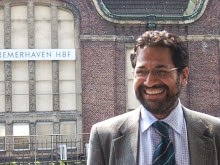
After the failure of technical talks in London, Nicholas Burns is set to try one last attempt at pushing through a deal before Manmohan and Bush meet on the sidelines of the G* Outreach meeting in Germany next week.
28 May 2007
The Hindu
India, U.S. nuclear talks set for this week
Siddharth Varadarajan
New Delhi: With major differences over the contours of the proposed India-U.S. nuclear cooperation agreement still persisting, Washington's point man on the issue is coming here this week for another round of talks aimed at closing the deal.
According to official sources, U.S. Under Secretary of State Nicholas Burns will arrive on May 31 and hold talks with Foreign Secretary Shiv Shankar Menon.
Asked for confirmation of these dates, a U.S. Embassy spokesperson said a formal announcement to this effect had not yet been made in Washington.
Burns visit
The idea of Mr. Burns' visit "in the second half of May" was first flagged by the U.S. State Department after his meeting with Mr. Menon in Washington on May 1. Though both claimed that "considerable progress" was made, their technical teams failed to reach agreement in subsequent parleys, resulting in postponement of Mr. Burns' visit.
Senior officials here familiar with the status of the talks on the accord — known as the `123' agreement — told The Hindu on Sunday that the technical talks in London on March 20 and 21 could not lead to resolution of outstanding differences on a range of outstanding issues. Top among these is Washington's insistence on including legal penalties in the event of a nuclear test by India, something New Delhi says it never agreed to in the July 2005 agreement.
"The reality is that we find ourselves stuck with an American law that has not been amended and was never sought to be amended (by the Bush administration)," an official said, referring to the section of the U.S. Atomic Energy Act that mandates the incorporation of a nuclear test penalty clause in any bilateral agreement with a country that is not a nuclear weapons state under the Nuclear Non-Proliferation Treaty.
"Even though we made this point repeatedly, they sought to ignore it. So now we are both stuck," he said.
[This story was split into a second part which ran on an inside page]
London meet failed to bridge differences over 123 pact
Further rounds of technical discussions necessary to address India's concerns
Siddharth Varadarajan
New Delhi: Despite India's insistence that the draft 123 agreement cannot treat it as a non-nuclear weapons state as far as the implications of a nuclear test under domestic U.S. statute are concerned, American negotiators say the administration's hands are tied by the Atomic Energy Act and the Hyde Act passed by Congress last December.
During last week's technical talks in London, all the U.S. side was willing to concede was the possibility that the penalties and liabilities flowing from any future nuclear test could be "padded" to make them less onerous for India. But this would still involve India conceding that a future test could have adverse legal consequences.
Deal killer
The second major issue on which no progress was made in the London meeting is another deal killer — the American refusal to accept India's demand for the inclusion within the 123 of reprocessing rights for spent fuel produced by any U.S. reactors the country may import.
Potential difficulties
On this, as well as the question of India accessing reprocessing and enrichment equipment and technology, the U.S. said the agreement could incorporate "forward looking language" but this falls short of the kind of water-tight commitment India says it needs. Though reprocessing rights belong entirely in the domain of executive policy, Indian officials said the American side is citing potential difficulties with Congress as one reason why the 123 agreement cannot give India prior consent.
As for fuel-supply guarantees and fall-back safeguards, each side remains wary of the other's draft language.
Concerns raised
At the London meeting, say officials, the Indian side raised a number of questions linked to lacunae in the Hyde Act passed by Congress last December as well to concerns emanating from the U.S. draft of the 123 agreement. "These questions have yet to be answered," said one official.
General assessment
Though Indian officials anticipate Mr. Burns would like to make one final attempt to strike a deal in the run-up to next week's meeting between Prime Minister Manmohan Singh and President George W. Bush at the G-8 forum in Germany, the general assessment is that further rounds of technical discussions will be necessary to address India's concerns.
Indeed, the timing of Mr. Burns' impending visit has taken South Block somewhat by surprise since at least two important members of the Indian negotiating team are scheduled to be away at the time.
28 May 2007


17 May 2007
123 as countdown to CTBT by the backdoor

No matter how it is cushioned or phrased, the U.S. insistence on a "right to require the return" of exported material if India conducts a nuclear test will convert India's voluntary moratorium into a bilateral, and eventually multilateral, undertaking with legal consequences.
17 May 2007
The Hindu
123 as countdown to CTBT by the backdoor
Siddharth Varadarajan
THE INDO-U.S. agreement on civil nuclear cooperation is built around a core bargain but as the moment of final implementation draws nearer, it is evident the United States does not intend to uphold its end of that trade-off.
On July 18, 2005, the U.S. agreed that "as a responsible state with advanced nuclear technology, India should acquire the same benefits and advantages as other such states." Accordingly, the American President undertook to "seek agreement from Congress to adjust U.S. laws and policies" and "work with friends and allies to adjust international regimes to enable full civil nuclear energy cooperation and trade with India." In return, India said it "would reciprocally agree that it would be ready to assume the same responsibilities and practices and acquire the same benefits and advantages as other leading countries with advanced nuclear technology, such as the United States."
Behind this word play was a simple proposition: in exchange for India assuming a number of costly "responsibilities and practices" in the nuclear field, the U.S. was saying it would (1) no longer treat India as a non-nuclear weapons state in political or legal terms; and (2) adjust its domestic statute and the guidelines of the Nuclear Suppliers Group to allow nuclear commerce with New Delhi in line with the new reality.
The joint statement enumerated exactly what the "responsibilities and practices" of other leading countries with advanced nuclear technology consisted of. It is in this context — and only in this context — that the continuation of India's moratorium on nuclear testing is mentioned. India was, inter alia, giving a political commitment that it would not end its moratorium. But it is clear from the preambular reference to the responsibilities and practices of "other leading countries with advanced nuclear technology" that this commitment was reciprocal to the commitment of others not to test.
Thus, if the U.S. were to detonate a nuclear device in the future, or if any other leading country with advanced nuclear capability were to deviate from its responsibilities, the Indian commitment would become infructuous.
Had the July 2005 statement been truly reciprocal, India's moratorium would have also been linked to an American commitment not to develop new, "usable" nuclear weapons. After all, the immediate danger confronting the world is not nuclear testing, per se, but the U.S. drive to design new and "better" nuclear weapons such as robust nuclear earth penetrators and the so-called `reliable replacement warhead,' or RRW. Indeed, the reason the Comprehensive Test Ban Treaty is a flawed treaty is that it seeks to block only one end of the nuclear weapon technology spectrum — testing — leaving countries like the U.S. plenty of room to refine and build deadly new nuclear weapons without violating the treaty.
The irony is that even though the CTBT privileges `advanced' nuclear weapons states, the Bush administration is opposed to the treaty's ratification since it wants the U.S. to have the option of testing for at least the next two decades. This option is crucial because as the U.S. nuclear arsenal — under the Complex 2030 programme — switches gradually from its existing stockpile of proven but allegedly ageing `legacy' warheads to greater reliance on the untested RRW, political and military pressure to test the new warhead will increase.
In other words, if one were to identify the one "leading country with advanced nuclear technology" most likely to break the testing moratorium in the next decade, that would be the U.S., and not India, Russia or China.
It is important to bear this background in mind in considering the tug-of-war currently under way between India and the U.S. over the bilateral nuclear cooperation — or `123' — agreement.
Not satisfied with New Delhi's political commitment to continue its moratorium, the U.S. wants India to give that commitment a bilateral legal character by accepting that any future Indian test would have adverse consequences for New Delhi. But this is something India cannot and should not accept. It is not that India is seriously bothered by the prospect of having to ship back to the U.S. any imported nuclear equipment or material in the event of a test. Rather, it is the principle of not being forced to concede something that was not part of the July 2005 agreement. Besides, if conceded, this bilateral legality would inevitably get converted into a multilateral one at the NSG and India would find itself effectively saddled with a CTBT in all but name.
The reason testing has emerged as a stumbling block is because Washington is simply not willing to stop treating India as a non-nuclear weapons state (NNWS). That is why the Bush administration did not seek all the necessary adjustments to domestic law in line with India's actual status and is now insisting that certain legal riders applicable to NNWS as defined by the Nuclear Non-Proliferation Treaty (NPT) be made a part of the 123 agreement with India.
This insistence stems from Section 123(a)(4) of the U.S. Atomic Energy Act, which declares that except in the case of agreements with nuclear-weapon states, all 123 agreements must allow America the right to require the return of "any nuclear materials and equipment transferred" if the recipient country "detonates a nuclear explosive device."
Needless to say, the U.S. 123 agreement with China does not include such a clause, nor does its 123 with Euratom as far as cooperation with Britain and France are concerned. The only stipulation is that these countries will not detonate a nuclear device using U.S. material. This is precisely the undertaking India says it is willing to abide by.
Since the U.S. agreed not to treat India as an NNWS anymore, the Bush administration should have either included a waiver to Section 123(a)(4) in the Hyde Act, which was passed last December or amended the definition of a nuclear weapon state in its domestic statute to remove the tight linkage with the NPT. But it did neither. And now, it is citing the constraints of domestic law as the reason why India must agree to convert its voluntary moratorium into a formal undertaking with legal penalties in case of violation.
One of the formulas now being studied by both sides is whether the "right of return" can be "cushioned" by stretching out the process of its implementation. Indian negotiators are also examining the merits of making the cost associated with any return of equipment and material prohibitive to the U.S. in monetary and environmental terms. But all of these proposals revolve around India conceding a legally binding aspect to its political, voluntary commitment not to test.
The only flexibility the U.S. side has indicated it might show is to exempt from the agreement's ambit any Indian test conducted after a future Chinese or Pakistani test. Senator Joe Biden, for example, has openly endorsed this line of thinking. For India, however, such a formulation would be even worse since it would repeat the diplomatic blunder the erstwhile Vajpayee government committed in blaming the 1998 Pokhran tests on the `China threat.'
India has every intention of standing by the political commitment of continuing its unilateral moratorium and has little interest in being the first to break the prevailing international moratorium on testing. Indeed, one could even argue that if an initial Indian test were to serve as a rationale for further tests by Pakistan, China and, eventually, the U.S. and others, the military "gains" from perfecting a new Indian weapon design would be more than offset by similar gains others might enjoy as a result of their new round of tests. But even though there is zero probability of India testing first, the U.S. would also like to rule out the prospect of an Indian test as part of any domino effect triggered by a future American test. When the RRW is eventually tested, the Chinese would be tempted to validate their attempts at manufacturing miniaturised warheads; and, given the unstable logic of deterrence, it is only natural that pressure inside India for further tests would increase.
The only way to break this chain of insecurity is for the U.S. to move away from nuclear weapons. For as long as it continues to privilege this genocidal currency of power it is unreasonable to expect powers like China, Russia or India to accept binding unilateral restraints.
Can the Indo-U.S. nuclear deal be salvaged if the U.S. insists on retaining a `right of return' clause in the 123 agreement? Or indeed any termination clause that might potentially penalise India for not toeing a particular line? My guess is that it cannot. Since 1947, India has always avoided entering into agreements that might restrict its future freedom of action. Even at times of economic vulnerability, the Indian leadership somehow managed to avoid getting pushed into a strategic corner. It would be highly unnatural for the country to agree to be boxed in at precisely the same moment that the entire world is heralding its arrival.
There are only two ways around the offensive clause. India can live with a restraint on testing if the U.S. agrees to scrap its new weapons work, including the RRW. But the U.S. can never live with such a restraint. This leaves only one option: President George W. Bush must invoke the waiver authority he already enjoys under Section 123 and seek the necessary legislative approval for waiving the right of return clause when the 123 agreement with India is submitted to Congress.
If Mr. Bush does not have the political capital to push a waiver through, or if Congress were to disapprove it, the agreement would not meet the yardstick held out in July 2005. And there would then be no more deal. Not because India is being "greedy" or "pushy" but because the U.S. failed to live up to its promises.
11 May 2007
Blame the police, not the messenger
By failing to act decisively against the Hindu chauvinist organisations which are targeting Christian priests and missionaries in Rajasthan, Maharashtra, and elsewhere, the police are only increasing the likelihood of copycat attacks

11 May 2007
The Hindu
Blame the police, not the messenger
Siddharth Varadarajan
"I can still hear the cries of the helpless pastor in my ears. I had never imagined such cruelty was possible. I had never ever seen anyone beat a defenceless man in such a heartless manner." — Sharat Kumar, Jaipur correspondent, Aaj Tak.
ON APRIL 29, a pastor in Jaipur, Walter Masih, was beaten mercilessly by activists and goons associated with the Vishwa Hindu Parishad. We know this because unlike the scores of other incidents in which "unidentified assailants" have attacked Christian priests, preachers and missionary workers in Rajasthan, Uttar Pradesh, Madhya Pradesh, and other parts of India, two brave television journalists managed to film this particular crime at great personal risk to themselves.
Thanks to them, we saw the faces of the attackers and know the names of their ringleader. His position as a senior leader of the VHP is a matter of public knowledge. That the police took more than 10 days to arrest him is another issue.
Ordinarily, the exposure of such a shocking crime on television should have goaded the police into action and put the VHP and its kindred organisations on the defensive. Thanks to the laxity of the police, however, the opposite has happened, with the Bajrang Dal activists in Kolhapur who brutally assaulted two priests on May 6 behaving even more brazenly than their Jaipur counterparts.
Sharat Kumar is the Jaipur correspondent of Aaj Tak, a leading Hindi-language television news channel. Mohanlal Jain is the channel's cameraman. It was the footage this duo captured that was later shown on Aaj Tak and shocked the conscience of the country. There is no doubt in my mind that had they not been present, Mr. Masih would have beaten even more mercilessly, perhaps even killed. And yet, the two journalists today find themselves under fire. VHP and Bharatiya Janata Party leaders, upset that the involvement of Hindutva organisations and activities in the crime has been exposed, have started blaming the "media" for being part of a "conspiracy." And as if on cue, a section of the media has started a fruitless debate on whether the journalists concerned were accessories to the crime by their presence or their "failure to intervene."
Whether intended or not, this debate has shifted our focus away from the culpability of the perpetrators and their leaders. It is precisely in order to clear the air about how he and his cameraman came to be present that Mr. Kumar has decided to tell his side of the story.
In a first person account I received by email, Mr. Kumar narrates how at approximately 1.20 p.m. on April 29, he received a phone call informing him that Bajrang Dal and VHP activists were planning to stage a demonstration outside a Christian school located in a lane next to the residence of a local Congress politician. Mr. Kumar was told that two TV channels and one newspaper had also been informed about the programme.
"We took about 15 minutes to reach the spot. When our car reached the Nandpuri road, I was shocked to see more than 50 people with lathis in their hands sitting around near the shops. I instructed my cameraman to quietly film their faces and lathis. I knew that this organisation would not hesitate to smash our camera if they felt they might be implicated in any way."
Unknown to Mr. Kumar and Mr. Jain, two VHP activists had already entered the pastor's house and started beating him. As for the goons outside, they assumed the cameraman filming them was "on their side" and had been duly deputed to be present by their leader.
At this point, writes Mr. Kumar, he got out of the car. Standing at some distance, the man who was leading these goons, a senior VHP leader, spotted him. "He started moving towards me shouting filthy abuses and asking, `How come he is here, he is from Aaj Tak, quickly cover up your faces.' Upon receiving a signal from their leader, the goons started advancing towards me, saying `If he tells anyone, we will beat him up as well.' Bearing in mind earlier incidents when our camera had been smashed, I instructed the cameraman not to argue with them but to continue filming everything carefully."
All of a sudden, these activists went and stood outside a particular house. One of them knocked on the door. A man opened the door from inside and ran out quickly and then the crowd rushed in. The Aaj Tak cameraman quickly followed them inside. "I had told the cameraman not to stop filming. As soon as he entered, he saw that two of the attackers who had been present before had already badly beaten the priest."
Mr. Kumar writes that since he is one of the few TV journalists in Rajasthan "who have consistently been raising our voice against the activities of the Hindutva organisations and have thus been targeted by them," he thought it best to stay outside.
After a while, he also entered the house. "As soon as they saw me, the attackers ran out quickly. The entire incident happened so quickly that even we were taken aback. Our footage of the entire incident lasts barely 70-80 seconds. And it is during this time that they carried out their attack, something we had no forewarning about. After seeing this incident, my hands and feet started shaking. This was the first time in my career as a journalist that I had seen such a barbaric incident."
Mr. Kumar went straight back to office. After informing his seniors about what had happened, he phoned the police and told them about the incident. "Mindful of my social responsibilities, I called the police over to my office, showed them the entire footage and identified the saffron goons," he writes. "The SP asked me if I could name any of the attackers. Soon after that, I saw a senior VHP leader [Virendra Singh Ravana] giving a statement on ETV Rajasthan. I immediately phoned the SP to tell him this was the same man I had seen leading the attackers. The SP told me that he too had identified the leader of the attackers."
Mr. Kumar is understandably upset at the inspired finger-pointing that has now started against himself, his cameraman and TV channel. The VHP activists had started surrounding Walter Masih's house from 11 a.m. and the spot was hardly one kilometre away from Rajasthan Chief Minister Vasundhara Raje's residence. And yet the police knew nothing about the incident. "If I had not received news of what was happening, and had we not reached the spot immediately, the people beating the pastor inside his house would have escaped. Isn't it also true that had our camera not captured their faces, their identities might never have been known? And the police would not have got any information either. And just as in the past, another 4-line news item would have appeared that `unknown persons' have attacked a priest in the city."
Mr. Kumar is absolutely right. He and his cameraman lived up to their responsibilities both as journalists and citizens. Their presence and act of filming, in the final analysis, acted as a deterrent for the cowardly goons. This is not to say that the camera, in other circumstances, never incites or inflames violence. It can and does, and journalists should always be vigilant about this possibility. But the question to ask in this instance is not whether Mr. Kumar and Mr. Jain did the right thing by exposing the criminals. The real question is why the police — despite having footage and eyewitness testimony establishing the identity of the attackers and their leaders — have yet to act in a decisive manner.


11 May 2007
The Hindu
Blame the police, not the messenger
Siddharth Varadarajan
"I can still hear the cries of the helpless pastor in my ears. I had never imagined such cruelty was possible. I had never ever seen anyone beat a defenceless man in such a heartless manner." — Sharat Kumar, Jaipur correspondent, Aaj Tak.
ON APRIL 29, a pastor in Jaipur, Walter Masih, was beaten mercilessly by activists and goons associated with the Vishwa Hindu Parishad. We know this because unlike the scores of other incidents in which "unidentified assailants" have attacked Christian priests, preachers and missionary workers in Rajasthan, Uttar Pradesh, Madhya Pradesh, and other parts of India, two brave television journalists managed to film this particular crime at great personal risk to themselves.
Thanks to them, we saw the faces of the attackers and know the names of their ringleader. His position as a senior leader of the VHP is a matter of public knowledge. That the police took more than 10 days to arrest him is another issue.
Ordinarily, the exposure of such a shocking crime on television should have goaded the police into action and put the VHP and its kindred organisations on the defensive. Thanks to the laxity of the police, however, the opposite has happened, with the Bajrang Dal activists in Kolhapur who brutally assaulted two priests on May 6 behaving even more brazenly than their Jaipur counterparts.
Sharat Kumar is the Jaipur correspondent of Aaj Tak, a leading Hindi-language television news channel. Mohanlal Jain is the channel's cameraman. It was the footage this duo captured that was later shown on Aaj Tak and shocked the conscience of the country. There is no doubt in my mind that had they not been present, Mr. Masih would have beaten even more mercilessly, perhaps even killed. And yet, the two journalists today find themselves under fire. VHP and Bharatiya Janata Party leaders, upset that the involvement of Hindutva organisations and activities in the crime has been exposed, have started blaming the "media" for being part of a "conspiracy." And as if on cue, a section of the media has started a fruitless debate on whether the journalists concerned were accessories to the crime by their presence or their "failure to intervene."
Whether intended or not, this debate has shifted our focus away from the culpability of the perpetrators and their leaders. It is precisely in order to clear the air about how he and his cameraman came to be present that Mr. Kumar has decided to tell his side of the story.
In a first person account I received by email, Mr. Kumar narrates how at approximately 1.20 p.m. on April 29, he received a phone call informing him that Bajrang Dal and VHP activists were planning to stage a demonstration outside a Christian school located in a lane next to the residence of a local Congress politician. Mr. Kumar was told that two TV channels and one newspaper had also been informed about the programme.
"We took about 15 minutes to reach the spot. When our car reached the Nandpuri road, I was shocked to see more than 50 people with lathis in their hands sitting around near the shops. I instructed my cameraman to quietly film their faces and lathis. I knew that this organisation would not hesitate to smash our camera if they felt they might be implicated in any way."
Unknown to Mr. Kumar and Mr. Jain, two VHP activists had already entered the pastor's house and started beating him. As for the goons outside, they assumed the cameraman filming them was "on their side" and had been duly deputed to be present by their leader.
At this point, writes Mr. Kumar, he got out of the car. Standing at some distance, the man who was leading these goons, a senior VHP leader, spotted him. "He started moving towards me shouting filthy abuses and asking, `How come he is here, he is from Aaj Tak, quickly cover up your faces.' Upon receiving a signal from their leader, the goons started advancing towards me, saying `If he tells anyone, we will beat him up as well.' Bearing in mind earlier incidents when our camera had been smashed, I instructed the cameraman not to argue with them but to continue filming everything carefully."
All of a sudden, these activists went and stood outside a particular house. One of them knocked on the door. A man opened the door from inside and ran out quickly and then the crowd rushed in. The Aaj Tak cameraman quickly followed them inside. "I had told the cameraman not to stop filming. As soon as he entered, he saw that two of the attackers who had been present before had already badly beaten the priest."
Mr. Kumar writes that since he is one of the few TV journalists in Rajasthan "who have consistently been raising our voice against the activities of the Hindutva organisations and have thus been targeted by them," he thought it best to stay outside.
After a while, he also entered the house. "As soon as they saw me, the attackers ran out quickly. The entire incident happened so quickly that even we were taken aback. Our footage of the entire incident lasts barely 70-80 seconds. And it is during this time that they carried out their attack, something we had no forewarning about. After seeing this incident, my hands and feet started shaking. This was the first time in my career as a journalist that I had seen such a barbaric incident."
Mr. Kumar went straight back to office. After informing his seniors about what had happened, he phoned the police and told them about the incident. "Mindful of my social responsibilities, I called the police over to my office, showed them the entire footage and identified the saffron goons," he writes. "The SP asked me if I could name any of the attackers. Soon after that, I saw a senior VHP leader [Virendra Singh Ravana] giving a statement on ETV Rajasthan. I immediately phoned the SP to tell him this was the same man I had seen leading the attackers. The SP told me that he too had identified the leader of the attackers."
Mr. Kumar is understandably upset at the inspired finger-pointing that has now started against himself, his cameraman and TV channel. The VHP activists had started surrounding Walter Masih's house from 11 a.m. and the spot was hardly one kilometre away from Rajasthan Chief Minister Vasundhara Raje's residence. And yet the police knew nothing about the incident. "If I had not received news of what was happening, and had we not reached the spot immediately, the people beating the pastor inside his house would have escaped. Isn't it also true that had our camera not captured their faces, their identities might never have been known? And the police would not have got any information either. And just as in the past, another 4-line news item would have appeared that `unknown persons' have attacked a priest in the city."
Mr. Kumar is absolutely right. He and his cameraman lived up to their responsibilities both as journalists and citizens. Their presence and act of filming, in the final analysis, acted as a deterrent for the cowardly goons. This is not to say that the camera, in other circumstances, never incites or inflames violence. It can and does, and journalists should always be vigilant about this possibility. But the question to ask in this instance is not whether Mr. Kumar and Mr. Jain did the right thing by exposing the criminals. The real question is why the police — despite having footage and eyewitness testimony establishing the identity of the attackers and their leaders — have yet to act in a decisive manner.
04 May 2007
Qualifying nuclear test moratorium may offer way out of 123 impasse
The July 2005 agreement spoke of India "continuing" its nuclear test moratorium in the context of abiding by the "resposibilities and practices" of other countries with "advanced nuclear technology". This should make it possible to qualify any implicit reference to an Indian detonation as a cause for terminating nuclear cooperation by requiring that others too must not test a nuclear device.
4 May 2007
The Hindu
Qualifying nuclear test moratorium may offer way out
'India should not be penalised if others with "advanced nuclear technology" test first'
Siddharth Varadarajan
NEW DELHI: India and the United States are looking at a range of proposals aimed at bridging their differences on the 123 agreement but it is not clear how the "considerable progress" claimed by Foreign Secretary Shiv Shankar Menon in Washington on May 1 will translate into textual consonance when negotiations resume later this month.
The next round of talks is slated to begin here on May 21.
One of the most serious obstacles in the way of a final agreement on bilateral civil nuclear cooperation is the U.S. insistence on including a "right of return" clause in the 123 agreement. Under this, India would be obligated to return any imported equipment or material in the event of the agreement being terminated.
The inclusion of such a clause is mandated by Section 123(a)(4), for which no specific waiver was included in the Hyde Act passed last December.
Indian officials say that although they were aware of this "right of return" requirement from the outset, they did not focus their attention on it directly because the main preoccupation of the Indian side was to push for the exclusion of any legally-binding reference to a future Indian nuclear test.
"All or nothing"
Thus, though the draft 123 omits any direct reference to detonation by India, the "right of return" issue remains and has now emerged as a major headache with the U.S. side declaring that a legislative waiver for this requirement is not possible.
One "creative" end-run around this requirement that is being looked at is to "cushion" the "right of return" so that it would be practically impossible for the U.S. to ever invoke it.
In other words, the "right of return" could be drafted in such a way that it would require the "all or nothing" return of imported American equipment and material. In other words, instead of being able to demand the return of one or two critical components — thereby disabling an entire nuclear plant — the U.S. would have to ship back each and every U.S.-origin or U.S.-obligated item and component, including the concrete, spent fuel, radioactive material, contaminants etc. and pay India "fair market compensation" for the same.
A second "cushion" might be an elastic timeframe for the exercise of this right by the U.S. in the event of an Indian nuclear test.
But even these proposals would involve India agreeing to give a bilateral legal character to its unilateral moratorium, something the Manmohan Singh Government has been reluctant to accept.
Some officials feel that one way to mitigate this problem might be to qualify the continuation of India's unilateral moratorium by a reference to all other countries with "advanced nuclear technology" also abiding by a nuclear test moratorium.
Such a qualification would be fully consistent with the July 2005 joint statement. India had said it was "ready to assume the same responsibilities and practices and acquire the same benefits and advantages as other leading countries with advanced nuclear technology, such as the United States" and it is only in that context that its moratorium is mentioned.
In other words, India's offer of "continuing" its unilateral moratorium was explicitly made as part of the enumeration of what the "responsibilities and practices" of other leading countries with advanced nuclear technology consist of.
The incorporation of such a qualification would still expose India to the danger of the U.S. invoking its "right of return" following an "unprovoked" Indian detonation. But if another country with advanced nuclear technology were to ever conduct a nuclear test, India would not be under any obligation to continue its own moratorium and should thus not be subject to any penalties.
New proposal
On "full" civil nuclear cooperation — a problem area because of America's refusal to include the sale of enrichment and reprocessing technology in the scope of the agreement — a new proposal being looked at is to use language that is "neutral," neither ruling out such cooperation nor explicitly ruling it in.
The U.S. side says that its official policy is not to provide such equipment or technology to any other country and that it would not be discriminating against India by excluding the fuel cycle from the purview of the July 2005 deal.
Accordingly, the suggestion has been made that the 123 agreement could state that any cooperation between the two countries in this field would take place in a manner consistent with each side's national policies in this regard.
At the same time, Indian officials caution that even if the U.S. has a policy of not selling such equipment to any country, it must provide an assurance that it would not stand in the way if some other Nuclear Suppliers Group member wishes to sell safeguarded reprocessing or enrichment technology, equipment or components to India in a manner consistent with its own national policies.
In other words, the proposed NSG rule change must not exclude "full" civil nuclear cooperation.
While a number of ideas were thrown around during Mr. Menon's meeting with Under Secretary Nicholas Burns in Washington, D.C., earlier this week, including on reprocessing consent rights, senior Indian officials here say it is difficult to evaluate the merit of any one proposal without considering the "overall package" that emerges.
Though both men are travelling, officials said Mr. Menon had already briefed National Security Adviser M.K. Narayanan in London about the Washington talks. But a full evaluation of where the process stands would only be possible when the Foreign Secretary and other senior officials return to New Delhi on Friday.
4 May 2007
The Hindu
Qualifying nuclear test moratorium may offer way out
'India should not be penalised if others with "advanced nuclear technology" test first'
Siddharth Varadarajan
NEW DELHI: India and the United States are looking at a range of proposals aimed at bridging their differences on the 123 agreement but it is not clear how the "considerable progress" claimed by Foreign Secretary Shiv Shankar Menon in Washington on May 1 will translate into textual consonance when negotiations resume later this month.
The next round of talks is slated to begin here on May 21.
One of the most serious obstacles in the way of a final agreement on bilateral civil nuclear cooperation is the U.S. insistence on including a "right of return" clause in the 123 agreement. Under this, India would be obligated to return any imported equipment or material in the event of the agreement being terminated.
The inclusion of such a clause is mandated by Section 123(a)(4), for which no specific waiver was included in the Hyde Act passed last December.
Indian officials say that although they were aware of this "right of return" requirement from the outset, they did not focus their attention on it directly because the main preoccupation of the Indian side was to push for the exclusion of any legally-binding reference to a future Indian nuclear test.
"All or nothing"
Thus, though the draft 123 omits any direct reference to detonation by India, the "right of return" issue remains and has now emerged as a major headache with the U.S. side declaring that a legislative waiver for this requirement is not possible.
One "creative" end-run around this requirement that is being looked at is to "cushion" the "right of return" so that it would be practically impossible for the U.S. to ever invoke it.
In other words, the "right of return" could be drafted in such a way that it would require the "all or nothing" return of imported American equipment and material. In other words, instead of being able to demand the return of one or two critical components — thereby disabling an entire nuclear plant — the U.S. would have to ship back each and every U.S.-origin or U.S.-obligated item and component, including the concrete, spent fuel, radioactive material, contaminants etc. and pay India "fair market compensation" for the same.
A second "cushion" might be an elastic timeframe for the exercise of this right by the U.S. in the event of an Indian nuclear test.
But even these proposals would involve India agreeing to give a bilateral legal character to its unilateral moratorium, something the Manmohan Singh Government has been reluctant to accept.
Some officials feel that one way to mitigate this problem might be to qualify the continuation of India's unilateral moratorium by a reference to all other countries with "advanced nuclear technology" also abiding by a nuclear test moratorium.
Such a qualification would be fully consistent with the July 2005 joint statement. India had said it was "ready to assume the same responsibilities and practices and acquire the same benefits and advantages as other leading countries with advanced nuclear technology, such as the United States" and it is only in that context that its moratorium is mentioned.
In other words, India's offer of "continuing" its unilateral moratorium was explicitly made as part of the enumeration of what the "responsibilities and practices" of other leading countries with advanced nuclear technology consist of.
The incorporation of such a qualification would still expose India to the danger of the U.S. invoking its "right of return" following an "unprovoked" Indian detonation. But if another country with advanced nuclear technology were to ever conduct a nuclear test, India would not be under any obligation to continue its own moratorium and should thus not be subject to any penalties.
New proposal
On "full" civil nuclear cooperation — a problem area because of America's refusal to include the sale of enrichment and reprocessing technology in the scope of the agreement — a new proposal being looked at is to use language that is "neutral," neither ruling out such cooperation nor explicitly ruling it in.
The U.S. side says that its official policy is not to provide such equipment or technology to any other country and that it would not be discriminating against India by excluding the fuel cycle from the purview of the July 2005 deal.
Accordingly, the suggestion has been made that the 123 agreement could state that any cooperation between the two countries in this field would take place in a manner consistent with each side's national policies in this regard.
At the same time, Indian officials caution that even if the U.S. has a policy of not selling such equipment to any country, it must provide an assurance that it would not stand in the way if some other Nuclear Suppliers Group member wishes to sell safeguarded reprocessing or enrichment technology, equipment or components to India in a manner consistent with its own national policies.
In other words, the proposed NSG rule change must not exclude "full" civil nuclear cooperation.
While a number of ideas were thrown around during Mr. Menon's meeting with Under Secretary Nicholas Burns in Washington, D.C., earlier this week, including on reprocessing consent rights, senior Indian officials here say it is difficult to evaluate the merit of any one proposal without considering the "overall package" that emerges.
Though both men are travelling, officials said Mr. Menon had already briefed National Security Adviser M.K. Narayanan in London about the Washington talks. But a full evaluation of where the process stands would only be possible when the Foreign Secretary and other senior officials return to New Delhi on Friday.
03 May 2007
India, U.S. claim progress in nuclear talks

But while the U.S. speaks of a deal on the 123 agreement by the end of May, the Indian side points out there are still "issues" to be settled.
3 May 2007
The Hindu
India, U.S. claim progress in talks
Delhi says issues still remain to be settled
Siddharth Varadarajan
* U.S. speaks of "final agreement" by May-end
* `No point solving specific issues through the media: Shivshankar Menon
NEW DELHI: After two rounds of meetings in Washington, D.C., between Foreign Secretary Shivshankar Menon and Under Secretary of State Nicholas Burns, India and the United States publicly claimed that considerable progress had been made in the crucial `123 agreement' on bilateral civil nuclear cooperation.
But where U.S. State Department spokesman Sean McCormack sought to push the envelope by speaking of a "final agreement" by the end of May, Mr. Menon struck a more cautious note. "On the 123, we think we've made considerable progress forward and we now expect to welcome Under Secretary Burns later this month and we hope to finalise this as soon as we can." But he also acknowledged that the two sides "still have issues to settle."
Asked about the areas where progress had been made, the Foreign Secretary declined to get into specifics. "I have a deal with Nicholas Burns that we're not going to get into the issues until we solve them all," he told a press conference at the Indian Embassy. "I'm not going to get into individual issues because there's no point trying to solve this through the media."
Nor would he get drawn into endorsing the May-end prediction made by the U.S. "I think we're both confident we can do this and the quicker the better... I think it's doable ... but as I said, we've made considerable progress but we still have issues to settle, but until we settle them all, I'm not going to say anything."
"Frustration"
Asked whether the "frustration" Mr. Burns spoke about last month now gave way to a more positive atmosphere, Mr. Menon replied: "I think you should ask the people who were frustrated. I have never said that."
Taking a cue from the tenor of Mr. Menon's remarks, senior Indian officials said a proper measure of the distance that remained between the two sides could only be established once the negotiators got into the specifics.
Generalities vs Specifics
"Agreeing on generalities doesn't tell you much," one official told The Hindu . "It is the specifics which matter." And this is where it has become apparent that serious differences exist between both sides on issues ranging from the inclusion of a "right of return" and reprocessing to fuel guarantees and fallback safeguards for Indian reactors placed under IAEA supervision.
On its part, the State Department characterised the Menon-Burns discussions as positive. "The U.S. is encouraged by the extensive progress that was made on the issues," an official release said.
The statement added that Mr. Burns would travel to Delhi in the second half of May "to reach a final agreement."
In his daily interaction with beat reporters on May 1 before the final round of talks had ended, Mr. McCormack noted that the Foreign Secretary had come to Washington "with some constructive ideas."
The U.S., he said, was confident that India was "ready to work in good faith to get an agreement." But he added that "it's going to require some creativity and some compromise on both sides."
Asked by a reporter whether he and Mr. Burns had identified issues that could only be resolved when Prime Minister Manmohan Singh and President George W. Bush meet on the sidelines of the G-8 summit in Germany in June, Mr. Menon said the two sides would try and resolve the remaining issues at their next meeting in Delhi later this month.
02 May 2007
This has nothing to do with energy

Under Secretary of State Nicholas Burns's recent article is a reminder of America's onerous "strategic partnership" agenda for India: defence sales, interoperability of forces followed by joint missions, isolating Iran, and helping to prise Central Asia away from Russian influence.
2 May 2007
The Hindu
This has nothing to do with energy
Under Secretary of State Nicholas Burns' recent article is a reminder of America's onerous "strategic partnership" agenda for India: defence sales, interoperability of forces followed by joint missions, isolating Iran, and helping to prise Central Asia away from Russian influence.
Siddharth Varadarajan
FOR ALL the controversy that nuclear negotiations between India and the United States have generated since July 2005, there is one point on which the supporters and opponents of the deal in both countries tend to agree wholeheartedly: the nuclear agreement is not about energy.
Nuclear power contributes less than 3 per cent of India's energy consumption basket. Even if the most optimistic projections about imported reactors and fuel come true, that figure is not expected to rise to beyond 8 to 10 per cent by 2020. The share of nuclear power may be a key factor in India's long-term energy basket but for the short and medium-term, there is no getting away from our increased need for conventional sources of energy such as natural gas, oil, new coal technologies and hydroelectricity. Put another way, while the nuclear deal with the U.S. might be welcome as an additionality, the more pressing task for Indian energy diplomacy is to work in tandem with our neighbourhood and extended neighbourhood to ensure the stable and least-cost supply of oil, gas and hydroelectric power.
Indeed, the challenge is to harmonise the short- and medium-term with the long-term, so that there are no zero-sum games. India, in other words, needs a constructive energy relationship with the United States. But it also needs a similar relationship with Iran, China, Russia, Myanmar, Pakistan, Bangladesh and the Central Asian Republics (CAR). If increased access to nuclear reactors comes at the expense of diminished access to other forms of energy, the gains will get cancelled. One doesn't have to be an economist to figure that out.
But if the `deal of the century' with the U.S. is not about energy — not mainly, perhaps not even peripherally — what is it really about? It is about cementing the "strategic partnership" between the U.S. and India. But what exactly does that mean? India has signed, or is in the process of signing, a "strategic partnership" with countries all over the world. For New Delhi, a "strategic partnership" is really a fancy way of saying let us increase the amount of bilateral trade and investment, let our companies access cutting-edge technologies, and let us have defence cooperation. For Washington, however, a strategic partnership holds the promise of much, much more than that. And this is where the problem arises.
Strategic naivete
Since the Indian establishment is not used to thinking about the world in strategic or structural terms, it has tended to be diffident about leveraging India's bilateral relationships to generate wider strategic gains in the regional or global context. After all, how can you use bilateral relationships to push for structural changes in the world order when no serious thought has gone into elaborating the kind of international system that you would like to see? Multipolarity and polycentrism worked fine as abstract slogans but little attempt has been made to anchor these concepts in diplomatic practice. For years, the only global security issue with which New Delhi actively engaged itself was terrorism, but even there, the primary purpose was to isolate Pakistan. Under Rajiv Gandhi, some initiative was taken on the arms control and disarmament front, but India later blundered its way into joining the U.S. in co-sponsoring resolutions urging the quick adoption of the Comprehensive Test Ban Treaty and Fissile Material Cut-off Treaty.
Today, in the absence of strategic thinking, a purely instrumental view of international politics has come to dominate officialdom. Rather than thinking through the kind of Asian and world order India needs to strive for, a major section of the Indian establishment has started believing that the strategic partnership with Washington can help pave the way for India's absorption into the existing world order as a major power. Mindful of this strategic naivete in New Delhi, it is hardly surprising that the promise of helping to make India a big power was the very idea the U.S. State Department ideologues hit upon in the spring of 2005 as a prelude to their opening gambit of a nuclear relationship later that year.
With nuclear negotiations over the crucial 123 agreement evenly poised, U.S. Under Secretary of State Nicholas Burns has chosen this moment to remind critics in America — particularly the newly resurgent non-proliferation lobby — about the enormous strategic promise the relationship with India holds.
India, he wrote in an article in the Washington Post, is likely to be "one of our two or three most important strategic partners" in the years to come, on a par, presumably, with the top two — Japan and Britain. Even if we assume the outstanding issues in the nuclear talks are all resolved in India's favour, Indians need to ask themselves what it would mean to be one of America's "two or three most important strategic partners."
From 123 to 126
Mr. Burns' article itself provides four clearly articulated deliverables that the U.S. has in mind. The first one mentioned is, of course, the most obvious one and, arguably, the least objectionable from an Indian standpoint. Once the U.S. has helped "bring India out of its self-imposed isolation" by implementing peaceful civilian nuclear cooperation, he writes, "[we] expect American companies will be among the first to invest in and profit from the opening of this gigantic energy market."
Mr. Burns turns next to defence, when he says India and the U.S. "can also do much more to create a stronger military partnership." Here, he elaborates on two separate but related sub-themes. The U.S. and India need to "complete a series of defense sales that meet India's needs and complement our overall defense relationship" and "build on an already impressive series of joint military exercises by improving the interoperability of our armed forces to respond to global contingencies." In the latter context, Mr. Burns mentions the post-tsunami quadrilateral naval effort involving the U.S., India, Australia and Japan. The post-tsunami operation is the model on which the Bush administration would like to develop wider security cooperation between this group of four. The target for this gang-up is clearly China.
Implicit in Mr. Burns' article is the idea that as the nuclear negotiations proceed, the U.S. would also be looking to move from a 123 agreement to a 126 agreement. The latter number is the quantity of advanced fighters the Indian Air Force is in the market for and for which both Boeing and Lockheed are competing along with Russian, Swedish and French companies. These major weapons sales are important to the U.S. for two reasons. First, for the companies involved, an India relationship would be a huge boost. In the case of the F-16s, for example, Lockheed-Martin's production line is slated for closure if an Indian order doesn't come through. Secondly, arms sales help push the envelope on the other aspect of the American military agenda — interoperability.
What the U.S. is looking for, essentially, is a closer working relationship with the Indian services, leading eventually to Indian participation in "multilateral" U.S.-led military operations and undertakings. The June 2005 Indo-U.S. defence agreement envisages Indian participation in such operations, even if they are not led or mandated by the United Nations. Given the Indian political realities, however, the U.S. is not expecting Indian military participation in offensive start-up operations of the kind it launched against Iraq in 2003. But it would like the Indians to pick up the slack in other kinds of deployments. A probable candidate for our first outing could well be Somalia, where U.N. Secretary-General Ban Ki Moon has already floated the idea of a multinational force.
A third issue cited by Mr. Burns in his article is America's expectations vis-à-vis a future Indian role in Central Asia. "We are working with Delhi to encourage energy-rich Central Asian states such as Kazakhstan and Turkmenistan to establish oil and gas trade with Afghanistan, Pakistan and India," he wrote, "thereby reducing the lure of long-term contracts with Iran."
What he left unsaid is the expectation — now well amplified in American policy documents — that India would help the U.S. prise Central Asia away from Russian and Chinese influence. Under its "Greater Central Asia" and "Regional Energy Market Access Program" (helpfully called REMAP), for example, American energy experts have envisaged a number of gas and hydro-electricity energy projects in which the U.S. and India would work with Central Asian states like Tajikistan, Kazakhstan and the Kyrgyz Republic and exclude any Russian involvement. So seriously are both Moscow and Beijing taking these U.S. plans that in the last trilateral Foreign Ministers meeting of Russia, India and China, both the Russian and Chinese Ministers raised this as an issue of concern.
The fourth issue flagged by Mr. Burns is Iran, where U.S. efforts to get India to help isolate Tehran are well known. Taken together, this American agenda provides an early warning of the kind of pressure that India can reasonably expect to face in the months and years ahead. To be sure, these pressure points on Indian foreign policy would exist independently of the nuclear deal. But what Washington is looking to get for itself in the last round of nuclear negotiations is leverage that can remain long after the deal is signed, sealed and delivered.
Even with a water-tight nuclear agreement, New Delhi will soon find itself being weighed down by extraneous demands. If the agreement contains loose ends, we will only have ourselves to blame.
Subscribe to:
Posts (Atom)