The sooner a U.N. mission is in place to monitor the arms of the Nepal Army and Maoist PLA, the smoother will be the transition towards an interim government and Constituent Assembly elections.
29 June 2006
The Hindu
Towards the endgame in Nepal
Siddharth Varadarajan
EVENTS IN Nepal have moved so rapidly these past few weeks that King Gyanendra's April proclamation restoring parliament seems to belong to another political universe. Like the Long Parliament which Charles I was compelled to summon in 1640, the reconvened House of Representatives moved swiftly to assert the sovereign will of the people against monarchy. The king was stripped of his powers, the government and army were renamed, anti-democratic laws scrapped, and political prisoners released. But the historical analogy ends there. England descended into civil war as the Crown and Westminster struggled for supremacy. In Nepal, however, the assertion of popular will over palace and privilege offers the country its best chance of ending a decade of conflict.
On June 16, Prime Minister Girija Prasad Koirala and Maoist leader Prachanda reached an eight-point agreement that is a tribute to the wisdom and broad-mindedness of the Nepalese political forces. At the heart of the agreement is the formation of an interim government with the participation of the former `rebels.' Equally important are three propositions the seven-party alliance (SPA) and Maoists agreed to. First, that peaceful, competitive politics is the only way for parties to conduct their affairs and people to express their sovereignty. Secondly, that the weapons and army of both the government and the Maoists will have to be managed or monitored by the United Nations to ensure impartial elections. Thirdly, for there to be a "progressive restructur[ing] [of] the state," elections to the Constituent Assembly must take into account inequalities of class, race, region, and gender.
It stands to reason that the sole `legal' custodian of sovereignty — the House of Representatives — must perforce extinguish itself to make way for the interim government. At the same time, the eight-point agreement speaks of "making an alternative arrangement," perhaps an all-party-cum-civil society standing conference, to which the interim government will be answerable.
Even though India is used to the dissolution of parliament before early elections, Indian policymakers fear dissolution of the HoR could lead to a power "vacuum" in Nepal. These fears are misplaced. The fact is that India, or South Asia for that matter, has so far only seen "transfers of power" from one sovereign authority to another in which the continuity of state institutions was ensured. This is what happened in 1947, and even in 1971, when Bangladesh was created. What is happening in Nepal, however, is a revolution where constitutional legality and political power become highly fluid and contingent. Different political forces have competing agendas but their interaction is mediated by the popular desire for peace and an egalitarian social transformation. Whether one likes it or not, parties and state institutions that are not compatible with these aspirations will disappear.
Nature of U.N. mandate
Despite the centrality of arms monitoring to the timetable for elections and perhaps even the entry of the Maoists into an interim government, insufficient attention has been paid to the precise form U.N. involvement should take. India, which was sceptical about outside participation, conceded to Mr. Koirala earlier this month that the U.N. might play a useful role on the arms management front. But New Delhi is still chary of a U.N. resolution, even though this is a must for the deployment of U.N. police or military observers to Nepal.
Notwithstanding its indifferent record in peace making, the U.N. has been reasonably successful in the verification and implementation of ceasefire accords in civil war situations, including the management of weapons and armies. Most of these missions have been under Chapter VI of the U.N. Charter on the pacific settlement of disputes. Two missions stand out for their success and relevance — the 1997 U.N. Verification Mission in Guatemala (MINUGUA), and the 1992-1994 U.N. Operation in Mozambique (ONUMOZ), in which Indian peacekeepers also participated. In both cases, U.N. military observers came to verify and monitor compliance with political agreements that had already been reached by government and rebels. The separation of combatants from both sides was overseen, as was the decommissioning of rebel arms. In the case of Mozambique, the mandate included demobilisation of 76,000 government and rebel soldiers, as well as the subsequent integration of 10,000 soldiers into a new national army.
Though the armed conflict in Nepal has taken a terrible toll, the scale of hostilities pales into insignificance when compared with either Mozambique or Guatemala. Thus, implementing a simple mandate should not be difficult for any prospective U.N. verification mission in Nepal. All the more so since the decommissioning of arms and demobilisation of soldiers from either side are not necessary for the conduct of free elections and will not be part of the mission.
Some statistics will illuminate the point more clearly. In Guatemala, for example, 2,928 combatants from the Unidad Revolucionaria Nacional Guatemalteca (URNG) were demobilised and 535,102 weapons and rounds of ammunition handed over to the U.N. mission. In Nepal, according to data provided by Maj. Gen. Ashok K. Mehta in his new book, The Royal Nepal Army, the total number of "armed guerrillas" as of December 2004 is approximately 4,000. Even more revealing is the Maoist army's stock of arms. Gen. Mehta estimates the PLA's total weapons holdings at 2,895. Of these, nearly half, or 1,370, are .303 rifles. If the Maoists have emerged as a major political force in Nepal, it is perhaps not so much because of their guns — clearly, they do not have too many — but due to the appeal of their programme, most of which the SPA has now adopted.
As things stand, the Nepal government and the Maoists have agreed on a code of conduct for their armies. But violations of the informal ceasefire have occurred, with the U.N. Office of the High Commissioner for Human Rights in Kathmandu alleging that Maoist soldiers have killed nine individuals over the past month. If the Guatemala model is followed, a formal ceasefire needs to enter into force on the day the U.N. monitoring mission in Nepal ('UNMINEP') deploys. In consultation with Nepal Army and Maoist commanders, the barracks and assembly points where soldiers and weapons are to be sequestered for ease of monitoring can then be identified.
In Guatemala, the separation of soldiers and guerrillas was carried out through the establishment of two concentric areas — security zones and coordination zones — around eight URNG assembly points. Army units were not permitted to enter the security zone and police units could do so only in coordination with U.N. observers. In Nepal, since the army is also to be monitored, the 'UNMINEP' mission would need to be larger. At all assembly points and barracks, heavy guns would have to be warehoused under a double-locking system but army and PLA soldiers would retain personal weapons. Beyond a specified perimeter, however, personal arms would have to be deposited so that the presence of armed men and women in public areas does not compromise the free and fair nature of elections to the Constituent Assembly.
What India must do
For the U.N., Nepal can be the first practical project of the new Peacebuilding Commission, of which India is a member along with more than 40 other nations. But the mandate for the deployment of military or police observers will have to come from the General Assembly or Security Council, most likely the latter. The relevant resolution must be Chapter VI and not Chapter VII. Like the Guatemala resolution, it must make no reference to the situation in Nepal being a potential threat to international peace and security. It must also limit itself to the goals agreed to by the Nepalese political forces themselves. This is important because individual UNSC members — such as the United States — oppose the inclusion of Maoists in an interim government without first surrendering their arms and may seek to impose a broader mandate. This is where India must counsel its new `strategic partner' to abandon McCarthyism and accept reality.
Along with the doctrinal shift in the use of civilian police and human rights experts recommended by the Lakhdar Brahimi panel on U.N. peace operations, the proposed U.N. mission in Nepal must work closely with civil society leaders who are already monitoring the code of conduct. In Mozambique, ONUMOZ went through difficult times but emerged with distinction because of the Mozambican people's desire for peace. The fact that this desire is just as strong in Nepal suggests the implementation of the transition roadmap will also be a success.
As an important neighbour that facilitated the broad partnership between the SPA and the Maoists, India need not worry about being kept out of the loop. Nor should it aspire to offer anything other than non-lethal logistical support for the U.N. mission in Nepal. It is not in the interests of the U.N. or of the Nepalese political forces — including the Maoists — to do anything that will make the people of India less secure. Coincidentally, the U.N. military adviser in the Department of Peacekeeping is currently an Indian, Lt. Gen. Randhir Kumar Mehta.
It is also time India adjusted to the impending reality of an interim government in Nepal with the participation of Maoists in key portfolios. One of the first acts of the new government will be to formally request the release of Nepali Maoist prisoners in Indian jails, including senior leaders like Mohan Baidhya (`Kiran') and Chandra Prakash Gajurel (`Gaurav'). Rather than waiting for this request, which has already been made orally by Mr. Koirala, Prime Minister Manmohan Singh should take the necessary legal steps for their immediate release. Such an act will not alter the balance of power between the SPA and the Maoists but will generate goodwill for India.
29 June 2006


21 June 2006
Will an Indian be the next U.N. chief?
In nominating Shashi Tharoor as its candidate for the top U.N. job, India is taking a gamble. The payoff in terms of international visibility is potentially high while the cost of defeat is low, but only if the game is played properly.
21 June 2006
The Hindu
Will an Indian be the next U.N. chief?
Siddharth Varadarajan
EVER SINCE India went head-to-head against Japan for a non-permanent seat on the United Nations Security Council in 1996 and lost, official circles in New Delhi have had little appetite for standalone contests in international fora. Last year, when the country made a strong pitch for a permanent seat, it did so with the comforting security blanket of the G-4 firmly wrapped around it. Even so, Prime Minister Manmohan Singh and the PMO — perhaps sensing the difficult odds — chose not to get directly involved in that hunt and left all the lobbying and legwork to the Ministry of External Affairs (MEA).
Against this backdrop, New Delhi's decision to nominate U.N. Under-Secretary-General Shashi Tharoor as its official candidate for the top job at Turtle Bay suggests a new willingness to take a risky gamble on the world stage. Mr. Tharoor finds himself fighting the charge of being "light-weight" and faces stiff competition from a host of declared (and undeclared) contenders. Even though the stakes are much higher for its nominee, the Government presumably evaluated both the probability of victory and the consequences of defeat and found the cost-benefit ratio of the venture to its liking.
Within the foreign policy establishment, the decision to back Mr. Tharoor was not taken easily. Some within the PMO saw merit in India endorsing his candidature but the MEA and our mission to the U.N. initially felt the risk was not worth taking. It was only on June 13 that the MEA sent a confidential cable to its Ambassadors informing them of India's decision to back Mr. Tharoor. The Ambassadors were instructed to sound out their host government's initial preferences. They were also told that the formal announcement would be made later in the month, though the same was done within 48 hours.
For Mr. Tharoor, defeat will almost certainly mean the end of his career at the U.N., where he has worked for more than two decades. If he is prepared to risk it all, one can only imagine he has done his homework carefully. For India, however, there are potential costs, none by themselves overly onerous though a lot will depend on the precise manner in which the election campaign proceeds from here on.
Unpredictable process
Barring the 18-year period between Dag Hammarskjold's election as Secretary-General in 1953 — in a race which saw Vijayalakshmi Pandit and Sir Benegal Narayan Rau of India also emerge as unsuccessful candidates — and the end of U. Thant's tenure in 1971, the selection process for the job of Secretary-General has involved a high degree of unpredictability. In 1971, Kurt Waldheim fought off Max Jakobson of Finland and Carlos Ortiz de Rosas of Argentina to emerge the winner. With the backing of both superpowers, the dour Austrian got re-elected in 1976 but was vetoed by China when he sought a third term in 1981. With the United States also vetoing the Tanzanian Foreign Minister, Salim Ahmed Salim, Javier Perez de Cuellar of Peru — who was an Under Secretary-General in the U.N. at the time — eventually emerged as the consensus candidate. In 1986, he was reappointed for a second term.
In 1991, Africa claimed the post as its own. Though candidates from outside the region were also nominated (such as the former Canadian Prime Minister, Brian Mulroney) the serious contenders were all African. Eventually, two front-runners emerged — Boutros Boutros-Ghali of Egypt and Bernard Chidzero of Zimbabwe — with the Egyptian deputy foreign minister eventually triumphing. Five years later, the Clinton administration vetoed a second term for Mr. Boutros-Ghali, whose independence, particularly in matters involving West Asia, it had come to resent. Again, a slate of alternative African candidates emerged with Kofi Annan, the favourite at the outset, eventually rising to the top despite the initial opposition of France (because of his poor French).
While the U.N. Charter has little to say about the process of election, past precedent is a good guide to how the race will shape up this year. First, there is the question of Asia. The last four Secretaries-General have come from Africa, Latin America, and the "West Europe and Others group." Rotation is not mandatory but U.N. General Assembly resolution 51/241 of 1997 did note that the Secretary-General's selection should pay "due regard to regional rotation and gender equality." As of now, the U.S. is refusing to accept it is Asia's turn. And egged on by Washington — which favours Vaira Vike-Freiberga of Latvia or Alexander Kwasnieski of Poland — the East European group insists it should be allowed a chance. However, when the election process begins in earnest [See box: The election procedure], Asian candidates are likely to dominate in the same way that African ones did in 1991.
As of now, the other declared candidates are Jayantha Dhanapala, a highly-regarded diplomat from Sri Lanka, South Korean Foreign Minister Ban Ki-Moon and Thai Deputy Prime Minister Suriakart Sathirathai, who has the backing of Asean though none of its members is on the Security Council. Pakistan is reportedly considering fielding a candidate of its own with Nafis Sadik, Mr. Annan's special envoy for HIV/AIDS, a likely choice as she has the advantage of being both Asian and a woman.
In canvassing support for Mr. Tharoor, the biggest obstacle India will face is the argument that a big country should not aspire to the post of Secretary-General. Small and non-aligned may have been an important formula during the Cold War but it is not clear why that should be the sole criterion now. In any case, two Indians were entered into the race in 1953 while Egypt — a large and important country with heavy involvement in diplomatic disputes in its neighbourhood — won the top job in 1991. In any case, to the extent that Mr. Tharoor has never held an official position in India, it is possible that other countries will see him as a candidate unencumbered by the baggage of national diplomacy.
But if the P-5 countries or Japan would never imagine fielding one of their own nationals, is the nomination of Mr. Tharoor a signal that India does not consider itself a major world power? Certainly this was a question many in the MEA asked, with the initial perception being that such a move might compromise the country's bid for a permanent seat on the Security Council. Predictably, this is the line Pakistani diplomats have taken. Regardless of perceptions, however, the fact is that the two processes — and timelines — are completely unconnected. India can get a permanent seat only if there is enough international momentum for Security Council reform; there is little it can do on its own. And there is no reason why an Indian Secretary-General should reduce the appetite of the G-4 and other aspirants for a permanent seat. Equally, if ever there is an expansion of permanent membership, it is inconceivable that India would not make the cut even if an Indian is Secretary-General.
A major handicap Mr. Tharoor will have to overcome is the perception that a consummate UN insider like him may not be the best person to push through the administrative reforms needed. Thanks to his close association with Mr. Annan, whose relationship with the Bush administration started souring soon after his second term began, Mr. Tharoor might also run the risk of American opposition. This is presumably where he hopes India will come in. Given the growing strategic partnership between Washington and New Delhi, the U.S. may not want to annoy India by blocking its nominee. At the same time, India should be wary of the quid pro quo that American support might involve.
Two pitfalls
Well before it took the decision to field its own candidate, India circulated a draft resolution in the U.N. General Assembly calling for the selection of the Secretary General to be democratised by giving the U.N.'s wider membership — and not just the Security Council — a decisive say in the process. Under the Indian proposal, which has the backing of the Non-Aligned Movement, the Security Council should present the General Assembly — where every country has one vote and none the veto — a slate of two or more candidates and ask it to choose one. The Indian proposal, which echoes UNGA resolution 51/241, took the P-5 — who are extremely protective of their veto privilege — by surprise. At least one of the P-5 was so offended that it sent a delegation to Delhi to "demand" an explanation.
One consequence of the Indian espousal of Mr. Tharoor's candidature will almost certainly be to soft-pedal, if not entirely drop, the proposal to increase the role of the GA. But if it does so, other countries will see India's commitment to the democratisation of the U.N. as insincere.
Apart from this issue, there is another "irritant" India has to contend with. If Pakistan decides to enter someone in the race, there is always the danger that the election will be seen not as a contest between individual candidates but between two nations perceived as prone to washing their dirty linen in public.
Under no circumstances should New Delhi allow the election to degenerate into one of those typical India-Pakistan squabbles for which the world rightly has little time. Indeed, nothing limits India's profile internationally more than its inability to transcend "regional disputes" and forge a consensus in its own "backyard."
One strategy might have been to jointly push for a South Asian candidate like Mr. Dhanapala. But having taken the plunge and nominated Mr. Tharoor, the Government must now join the campaign in earnest and ensure he wins the widest possible support. At the same time, it should also have an exit strategy in hand. At the first sign that Mr. Tharoor might not make it, India should find a way gracefully to withdraw its candidate and endorse the emerging Asian consensus candidate, whoever she or he might be. Whatever the outcome, India must emerge as a unifying force in Asia and not a divisive one.
21 June 2006
The Hindu
Will an Indian be the next U.N. chief?
Siddharth Varadarajan
EVER SINCE India went head-to-head against Japan for a non-permanent seat on the United Nations Security Council in 1996 and lost, official circles in New Delhi have had little appetite for standalone contests in international fora. Last year, when the country made a strong pitch for a permanent seat, it did so with the comforting security blanket of the G-4 firmly wrapped around it. Even so, Prime Minister Manmohan Singh and the PMO — perhaps sensing the difficult odds — chose not to get directly involved in that hunt and left all the lobbying and legwork to the Ministry of External Affairs (MEA).
Against this backdrop, New Delhi's decision to nominate U.N. Under-Secretary-General Shashi Tharoor as its official candidate for the top job at Turtle Bay suggests a new willingness to take a risky gamble on the world stage. Mr. Tharoor finds himself fighting the charge of being "light-weight" and faces stiff competition from a host of declared (and undeclared) contenders. Even though the stakes are much higher for its nominee, the Government presumably evaluated both the probability of victory and the consequences of defeat and found the cost-benefit ratio of the venture to its liking.
Within the foreign policy establishment, the decision to back Mr. Tharoor was not taken easily. Some within the PMO saw merit in India endorsing his candidature but the MEA and our mission to the U.N. initially felt the risk was not worth taking. It was only on June 13 that the MEA sent a confidential cable to its Ambassadors informing them of India's decision to back Mr. Tharoor. The Ambassadors were instructed to sound out their host government's initial preferences. They were also told that the formal announcement would be made later in the month, though the same was done within 48 hours.
For Mr. Tharoor, defeat will almost certainly mean the end of his career at the U.N., where he has worked for more than two decades. If he is prepared to risk it all, one can only imagine he has done his homework carefully. For India, however, there are potential costs, none by themselves overly onerous though a lot will depend on the precise manner in which the election campaign proceeds from here on.
Unpredictable process
Barring the 18-year period between Dag Hammarskjold's election as Secretary-General in 1953 — in a race which saw Vijayalakshmi Pandit and Sir Benegal Narayan Rau of India also emerge as unsuccessful candidates — and the end of U. Thant's tenure in 1971, the selection process for the job of Secretary-General has involved a high degree of unpredictability. In 1971, Kurt Waldheim fought off Max Jakobson of Finland and Carlos Ortiz de Rosas of Argentina to emerge the winner. With the backing of both superpowers, the dour Austrian got re-elected in 1976 but was vetoed by China when he sought a third term in 1981. With the United States also vetoing the Tanzanian Foreign Minister, Salim Ahmed Salim, Javier Perez de Cuellar of Peru — who was an Under Secretary-General in the U.N. at the time — eventually emerged as the consensus candidate. In 1986, he was reappointed for a second term.
In 1991, Africa claimed the post as its own. Though candidates from outside the region were also nominated (such as the former Canadian Prime Minister, Brian Mulroney) the serious contenders were all African. Eventually, two front-runners emerged — Boutros Boutros-Ghali of Egypt and Bernard Chidzero of Zimbabwe — with the Egyptian deputy foreign minister eventually triumphing. Five years later, the Clinton administration vetoed a second term for Mr. Boutros-Ghali, whose independence, particularly in matters involving West Asia, it had come to resent. Again, a slate of alternative African candidates emerged with Kofi Annan, the favourite at the outset, eventually rising to the top despite the initial opposition of France (because of his poor French).
While the U.N. Charter has little to say about the process of election, past precedent is a good guide to how the race will shape up this year. First, there is the question of Asia. The last four Secretaries-General have come from Africa, Latin America, and the "West Europe and Others group." Rotation is not mandatory but U.N. General Assembly resolution 51/241 of 1997 did note that the Secretary-General's selection should pay "due regard to regional rotation and gender equality." As of now, the U.S. is refusing to accept it is Asia's turn. And egged on by Washington — which favours Vaira Vike-Freiberga of Latvia or Alexander Kwasnieski of Poland — the East European group insists it should be allowed a chance. However, when the election process begins in earnest [See box: The election procedure], Asian candidates are likely to dominate in the same way that African ones did in 1991.
As of now, the other declared candidates are Jayantha Dhanapala, a highly-regarded diplomat from Sri Lanka, South Korean Foreign Minister Ban Ki-Moon and Thai Deputy Prime Minister Suriakart Sathirathai, who has the backing of Asean though none of its members is on the Security Council. Pakistan is reportedly considering fielding a candidate of its own with Nafis Sadik, Mr. Annan's special envoy for HIV/AIDS, a likely choice as she has the advantage of being both Asian and a woman.
In canvassing support for Mr. Tharoor, the biggest obstacle India will face is the argument that a big country should not aspire to the post of Secretary-General. Small and non-aligned may have been an important formula during the Cold War but it is not clear why that should be the sole criterion now. In any case, two Indians were entered into the race in 1953 while Egypt — a large and important country with heavy involvement in diplomatic disputes in its neighbourhood — won the top job in 1991. In any case, to the extent that Mr. Tharoor has never held an official position in India, it is possible that other countries will see him as a candidate unencumbered by the baggage of national diplomacy.
But if the P-5 countries or Japan would never imagine fielding one of their own nationals, is the nomination of Mr. Tharoor a signal that India does not consider itself a major world power? Certainly this was a question many in the MEA asked, with the initial perception being that such a move might compromise the country's bid for a permanent seat on the Security Council. Predictably, this is the line Pakistani diplomats have taken. Regardless of perceptions, however, the fact is that the two processes — and timelines — are completely unconnected. India can get a permanent seat only if there is enough international momentum for Security Council reform; there is little it can do on its own. And there is no reason why an Indian Secretary-General should reduce the appetite of the G-4 and other aspirants for a permanent seat. Equally, if ever there is an expansion of permanent membership, it is inconceivable that India would not make the cut even if an Indian is Secretary-General.
A major handicap Mr. Tharoor will have to overcome is the perception that a consummate UN insider like him may not be the best person to push through the administrative reforms needed. Thanks to his close association with Mr. Annan, whose relationship with the Bush administration started souring soon after his second term began, Mr. Tharoor might also run the risk of American opposition. This is presumably where he hopes India will come in. Given the growing strategic partnership between Washington and New Delhi, the U.S. may not want to annoy India by blocking its nominee. At the same time, India should be wary of the quid pro quo that American support might involve.
Two pitfalls
Well before it took the decision to field its own candidate, India circulated a draft resolution in the U.N. General Assembly calling for the selection of the Secretary General to be democratised by giving the U.N.'s wider membership — and not just the Security Council — a decisive say in the process. Under the Indian proposal, which has the backing of the Non-Aligned Movement, the Security Council should present the General Assembly — where every country has one vote and none the veto — a slate of two or more candidates and ask it to choose one. The Indian proposal, which echoes UNGA resolution 51/241, took the P-5 — who are extremely protective of their veto privilege — by surprise. At least one of the P-5 was so offended that it sent a delegation to Delhi to "demand" an explanation.
One consequence of the Indian espousal of Mr. Tharoor's candidature will almost certainly be to soft-pedal, if not entirely drop, the proposal to increase the role of the GA. But if it does so, other countries will see India's commitment to the democratisation of the U.N. as insincere.
Apart from this issue, there is another "irritant" India has to contend with. If Pakistan decides to enter someone in the race, there is always the danger that the election will be seen not as a contest between individual candidates but between two nations perceived as prone to washing their dirty linen in public.
Under no circumstances should New Delhi allow the election to degenerate into one of those typical India-Pakistan squabbles for which the world rightly has little time. Indeed, nothing limits India's profile internationally more than its inability to transcend "regional disputes" and forge a consensus in its own "backyard."
One strategy might have been to jointly push for a South Asian candidate like Mr. Dhanapala. But having taken the plunge and nominated Mr. Tharoor, the Government must now join the campaign in earnest and ensure he wins the widest possible support. At the same time, it should also have an exit strategy in hand. At the first sign that Mr. Tharoor might not make it, India should find a way gracefully to withdraw its candidate and endorse the emerging Asian consensus candidate, whoever she or he might be. Whatever the outcome, India must emerge as a unifying force in Asia and not a divisive one.
UNSG race: Who gets to vote?
If India drops its proposal of having the General Assembly consider a slate of two or more candidates, then the next Secretary-General will be chosen by the 15 countries who are members of the Security Council.
Members likely to back Tharoor from the start: France, Greece
Members who may be induced to back him if India lobbies hard: Argentina, Britain, Congo-Brazaville, Ghana, Peru, Qatar, Russia, Tanzania
Members whom India can induce not to use the veto: China, United States
Others: Denmark, Japan, Slovakia
Members likely to back Tharoor from the start: France, Greece
Members who may be induced to back him if India lobbies hard: Argentina, Britain, Congo-Brazaville, Ghana, Peru, Qatar, Russia, Tanzania
Members whom India can induce not to use the veto: China, United States
Others: Denmark, Japan, Slovakia
The election procedure for chosing the UN Secretary General
UNDER THE Wisnumurti Guidelines — which built upon a transparent procedure first put in place in 1991 by Chinmaya R. Gharekhan who, as India's Permanent Representative to the U.N. and President of the Security Council, oversaw the election of Boutros Boutros-Ghali — a number of informal ballots are held in order to narrow the field down to the top two candidates:
The viability of each candidate may be assessed by means of a "straw poll(s)" to be conducted in accordance with the following procedure:
- Two types of papers will be distributed to the members of the Security Council. White papers for non-permanent members and red papers for permanent members. Each paper will contain a column listing the name of candidate or candidates, the first marked "encouraged" and the second "discouraged."
- Each member of the Security Council may indicate on the appropriate paper the candidate or candidates who it wants to encourage or discourage.
Candidates who are "encouraged" by the least number of members and who are "discouraged" by one or more permanent members, tend to withdraw from the fray. When Brian Mulroney polled just two votes in 1991, for example, the Canadian Government informed the Security Council that it could "no longer spare" the former Prime Minister.
At the early stages of this process, it is not unusual for members to support (i.e. "encourage") more than one candidate. In 1991, for example, both Boutros-Ghali and Mr. Chidzero went into the final, formal vote with more than the nine members required for a majority encouraging them. During this informal balloting, a negative vote by a permanent member does not mean the candidate concerned is eliminated.
It is only afetr this process establishes clarity about who the leading (or top two) contender(s) is/are that the Security Council proceeds to a formal vote.
If deadlock persists, either because of the top two candidates polling equal "encouraged" votes or because both face the veto (as happened in 1981), a compromise candidate who is not formally in the race till then is encouraged to enter the fray with the promise of unanimous election. That year, Mr. Perez de Cuellar was chosen to break the deadlock.
This time, the smart money is on Singapore's former Prime Minister, Goh Chok Tong, being drafted in the event of a deadlock among the other Asian contenders.
04 June 2006
At Shangri-La, Rumsfeld fears lost horizon in Asia

I have been arguing for some time now that as Asia emerges into its own in the 21st century, what the United States fears most is being excluded from the new institutional arrangements and strategic architecture that the region will inevitably seek to build.
This is precisely the theme on which U.S. Defence Secretary Donald Rumsfeld held forth at the Shangri-La conference of Asia-Pacific defence ministers in Singapore on Saturday.
In my view the building blocks for this new Asian architecture are all in place -- the Shanghai Cooperation Organisation (SCO) for security issues, the East Asia Summit process of economic integration and the Asian energy grid for energy-related matters. And guess who's not a part of any of these emerging arrangements?
At the Shangri-La meeting, Rumsfeld, the Associated Press reported, encouraged Southeast Asian nations "to work closely with the United States in the face of pressure from China and Russia to at times exclude the U.S. from regional meetings".
The American Forces Press Service report is more candid:
"The secretary was critical of groups that are not as inclusive as this one. For example, the Association of Southeast Asian Nations, the East Asia Summit, and the Shanghai Cooperation Organization have formed and met without U.S. participation. Rumsfeld said these groups have the right to include, or exclude, whomever they wish, but he questioned the effectiveness of this exclusivity".In particular, Rumsfeld attacked Russia and China for advocating the inclusion of Iran in the Shanghai Cooperation Organisation. India is also an observer in the SCO but is otherwise not particularly enthusiastic about its activities. In my next column, I will try and analyse how the emerging India-U.S. relationship is linked to this American fear of exclusion from Asia.
In deposing live on TV, a new trend emerges
Fugitives seek to tell their side of the story on television before police lay their hands on them.
4 June 2006
The Hindu
In deposing live on TV, a new trend emerges
Siddharth Varadarajan
New Delhi: From Billy Wilder's Ace in the Hole and Costa-Gavras's Mad City to the Amitabh Bachchan-Shabana Azmi starrer Main Azaad Hoon, the parasitic nature of the media's quest for `exclusive' access to the scene of a tragedy or crime has been widely documented in the West and even in India. Not as well documented is the quest in reverse, when a fugitive seeks desperately to tell his side of the story on television before the police — with their infinitely less gentle inquisitorial methods — get their hands on him.
Friday night's "exclusive" pre-surrender televised deposition by Rahul Malhotra, Tishay Khanna and Karan Ahuja — the three young men who were with Rahul Mahajan on the fateful evening the aspiring BJP politician collapsed — was followed on Saturday by Sahil Zaroo, the fourth house guest, meeting the press before handing himself over to the police for questioning. All four men had been sought by law enforcement since Friday morning. Their absence fuelled intense speculation what it was that led to Mr. Mahajan and his late father's secretary, Bibek Moitra, being taken to hospital in a comatose condition. Throughout the day, dark rumours swirled around Delhi about big political money, foul play and murder. Before the day was out, however, the three young men appeared on NDTV to narrate a less sensational if equally sordid tale of drug abuse.
On his part, Mr. Zaroo, who saw himself emerging as the fall guy in the entire escapade and carries the additional burden — in these paranoid times — of being a Kashmiri Muslim, also preferred to submit himself to the media first before bowing to the inevitable.
Last November, in the eye of a storm generated by the oil-for-food scandal, Delhi-based businessman Andaleeb Sehgal too chose the television studio route to claim his innocence before turning himself over to the Enforcement Directorate.
The closest filmic account of this trend of wanted persons using the media occurs in the climax of Rang de Basanti when Amir Khan and his friends take over All India Radio in order to confess to the assassination of a corrupt defence minister live on FM.
Credibility gap
In many ways, these high-profile "confessions" and "surrenders" tell us as much about the narcotic value of "breaking news" as they do about the reputation of the Indian police. Simply put, public confidence in the professionalism and impartiality of law enforcement is so low that any individual with knowledge of a crime that intersects with power politics and big money would be unlikely to want to get in touch with the police.
Indeed, so large is the credibility gap that often the police themselves stage televised confessions. Soon after Mohammed Afzal was arrested in connection with the December 2001 terrorist attack on Parliament, the Delhi Police Special Cell paraded him before reporters and prompted him to not only confess but also implicate others. And when the cameras recorded him saying something that ran counter to the police version of events, all the reporters present agreed not to broadcast the `offending' sound bites.
Sometimes, televised confessions can also have the effect of muddying the waters or weakening a case. When the Punjab police allowed Maninder Singh Kohli — wanted in Britain for the rape and murder of a young girl — to make a televised confession while he was in their custody in July 2004, the British government reportedly told the Punjab authorities that such public confessions could actually hamper the progress of the case.
4 June 2006
The Hindu
In deposing live on TV, a new trend emerges
Siddharth Varadarajan
New Delhi: From Billy Wilder's Ace in the Hole and Costa-Gavras's Mad City to the Amitabh Bachchan-Shabana Azmi starrer Main Azaad Hoon, the parasitic nature of the media's quest for `exclusive' access to the scene of a tragedy or crime has been widely documented in the West and even in India. Not as well documented is the quest in reverse, when a fugitive seeks desperately to tell his side of the story on television before the police — with their infinitely less gentle inquisitorial methods — get their hands on him.
Friday night's "exclusive" pre-surrender televised deposition by Rahul Malhotra, Tishay Khanna and Karan Ahuja — the three young men who were with Rahul Mahajan on the fateful evening the aspiring BJP politician collapsed — was followed on Saturday by Sahil Zaroo, the fourth house guest, meeting the press before handing himself over to the police for questioning. All four men had been sought by law enforcement since Friday morning. Their absence fuelled intense speculation what it was that led to Mr. Mahajan and his late father's secretary, Bibek Moitra, being taken to hospital in a comatose condition. Throughout the day, dark rumours swirled around Delhi about big political money, foul play and murder. Before the day was out, however, the three young men appeared on NDTV to narrate a less sensational if equally sordid tale of drug abuse.
On his part, Mr. Zaroo, who saw himself emerging as the fall guy in the entire escapade and carries the additional burden — in these paranoid times — of being a Kashmiri Muslim, also preferred to submit himself to the media first before bowing to the inevitable.
Last November, in the eye of a storm generated by the oil-for-food scandal, Delhi-based businessman Andaleeb Sehgal too chose the television studio route to claim his innocence before turning himself over to the Enforcement Directorate.
The closest filmic account of this trend of wanted persons using the media occurs in the climax of Rang de Basanti when Amir Khan and his friends take over All India Radio in order to confess to the assassination of a corrupt defence minister live on FM.
Credibility gap
In many ways, these high-profile "confessions" and "surrenders" tell us as much about the narcotic value of "breaking news" as they do about the reputation of the Indian police. Simply put, public confidence in the professionalism and impartiality of law enforcement is so low that any individual with knowledge of a crime that intersects with power politics and big money would be unlikely to want to get in touch with the police.
Indeed, so large is the credibility gap that often the police themselves stage televised confessions. Soon after Mohammed Afzal was arrested in connection with the December 2001 terrorist attack on Parliament, the Delhi Police Special Cell paraded him before reporters and prompted him to not only confess but also implicate others. And when the cameras recorded him saying something that ran counter to the police version of events, all the reporters present agreed not to broadcast the `offending' sound bites.
Sometimes, televised confessions can also have the effect of muddying the waters or weakening a case. When the Punjab police allowed Maninder Singh Kohli — wanted in Britain for the rape and murder of a young girl — to make a televised confession while he was in their custody in July 2004, the British government reportedly told the Punjab authorities that such public confessions could actually hamper the progress of the case.
03 June 2006
Caste matters in the Indian media
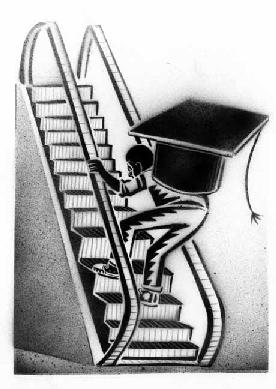
If television and newspaper coverage of the anti-reservation agitation was indulgent and one-sided, the lack of diversity in the newsroom is surely a major culprit.
3 June 2006
The Hindu
Caste matters in the Indian media
Siddharth Varadarajan
MY FIRST brush with caste prejudice in higher education came in 1999, when a group of Dalit students from the University College of Medical Sciences (UCMS) came to see me at my office in another English newspaper where I worked at the time as an editorial writer.
The students were residents of the hostel and had silently borne the brunt of casteist abuse and discrimination for some time. Whether by happenstance or design, the Scheduled Caste students were confined to two floors and not assigned rooms elsewhere in the building. In the dining hall, they were forced by the forward caste majority to sit together at one end. If a Dalit student sat somewhere else, he would be abused. "Bloody shaddu," one of them was told when he sat amidst others by mistake, "you cannot eat with us."
The Dalits put up with this harassment and humiliation because, as one of their parents told them, "you have to become a doctor at any cost." But the abuse eventually turned to violence and when one of the students was badly beaten and another had his room ransacked, they decided to go on a dharna. This is also when they ended up in my office.
After hearing them out, I requested the head of the Metro section to send someone to UCMS to cover the story. I was promised a reporter would be sent soon. Several days went by but nothing appeared. It turned out no reporter was assigned. I tried again, this time going one notch higher in the editorial chain-of-command. Again there was no response. Eventually, I decided to do the story myself. I spent half-a-day at the college, interviewed the college authorities, the students on dharna as well as the general category students. One of them admitted reluctantly to using the slur `shaddu' for the Scheduled Caste students but only as a `pet name'.
I filed the story but it did not appear the next day or the day after. Nobody ever said the story was not interesting or not up to scratch but for some reason space could never be found. The story finally appeared, in a cut and mutilated form, a full month after the Dalit students began their dharna. Needless to say, the travails of the Dalit students at UCMS were not considered newsworthy enough by other newspapers or by any of the news channels.
I narrate this story because of how it contrasts with the extraordinary indulgence the national media showed the nearly month-long anti-reservation agitation of doctors and medical students at AIIMS and other colleges. Despite the 24x7 presence of TV cameras, the daily protests in favour of reservation by AIIMS doctors and staff under the banner of `Medicos Forum for Equal Opportunities' were virtually blacked out. One channel showed the counter-protest last Sunday only when a `citizen journalist' presented it with footage he had shot. Often, it was impossible to separate the breathless TV reporters from the anti-reservation doctors they were reporting about. The insensitive and casteist forms of protest some of them adopted — the `symbolic' sweeping of streets, the shining of shoes, the singing of songs warning OBCs and others to `remember their place' (`apni aukat mein rahio') — were put on air without comment by the channels. Nobody asked what kind of doctors these `meritorious' students were likely to become if they had such contempt towards more than half the population of India. And in a media discourse which routinely reports the protests of the underprivileged only as "traffic jams" and other disruptions to the "normal" life of the city, the suffering of poor patients as a result of the AIIMS strike figured largely as a footnote to the "heroic" struggle the medical students and junior doctors were waging.
Amidst the hysteria induced by the media coverage, no one cared to point out how indulgent the AIIMS authorities themselves were being towards the anti-reservation strike. Earlier this year, when a section of doctors concerned about higher user fees being imposed on poor patients sought to protest, they were warned of dire consequences. Under the terms of a High Court order, no protest or demonstration is permitted within the AIIMS campus. Yet nobody demurred when the anti-reservation students occupied the lawns, put up shamianas and coolers and received the "solidarity" of traders, event managers, and IT employees (whose employers usually ban their own staff from ever striking work.)
While there were honourable exceptions — Outlook, The Hindu , and Frontline among them, as well as individual reporters in some newspapers and channels — would the media's coverage have been more balanced had there been a greater degree of caste diversity in the newsroom and editorial boards of our newspapers and channels? Put another way, in egging the forward caste students on to oppose any extension of reservation, were forward caste editors and reporters reflecting their own personal impatience with the idea of affirmative action? Was the media coverage, then, a display of trade unionism by the privileged?
There are no official or industry statistics but every journalist is aware of the extent to which forward castes dominate the media. When B.N. Uniyal surveyed the scene in 1996, he found not a single Dalit accredited journalist in Delhi. Today, the position is unlikely to be much better. At a recent meeting of Journalists for Democracy, it was reported that an informal survey had found that the number of accredited North Indian OBC journalists in Delhi was under 10. I myself have counted the number of Muslims with accreditation to the Press Information Bureau and they barely cross the three per cent mark. In Chhattisgarh, a recent attempt to send Tribal journalists on a training programme had to be dropped because there was none.
One is not saying the absence of Dalit or OBC journalists is the product of conscious discrimination though that factor cannot be ruled out. But the reality of their absence is something the media must have the courage to acknowledge.
In an ideal world where professionalism is paramount, the caste or religious affiliation of a journalist should not matter. But journalism that has little or no space for the majority of citizens is bound to end up missing out on the complexity of the society it seeks to cover. Story ideas will not be taken up, or if taken up then covered only from a particular perspective. To be sure, many of the negative trends so evident in Indian journalism — the shrinkage of space, the lack of coverage of rural India or of the problems of poor Indians, the episodic, frenetic nature of news, the cult of the Sensex, the preoccupation with trivia and sensationalism — will not be cured by newspapers and TV channels hiring more Dalit, OBC, and Muslim journalists. But greater workplace diversity will certainly infuse a greater degree of vitality in the newsroom as wider varieties of lived experience intrude upon and clash with the largely urban, rich, forward caste Hindu certitudes of the overwhelming majority of journalists.
Far from seeing affirmative action as a threat, India's media houses should look upon the entry of Dalit, Tribal, OBC, and Muslim journalists as an opportunity to broadbase their journalism and make it more professional and authentic. Last year, Ankur and Sarai-CSDS provided teenagers in the now-demolished slum cluster of Nangla Machi with computers. The daily diaries and fly-sheets they produced even as their homes were being brought down by bulldozers is journalism of as high a quality as anyone can find in India today (Interested readers should visit the Nangla Machi site here). Certainly their writings tell us more about the reality of "slum clearance" than any of our TV channels, and in prose that is better than what one normally gets to read in our newspapers.
As the OBC and SC-ST youths who want to become doctors and engineers are saying, merit is not simply a score that can be bought by parents who have the money to invest in the most expensive education for their children. It is also about the talent that all children have within them regardless of their caste or socio-economic background. A society — or an industry like the media — which does not find a way to tap that talent will only end up impoverishing itself. Specifically, media houses must seriously think about starting internships and training programmes for Dalit, Tribal, Muslim, and OBC students interested in becoming journalists.
Reservation, affirmative action, targeted expenditure, and investment are all means of society helping people unlock their inherent talent. As pro-reservation scholars such as Yogendra Yadav, Satish Deshpande, Purshottam Aggarwal, and others have argued, the United Progressive Alliance Government's current approach is not necessarily the best one. But by conducting a shrill campaign and encouraging forward caste students to launch an ill-conceived agitation, the media themselves foreclosed the possibility of a rational debate on what the best way of building an inclusive education system really is. When the dust settles, the media should introspect and ask what they can do to make society as a whole more inclusive. Encouraging conversation and not hectoring is one way. But another is surely to diversify the newsroom by consciously bringing in those sections of society who have hitherto been excluded. There are a million stories out there waiting to be told. If only we allow the storytellers to do the telling.
Subscribe to:
Posts (Atom)