28 September 2006

New economic policy meets old paranoia

From ports to telecoms, Chinese FDI in India is hitting "national security" barrier.

28 September 2006
The Hindu

Chinese FDI hitting `national security' barrier

Siddharth Varadarajan

New Delhi: The numbers involved are small compared with the annual bilateral trade turnover of more than $18 billion but the Indian decision to block Chinese firms from investing in the country's telecommunications and port sectors is beginning to cast a shadow over the fast-growing economic relationship between the two Asian giants.

The issue figured in the two-day meeting of the India-China Eminent Persons Group (EPG) held here on September 25 and 26, with the Chinese side registering its concern over the blacklisting of China-based firms from key Indian projects on grounds of national security.

At stake is the Rs. 4,230-crore Vizhinjam Deep Water International Transhipment Terminal near Thiruvananthapuram, where the Centre in August refused to approve the award of a contract to a consortium consisting of two Chinese companies — Kaidi Electric Power Company and China Harbour Engineering Company — and Zoom Developers of Mumbai. The contract was awarded to the consortium by the erstwhile Congress-led State Government of Oommen Chandy but continues to have all-party support within Kerala following the election of the Left Democratic Front.

With India in the midst of an ambitious port construction and modernisation programme, Chinese firms fear being shut out of a sector whose business opportunities are estimated to be worth upwards of Rs. 60,000 crore.

Earlier this month, the Centre formally advised the Chennai and Mumbai Port Trusts to reject the bid of the Hong Kong-based Hutchison Port Holdings (HPH) for the construction of new container terminals at the two ports. The reason cited: unspecified "security concerns." HPH runs 27 international port operations, besides 14 in China and Hong Kong and was partnering the Indian firm, L&T, in joint bids for Chennai and Mumbai.

"We are not for one moment suggesting that India has no right to decide which sectors of its economy should be open to foreign investment and which should be closed," a highly placed Chinese source told The Hindu. "But if a sector is open, it should be open to all." Under the Government of India's own rules, the source said, ports and telecom were open to FDI. "If you have sectors that are not open, like retail trade, that's OK. I know there is one Chinese firm that is keen to come but it can wait till the day the sector is open. But if a sector is open, it is not fair to block firms from one country."

Excellent relations

Emphasising that the number of cases of exclusion was "very limited" and that the overall economic relationship between India and China was excellent, the official nevertheless said that the selective barring of Chinese firms hurt Beijing's sentiments. "It has a psychological impact." Cumulative Indian FDI in China is around $200 million, while Chinese investments in India were only one-tenth that figure. China, he said, imposed no restrictions on Indian investment and its telecoms and ports sectors were open to all, without exception.

Citing the example of Huawei Technology, a Shenzhen-based telecommunications company with more than 800 employees in Bangalore, the Chinese sources said it was not clear on what grounds the company was being denied clearance to invest $60 million in a proposed new manufacturing unit in India. Huawei has been in India for several years now. "For a company, time is money. They don't know whether they can go ahead or not."

The sources also cited as another dampener the Indian reluctance to grant Chinese businesspersons multiple-entry visas or visas allowing stays of longer than one or three months. "Last year, 350,000 Indians visited China compared with 50,000 Chinese visitors to India. Of course, we should promote more information about India in China so as to encourage visitors but there are also big difficulties on the visa front." If India had a more stable, predictable and transparent visa policy, this would lead to more business opportunities for the two sides, he observed.

21 September 2006

The life and death of a mad Bhopali


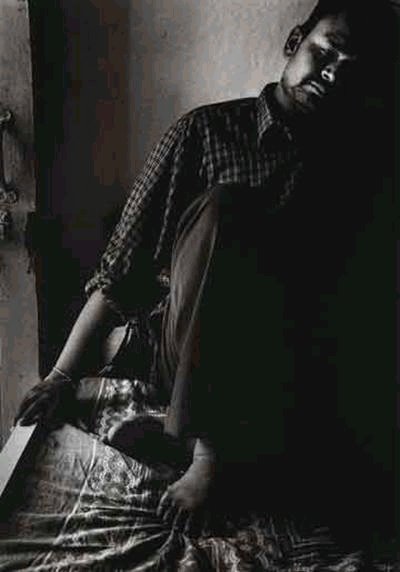
Sunil Kumar, who was 13 at the time the Union Carbide plant in Bhopal unleashed its deadly payload of methyl isocyanate gas over the sleeping city, committed suicide recently. Indra Sinha, who lives in France, has written a remarkable tribute to the dead man.

SUNIL KUMAR, BORN 20 JULY 1971, DIED 26 JULY 2006

SUNIL, FOR MUCH OF YOUR SHORT LIFE, you believed that people were coming to murder you.

'Nonsense,' we, your friends, would try to reassure you. 'The sky's blue. We are all here. You have done no harm to a soul, why should anyone want to harm you?'

'I guess I'm mad,' you'd say, who could see nightmares in sunlight and hear voices bellowing in his head.

Mad? Maybe you were. If so it was hardly surprising.

When you are 13 years old, safely asleep in your house with your parents, three brothers and four sisters, you don't expect to be woken by screams. You don't expect your eyes to be burning and your lungs on fire, nor to discover that the screaming is coming from your mum, or that your dad's yelling 'Quick, everyone, we must get out! Union Carbide's factory has exploded!'

Nothing in your life has prepared you for what you now experience. Your family bundles out into a darkness thickened by something that blinds and burns. All around you terrified people are choking, throwing up, moaning in agony. A woman lies convulsing where yesterday you played marbles. In the panic-stricken rush to escape you are wrenched from your parents and swept away to fall into blackness. You wake on a truck piled with corpses, bundling you off to a funeral pyre because the people who found you thought you were dead.

When you learn of the awful, terrifying, unbelievable thing that has happened, you return to Bhopal to look for your family. Alone and crying, you wander the streets. There are posters up everywhere showing the faces of bodies as yet unidentified. On each brow rests a numbered scrap of paper. This is how you learn that your mum and dad and five of your brothers and sisters are dead. What of the other two? You keep searching, and by a miracle find them, your baby brother of 18 months and your sister of nine, alive. You bring them to the only home you have, the house across the road from the Union Carbide factory.

So at 13, mad Sunil, you are the man of the family, the breadwinner. You find casual jobs as a day labourer and at night wash glasses at a tea stall. You keep your little family going and somehow manage to get yourself to school often enough to pass the 10th standard.

Mad, are you? For the sake of your little brother and sister you refuse to give up or be defeated. You are kind to others and your house becomes a refuge for kids whose parents beat them. You ask, 'Is it better to have parents who beat you, or no parents at all?'

You learn all you can, dear crazy friend, about the disaster that took away your family, and you join with other survivors. You are young but you take the lead. When neither Union Carbide nor the authorities give medical help, it's you who lays the symbolic foundation stone at the pole-and-thatch health centre the survivors themselves start, which will soon be ripped down by the police. You march at every anniversary. Your voice is heard. Then, dear madman, you are sent to the USA to give evidence in the Indian government's case against Union Carbide. You have never flown before and don't care for the food. The government lawyers tell you to be brave and honest and just tell your story.

But neither they nor the government consult you or the other survivors before they do a deal with Union Carbide that makes its share price leap for joy. You are incensed. Off you go on another world tour against injustice, another month of telling your tale to whoever will listen in Ireland, Holland and the UK, which you tour with Bianca Jagger. You're mixing with famous people, but you, poor mad bugger, just want to be home in Bhopal. Instead you find yourself at the Union Carbide AGM in Houston. In the hotel lobby you are handing out copies of an environmental report when you're arrested. Union Carbide, whose gases entered your house and killed your family, charges you with criminal trespass. You're thrown in jail. It takes hundreds of phone calls to the mayor of Houston before you are released without charge. At last you can go home.

The voices in your head grow louder. They torment and taunt. By now you know your mind is playing tricks. You are anxious all the time about being killed, you don't want to sleep. You fall into deep depressions and begin to talk of taking your life. We, your friends, try to joke you out of it, but privately we are worried.

Then, mad Sunil, you find another way to give up this cruel human world. You run off into the jungle to live like a free creature. 'I lay on my belly and drank from a ditch like a dog,' you tell us when our search parties finally find you.

You cannot find work, but when we open the free Sambhavna Clinic in Bhopal you instantly volunteer. You're penniless, but refuse to be paid for your work.
We soon learn that you have a phenomenal memory. Every day you scan the papers for Bhopal gas disaster stories and years later can recall the slightest details. You go to work in the clinic's medicinal garden and for a time your voices abate. Such stories they tell of you, like how one day you pissed in a cobra's hole calling, 'Come out, ohé cobra maharaj!' And when the enraged reptile erupted from its defiled home, head raised and hood spread, you sprinted 400 yards to the tamarind tree and never pissed in a snake's hole again.

Ah, Sunil brother, the cool and beauty of the herb garden were not enough to keep the demons from you. Again you tried to take your life. You drank rat poison and after we'd had your stomach pumped, you rang the bastard who through his tears is writing this and said, 'Hey guess what, it tasted sweet!'

Dear Sunil, we did our best to get help for you, but there was little help to be had. Although some 60,000 Bhopal survivors suffer from depression, anxiety, memory loss, panic attacks, insomnia and a host of other psychological afflictions, the government refuses to accept mental health problems as a consequence of the gas disaster. People with mental problems get no compensation or treatment, in fact they are ridiculed and dismissed. Today, in all Bhopal's hospitals, there is only one part-time psychiatric consultant.

Sunil, when you were still a child, you told a journalist that those responsible for the death and suffering in Bhopal should be hanged. Never have they even been brought to trial and in the end, the person who was hanged was you. We found you in your flat, dangling from the ceiling fan. You left a note saying that when you made the decision to end your life you were completely in your senses. You had bathed and dressed in clean clothes. You, who rarely wore t-shirts, had put one on especially for this final farewell. It said NO MORE BHOPALS.

Sunil, we take this as a message from you to the uncaring world. We think you wanted people to know how horror, illness and grief continue to ruin lives in this city, twenty-two years after the night of terror.

If you were still alive, we could tell you that on September 27, 2006 your friends all over the world will plant trees in your memory. The trees will grow and flower for you all over India, all over Asia, in Africa, in the UK, France, in USA and many other places. We are planting two trees for you : one next to the people’s museum on the disaster “Yaad – e- Haadasaa” which you inaugurated in December 2005 and one in the Sambhavna herbal garden where you volunteered, but not too near the cobra's hole.

Also we could tell you that the Sambhavna Trust Clinic will open a new mental health department with full-time counsellors and psychiatrists, so that others will never again have as little help as you had.

Sunil, you thought you were mad, but a world without justice is madder. At least you are now safe. We scattered your ashes in the flooded Narmada river, and for your funeral feast we followed your precise instructions: quarter bottle of Goa brand whisky, mutton curry from Dulare's hotel near the bus stand, betel nut, tobacco and all. Were you there with us? If not, who was it that in the darkness chuckled, 'I am no longer afraid of being killed – I am already dead and fearless.'

Please plant a tree in memory of Sunil on September 27, 2006.
20 September 2006

In Nepal, time to check the dangerous drift

The road map for the formation of an interim government with Maoist participation is more or less in place. But powerful forces are intervening to derail the process.

20 September 2006
The Hindu

In Nepal, time to check the dangerous drift

Siddharth Varadarajan

AFTER MOVING forward quickly and purposefully towards the establishment of peace and democracy these past few months, Nepal's political parties have begun to stumble in the final crucial laps with a needless controversy over the disposition of Maoist arms.

At stake is the formation of an interim government consisting of the ruling Seven Party Alliance (SPA) and the Communist Party of Nepal (Maoist), which will have the mandate of conducting elections to a Constituent Assembly. The interim government will also have to administer the country till the formation of a new government elected on the basis of the Constitution which emerges from the Assembly's deliberations.

While it is the Constituent Assembly that will largely determine the political contours of the future Nepal, the credibility and structure of the interim government is equally important if the entire process is to be seen through to completion. As such, the full and unreserved participation of the Maoists and all other parties is essential. Indeed, the historic eight-point agreement, signed by Prime Minister Girija Prasad Koirala and CPN (M) leader Prachanda on June 16 explicitly commits the SPA and the Maoists to the establishment of an interim government on the basis of an interim constitution. Although that agreement explicitly provides for the United Nations to "help in the management of arms and armed personnel of both the sides and to monitor it in order to conduct elections for the Constituent Assembly in a free and fair manner," nowhere does it say that the surrender of arms by the Maoists is a precondition for the interim arrangement to go forward.

There is a good reason for this. By foregrounding the necessity of a political settlement between the SPA and the Maoists — through the instruments of an interim government and Constituent Assembly — the June agreement makes it easier for the eventual settlement of the arms question. As a senior SPA leader told me during a visit to Delhi in July, insisting on the surrender of arms before a political settlement was like putting the cart before the horse. "Let us say they give up their weapons and then we fail to reach a political solution. It will not be difficult for them to pick up the gun again." As for ensuring a level playing field during the elections — a legitimate demand of the SPA, whose cadres might otherwise be intimidated by Maoist weapons — this would be taken care of by the U.N. monitoring of both Nepal Army soldiers and Maoist combatants.

As the prospects for durable political change strengthen, however, the old order and its backers have begun reasserting themselves. For example, hardly a day goes by without James F. Moriarty, the U.S. Ambassador to Nepal, warning the parties not to accept Maoist participation in government without disarmament first. So brazen has been his intervention in Nepal's internal affairs that a number of MPs have called for his expulsion from the country. Also involved in this anti-Maoist scare campaign are Army officers who have not yet reconciled themselves to the loss of the "Royal" prefix from the name of the Nepal Army.

After the eight-point agreement was signed, the first hitch arose when the Koirala Government — presumably under pressure from the U.S. — wrote to the U.N. in early July asking for help in the management and decommissioning of Maoist arms. This "misunderstanding" was eventually resolved with Mr. Koirala and Mr. Prachanda writing identical letters to Secretary-General Kofi Annan on August 9 inviting the U.N. to "deploy qualified civilian personnel to monitor and verify the confinement of CPN-M combatants and their weapons within designated cantonment areas" as well as "[m]onitor the Nepal Army to ensure that it remains in its barracks and its weapons are not used for or against any side."

The letters also requested the U.N. to continue its human rights monitoring through the Office of the High Commissioner for Human Rights in Nepal currently headed by Ian Martin, assist the monitoring of the `Code of Conduct' during the Ceasefire, and "provide election observation for the election of the Constituent Assembly in consultation with the parties." Nowhere do the letters speak of decommissioning.

At a press conference in Kathmandu earlier this week, Mr. Martin acknowledged there was some confusion over the sequencing of what he called "arms management" issues and political issues. By this he meant the precise moment when the U.N. will step in to monitor the Nepal Army and Maoist combatants, in particular whether the monitoring would kick in before or after the formation of the interim government. While this sequencing is a matter for the SPA and Maoist leadership to sort out, the laying down of weapons by the Maoists is a diversionary question that will only undermine the prospects of the peaceful political transition both sides say they are committed to.

When Prime Minister Koirala and Mr. Prachanda get together later this month for their summit meeting, they must put an end to the dangerous drift that has set in on the formation of an interim government. The Interim Constitution Drafting Committee (ICDC) has done a commendable job in preparing a draft covenant to oversee the transitional period, including the formation of an interim government and the holding of elections to a Constituent Assembly. No doubt ambiguities abound, not least about how the issue of the monarchy is to be resolved, but none of these is intractable. With statesmanship and patience, which both the SPA and the Maoists have already displayed in abundance, the last remaining hurdles can be overcome.

India's role

To the extent to which Washington has muddied the waters with its strident anti-Maoist campaign, however, India needs to counsel the SPA to stick to the path spelt out in the eight-point agreement of June 2006.

The inexplicable re-arrest in Chennai on Monday of Nepali Maoist leader C.P. Gajurel suggests the Manmohan Singh Government has still not realised the fragile nature of the transition Nepal is going through.

The Indian legal system can be chaotic and unpredictable but surely the Government of India knows how to negotiate its way through it.

In 2000, New Delhi pushed through the release of Masood Azhar. Unlike Azhar, who went on to found the Jaish-e-Mohammed, Mr. Gajurel is a political leader who has never been charged with a violent offence and who means India and its people no harm. Ensuring his swift release — as well as his speedy, safe and honourable return to Kathmandu — would not only be the right thing to do but it would also send an important message: that India supports the formation of an interim government with the participation of all of Nepal's political parties, including the Maoists, and believes such a government offers Nepal its best chance for peaceful democratic change.

© Copyright 2000 - 2006 The Hindu

09 September 2006

India and the quest for world order

The Manmohan Singh Government's foreign policy may or may not be independent. What is certain is that it is not effective or imaginative.

9 September 2006
The Hindu

India and the quest for world order

Siddharth Varadarajan

IN INTERNATIONAL affairs, minor details often tell us more about the big picture than ponderous declarations and weighty documents. Next week, Prime Minister Manmohan Singh will travel to Brasilia and Havana for important meetings aimed at cementing India's trilateral relationship with Brazil and South Africa as well as its role in the Non-Aligned Movement. No doubt the visit will be a huge success. But on the long flight back home, where do you think Dr. Singh's aeroplane will make a fuel halt? Not Africa, which lies bang in the middle and which the Ministry of External Affairs and a large number of Indian companies have assiduously been cultivating, but Frankfurt.

Frankfurt? In the old days, the joke among wags was that Indian politicians liked a Zurich stopover to check up on their numbered accounts. Fortunately, Dr. Singh has no such accounts. Unfortunately, what he also doesn't have are advisors with imagination.

More than a dozen African countries lie on a straight line from Cuba to India and any one of them would have been more than willing to host the Indian Prime Minister for a brief unofficial or even official visit. Some of these countries, like oil-rich Chad, for example, have a lot of fuel and are even looking for new partners after having just thrown out Chevron-Texaco and Petronas. Sudan, too, has oil, some of which India has already invested in. Then there is Senegal, where the Tatas have a major presence and where Indian public sector companies are expected to play a major role in renovating the country's railways.

These are all countries where India is engaged diplomatically and economically. The only element missing is political, which could help to introduce a step change in the relationship. Compare the Indian approach with that of the Chinese. Hu Jintao, the President of China, has been in power for just a year longer than Dr. Singh. But he has already visited Africa twice on extended tours compared to the Indian Prime Minister's score of zero.

As for Latin America, the last time an Indian Prime Minister paid a bilateral visit there was in 1968, when Indira Gandhi travelled to Chile and Argentina. Her planned trip to Peru was cancelled because of General Velasco Alvarado's coup d'etat, and the experience evidently proved so traumatic for South Block that the entire continent remained terra incognita for subsequent Indian heads of government for the next 38 years.

Apart from the inexplicable and baffling absence of a Foreign Minister, Indian diplomacy suffers today from a combination of three ailments. The first is Eurocentrism, which looks at globalisation largely along predictable global axes, the second, a certain arrogance induced by the country's high growth rates and rising international profile, and third, diffidence in dealing with major questions of war and peace. This results in an over-eagerness to "engage" existing centres of global power at the highest levels in locales as distant as Gleneagles or Vladivostok but to avoid political engagements elsewhere.

NAM as restraining factor

Given the emerging crises and conflicts in its extended neighbourhood, however, it is not clear how long India can afford to remain aloof. And the NAM summit in Havana provides an ideal opportunity for India to signal its eagerness to re-engage the countries of Asia, Africa, and Latin America in a partnership that could restore a sense of balance and proportion in a world under siege from a variety of destabilising influences.

But in order to understand the relevance of NAM today, it is important to recognise the paradoxical truth that the erstwhile bipolar division of the world was only incidental to the project of Non-Alignment. During the Cold War, NAM's utility lay in restraining impulses which its members felt were most negative in the international system, namely the use of military and economic power as an instrument of domination by the former colonial powers, the United States, and, to a lesser extent, the Soviet Union. The bipolar division helped NAM achieve this goal but was not as central to the Non-Aligned project as many believed it to be at the time. At the same time, it must also be conceded that NAM was not necessarily very successful in playing this restraining role since many of its members ended up being attacked by the superpowers.

In contrast to the certitudes of the Cold War era, the world order today is in a state of flux. While it is difficult neatly to characterise the international system as "unipolar," "multipolar" or something in between, some understanding of the concrete nature of world order can be gleaned by examining the multiple points of disorder that have emerged in recent years. Among these are the crises caused by the Anglo-American invasions of Iraq and Afghanistan, the continuing Israeli occupation of Palestinian and Arab land, the recent Israeli aggression against Lebanon, the fast-spiralling dispute over Iran's civilian nuclear programme, which could lead to a huge increase in oil prices as well as war, the humanitarian crisis in Darfur in the Sudan, and the nuclear crisis in the Korean peninsula.

There are other points of disorder elsewhere — the conflict in Sri Lanka could easily become one of international proportion — but the ones enumerated above are surely among the most serious. All except Darfur lie in Asia. All of them have the potential of leading to war, with serious consequences for the national security and interests of India. But in each and every case, India — a major Asian power which sits at the very centre of continent — is not involved in efforts to try and find peaceful solutions. For Iran, there is the P5+1, for Korea the six-party talks, and in the Middle East peace process the Quartet. In Afghanistan, NATO is running the show while the U.S. occupation of Iraq shows no signs of ending. In Lebanon, India, which has a major troop contingent deployed as part of UNIFIL, chose not to get involved in the international discussions about the U.N. force's new mandate.

The issue at stake is not Asian pride or Indian delusions of grandeur but the sobering fact that the dominant approach to each of these crises is not only not working but is actually increasing the likelihood of conflict and war and fuelling the growth of terrorism. As such, India has a vital interest in restraining the exercise of U.S. power in the region.

Well before U.S. troops invaded Iraq in 2003, the whole world knew the tragic denouement that would follow. Similarly, if the U.S. insists on getting the United Nations Security Council to impose sanctions on Iran, the crisis will inevitably escalate. Just as surely as night follows day, the level of sanctions will be increased and Iran will eventually announce its withdrawal from the Nuclear Non-proliferation Treaty, as it is its sovereign right to do. At that point, Iran will either bite the bullet and be compelled to develop a nuclear weapon. Or will be subjected to aerial bombardment by the U.S., with disastrous consequences for the region.

Averting Iran endgame

More than the debate over the independent nature of India's foreign policy, it is this inability and unwillingness to involve ourselves in problem-solving that is worrying. The Manmohan Singh Government's foreign policy may or not be independent. But when it comes to being proactive in forestalling the danger of new wars in its neighbourhood, India is neither effective nor imaginative.

For example, whatever view one takes of India's vote against Iran at the International Atomic Energy Agency last September, surely the challenge confronting New Delhi today is to find ways of heading off this terrible ending that is all-too-predictable. As a country with vital interests in a peaceful settlement of the dispute, India cannot confine itself to making ritualistic statements about the importance of dialogue and negotiation.

Similarly on Lebanon, while it is laudable that Parliament passed a resolution condemning Israel's aggression, India did not leverage its much-vaunted friendship with Tel Aviv to counsel Prime Minister Ehud Olmert that the path he was taking would only make his country less secure. Mr. Olmert may have rejected any advice proffered by an Indian high-level envoy or even refused to meet the bearer of such tidings but India would have succeeded in sending a powerful signal to the region that there are more players than just the Quartet.

It was precisely this calculation that led the Foreign Ministers of India, Brazil, and South Africa (IBSA) to declare in March 2004 that they intended to insert themselves in the Middle East peace process alongside the Quartet. Sadly, the declaration was never followed up. Prime Minister Singh did well to appoint a special envoy for West Asia last year. But it is also a fact that the government grounded the envoy for several months for fear that a visit to the region would lead to meetings with Hamas and Hizbollah, which in turn would make the legislative passage of the Indo-U.S. nuclear agreement in Washington more difficult.

During the first-ever IBSA summit to be held in Brasilia next week, Dr. Singh must seek to turn the trilateral forum into a ginger group that can energise NAM to once again play the role of a moderating and restraining factor in international politics. And upon his return, he must appoint on a priority basis a full-fledged Minister for External Affairs, the absence of whom severely limits the effectiveness of Indian diplomacy.