The Manmohan Singh government's `bold' new line on nuclear non-proliferation is full of sound and fury but signifies nothing other than the loss of our official capacity to analyse the world rationally and independently.
28 October 2005
The Hindu
India submits to the Bush doctrine?
Siddharth Varadarajan
DESPITE THE fiasco over the non-discovery of weapons of mass destruction in Iraq, one of the enduring foreign policy successes of the Bush administration has been the diversion of international concern about nuclear weapons away from America's own stockpile, doctrine, and force posture and towards the problem of `rogue' proliferation. Within this discourse, North Korea, which says it has nuclear weapons, and Iran, which Washington insists is actively pursuing a weapons programme, pose a grave and imminent threat to international security, while the U.S. efforts to militarise space and enhance the flexibility and usability of its nuclear arsenal through the development of new kinds of weapons such as 'mini-nukes' and bunker busters pose no danger to the world at all.
Central to this approach is the notion that the new nuclear "threats" must be dealt with not through rule-based, multilateral institutions such as the Conference on Disarmament but through ad hoc, U.S.-led coalitions that arrogate to themselves the right both to draw up new rules and regulations and to enforce them with military means if necessary. Largely due to the resistance of China and South Korea, Washington was forced to drop its reliance on the threat of force against North Korea and work towards a negotiated settlement of the Korean nuclear question. But Iran still remains firmly in the Bush administration's sights.
Until now, the self-serving reduction of the problem of proliferation to one of the "horizontal" spread of weapons alone (rather than of "vertical" or qualitative enhancement as well) has tended to be accepted only by Washington's closest allies and friends. But with the Indo-U.S. strategic partnership entering a decisive new phase, the Indian foreign office has become the latest convert to this cause. Earlier this week, Foreign Secretary Shyam Saran delivered a major lecture entitled `Nuclear Non-Proliferation and International Security,' which attempts to lay out the new Indian perspective on the subject.
The lecture intended to answer the domestic critics of the Government's vote against Iran at the September 24 International Atomic Energy Agency meeting by embedding that inexplicable decision in a supposedly wider policy framework. Mr. Saran also sought to reassure U.S. legislators that India was a `genuine' believer in the Bush doctrine on non-proliferation and could be relied upon to continue extending its "support" to other "national and trans-national efforts" like the controversial Proliferation Security Initiative provided the July 18 Indo-U.S. nuclear deal comes through.
Mr. Saran says a "new global consensus on non-proliferation is called for," which can take into account "new challenges." This new global consensus "would have to be based on new and more rigorous standards being observed in export controls on sensitive technologies" such as those involved in reprocessing and enrichment. While one can understand the Government's eagerness to reassure the U.S. that it is deadly serious about export control, why should this be the only area where a new "global consensus" is required? Surely a global consensus on the prevention of an arms race in outer space is equally important. As is a consensus on, say, a first-use only doctrine rather than the frighteningly flexible use doctrine the U.S. military subscribes to.
Had Mr. Saran sought to analyse the problem of non-proliferation and international security from the perspective of international strategic realities, he would have pointed out that Washington's missile defence programme will lead to a new and more deadly missile race. Countries targeted by U.S. nuclear weapons would seek to nullify the advantage missile defence will confer on their principal adversary. He would also have pointed out how the doctrines of pre-emptive war and `regime change' have vitiated the security environment to such an extent that many countries are once again looking at nuclear weapons as a means of state survival. Even if horizontal proliferation were its sole concern, a state that is serious about, say, the danger of Iran going nuclear would counsel both Teheran to respect its international obligations and the U.S. to abandon the path of confrontation, sanctions, and regime change.
An afterthought
Of course, India knows the charges against Iran are trumped up — it admitted as much in its convoluted "explanation of vote" at the IAEA last month — and only went along with the anti-Teheran resolution because of pressure from the U.S. As an afterthought now, Mr. Saran has introduced a new element to justify that vote — the need to put A.Q. Khan in the dock. "With respect to the Iran nuclear issue ... we see no reason why there should be an insistence on personal interviews with Iranian scientists but an exception granted to a man who has been accused of running a global `nuclear Wal-Mart'." Had India raised this point during the IAEA debate on Iran, it might have carried more conviction. Today, it is an idle fantasy to believe that the Bush administration is seriously interested in getting at Dr. Khan or that the anti-Iran vote will lead to a chain of events in which the Pakistani nuclear establishment — and military — will stand exposed.
Towards the end of his speech, Mr. Saran makes an observation on the proposed separation of military and civilian nuclear facilities that suggests it is not just our national capacity for rational analysis that is being compromised. "It makes no sense," the Foreign Secretary declared, "for India to deliberately keep some of its civilian facilities out of its declaration for safeguards purposes." If Mr. Saran's words are followed through, all civilian nuclear facilities — including the prototype fast breeder reactor (PFBR) and other R&D facilities — will be offered for IAEA safeguards. This is something Anil Kakodkar, chairman of the Department of Atomic Energy, had ruled out in an interview to The Hindu and Frontline in August. Mr. Saran's statement would also appear to contradict the suggestion made by Prime Minister Manmohan Singh in Parliament on July 29 that the identification and separation of military and civilian facilities would be a "phased action" that will be "based solely on our own duly calibrated national decisions" and would be "taken at appropriate points in time." The Prime Minister's use of the plural — "points in time," "calibrated national decisions" — clearly indicates a separation process that would involve deliberately keeping some civilian facilities out of the safeguards declaration for some finite period of time.
Has the official line on separation changed since July 29? Is Mr .Saran's assessment on the ease with which all civilian facilities can be placed under safeguards correct, or is Dr. Kakodkar's plea that the PFBR and other R&D facilities must be kept out? As time elapses, it is becoming increasingly clear that the separation envisaged has to be a total, irrevocable and one-shot affair. Until now, both sides have been speaking about the need for New Delhi and Washington to fulfil their obligations under the July 18 agreement in tandem. Today, there is no room for any ambiguity: it is India that has to make the first move. "[B]efore we actually present any agreement to the Congress," U.S. State Department spokesman Sean McCormack said on October 26, "India needs to take several steps, including the separation of their civilian and military nuclear programs, so these are preconditions for us actually presenting this agreement to the Congress."
© Copyright 2000 - 2005 The Hindu
28 October 2005


21 October 2005
Indo-U.S. deal: Negotiating the nuclear fine print
India needs to play its hand carefully on sequencing, separation, and safeguards.
21 October 2005
The Hindu
India-U.S. deal: Negotiating the nuclear fine print
Siddharth Varadarajan
THE JULY 18 nuclear agreement between India and the United States represented a dramatic reversal of Washington's proliferation policies towards New Delhi. Dropping its insistence on India capping or reversing its nuclear weapons programme, the Bush administration declared itself willing to engage in nuclear commerce with a nation whose growing strategic significance it was keen to harness. In the neocon worldview, India's nuclear weapons are not a problem for American power but an asset in the larger game of tethering China and preventing the emergence of an Asian security architecture that might exclude the U.S. Central to this project is the prevention of pan-Asian energy arrangements built around pipelines linking Central Asia, Iran, Pakistan, India, Myanmar, and China. Allowing India access to international civil nuclear technology and supplies flows directly from these imperatives.
In exchange, India committed itself to a number of "voluntary" steps aimed at bringing its nuclear industry under some measure of international scrutiny. Its nuclear weapons programme was excluded from the purview of the July 18 agreement. At the same time, the U.S. was confident that the separation of military and civil nuclear facilities and the placing of the latter under International Atomic Energy Agency safeguards would help keep the Indian arsenal within the limits needed to `balance' China and ensure it did not develop into a more open-ended enterprise with global implications. Ideally, the U.S. would also like to influence India's choice of civilian nuclear technology, moving it away from its indigenous plutonium-thorium based three-stage programme towards light water reactors running on "proliferation-risk free" low enriched uranium.
Though the Government insists no hidden conditions were attached to the agreement, India was left in no doubt that its strategic instincts and plans must henceforth be curbed or, at the very least, dovetailed to suit the logic of its alliance with America. The shift in Indian behaviour this has induced is palpable. The Manmohan Singh Government's imprudent decision to support the European-U.S. resolution against Iran at the IAEA is the most visible marker of this change but there are other straws in the wind. All plans of looking at Iran as a land and energy bridge to Central Asia and Afghanistan are on hold; officials (and analysts) who once were excited by the prospect of an Iran-India pipeline have since turned turtle; the India-Brazil-South Africa forum is being seen as a distraction rather than a grouping with tremendous political and economic significance; relations with China are on a steady course but the more India gets sucked into the vortex it is entering, there will be dissonance here too.
If this is the political price India is paying for American nuclear assistance, there are also significant technological and financial costs to be borne as the country moves to implement the commitments made in the July 18 agreement. This weekend, the working group headed by Foreign Secretary Shyam Saran and Undersecretary of State Nicholas Burns will meet in New Delhi to evolve the timeframe and specific contours of the commitments to be implemented. The U.S. is committed to changing its domestic laws governing nuclear exports and working to bring the Nuclear Suppliers Group on board. India's commitments are mainly to effect a civil-military separation and accept the IAEA safeguards. However, the first question that has to be resolved in the Saran-Burns meeting is sequencing.
The American side has already spelt out its views. By the time President George W. Bush comes to Delhi in February 2006, "India should have identified the facilities in terms of the separation of civilian and military facilities and activities," Undersecretary of State for Nonproliferation Robert Joseph told a Congressional hearing on September 8. "It should have begun in-depth consultations with the IAEA for the application of safeguards on the civilian side. It should have also begun in-depth discussions with the IAEA on the Additional Protocol." Mr. Burns added that India had been told that the U.S. wanted "a date by which some of the actions will be taken ... And in turn, the Government of India will expect that we will be working in the NSG and with Congress to identify a way forward." (emphasis added)
In other words, by the time India has come up with a plan for separation and is already having "in-depth discussions" with the IAEA, the U.S. would still only be working on identifying a way forward. Assuming that way forward is identified promptly, will U.S. law be changed before India's safeguards agreement with the IAEA comes into force? Prime Minister Manmohan Singh told Parliament on July 29 that before India subjects itself to international scrutiny "we will ensure that all restrictions have been lifted." Careful calibration is required to ensure that India's safeguards obligations kick in after Congress amends the U.S. Atomic Energy Act without riders. The ease with which a handful of Congressmen were able to dragoon India on the Iran issue has given confidence to the nonproliferation lobby on and around the Hill, which is still seeking to make U.S. nuclear cooperation conditional on additional concessions.
Apart from sequencing, separation too is likely to be a complicated affair and one in which the U.S. will try and push the envelope as far as it can. Though India insists the identification and separation of military and civilian nuclear facilities is its decision alone, the U.S. is insisting on having a say. The Bush administration is keen to ensure that the separation is "both credible and defensible from a non-proliferation perspective," Mr. Burns told the Congressional panel last month. "The U.S. government has to be able to see it happen and understand what is happening and agree on what is happening." (emphasis added)
The issue is not an academic one. Though the Indian atomic establishment believes there is little difficulty in accepting safeguards at many facilities, there are some non-military facilities and activities where it would not like to let the IAEA in. Anil Kakodkar, chairman of the Atomic Energy Commission, has been quite blunt about this. In an interview to Frontline in August he said, "We are not going to put under safeguards any research and development programme." Asked explicitly about safeguards for the Prototype Fast Breeder Reactor (PFBR) under construction at Kalpakkam and other FBRs, Dr. Kakodkar replied: "No, the PFBR will not come. The PFBR is a prototype. Why should it go under safeguards? When technology becomes mature, it is a different story." He added that the IGCAR at Kalpakkam was an R&D centre, implying that it too would remain unsafeguarded. Dr. Kakodkar also emphasised that costs would be another factor in identifying what is civilian.
It is reasonable to infer that the State Department and the DAE have a vastly different view of the civil-military separation. What stand the Ministry of External Affairs takes remains to be seen. Apart from the PFBR, which Washington would ideally like to see on the civilian facilities list, U.S. experts are also believed to be keen to ensure India's present and future detritiation facilities — where heavy water is processed and tritium gas produced — are safeguarded since tritium is the hydrogen that gives a lethal boost to the explosive force of `hydrogen' bombs.
The irony here is that the U.S. produces its tritium at civilian facilities. For decades, the U.S. has been the only nuclear weapon state to have effected a civil-military separation more or less successfully thanks to billions of dollars spent in developing extensive stand-alone facilities to service its nuclear stockpile. However, in 2003 formal separation in the U.S. came to an end when the Tennessee Valley Authority's commercial Watts Bar Nuclear Plant started producing both tritium for nuclear weapons and electricity for civilians. The Department of Energy (which oversees the U.S. military nuclear programme) stopped making tritium in 1988 when its reactors at Savannah River were shut down for safety reasons. Since the gas has a short lifespan, the U.S. administration authorised the use of civilian facilities as a cheaper option to the establishment of a DoE-run dedicated extraction facility.
In other words, even as it expects India to separate its civilian and military nuclear activities, the U.S. is turning its back on separation because of the costs involved. In any case, apart from the U.S. and to a lesser extent Britain, none of the other recognised nuclear weapons states practise any serious separation. French civilian power reactors like the Chinon, Bugey and St-Laurent series are believed to have produced as much as 2000 kg of military plutonium for France's nuclear weapon stockpile over the years. In China, the China National Nuclear Corporation oversees military and civilian nuclear activities and tends to run them as an integrated whole. In Russia, Oleg Bukharin tells us in Science and Global Security, 1994, "the military and civilian nuclear fuel cycles are highly integrated ... at the level of both uranium flows and individual facilities."
The Manmohan Singh Government may still be right in deciding separation is the best way forward for India. Unfortunately, no serious attempt was made to work out the financial and ecological costs that might be involved before the July 18 commitment to separate was made. Now it must not allow itself to be railroaded into a separation plan drawn up to address Washington's concerns and interests.
© Copyright 2000 - 2005 The Hindu
21 October 2005
The Hindu
India-U.S. deal: Negotiating the nuclear fine print
Siddharth Varadarajan
THE JULY 18 nuclear agreement between India and the United States represented a dramatic reversal of Washington's proliferation policies towards New Delhi. Dropping its insistence on India capping or reversing its nuclear weapons programme, the Bush administration declared itself willing to engage in nuclear commerce with a nation whose growing strategic significance it was keen to harness. In the neocon worldview, India's nuclear weapons are not a problem for American power but an asset in the larger game of tethering China and preventing the emergence of an Asian security architecture that might exclude the U.S. Central to this project is the prevention of pan-Asian energy arrangements built around pipelines linking Central Asia, Iran, Pakistan, India, Myanmar, and China. Allowing India access to international civil nuclear technology and supplies flows directly from these imperatives.
In exchange, India committed itself to a number of "voluntary" steps aimed at bringing its nuclear industry under some measure of international scrutiny. Its nuclear weapons programme was excluded from the purview of the July 18 agreement. At the same time, the U.S. was confident that the separation of military and civil nuclear facilities and the placing of the latter under International Atomic Energy Agency safeguards would help keep the Indian arsenal within the limits needed to `balance' China and ensure it did not develop into a more open-ended enterprise with global implications. Ideally, the U.S. would also like to influence India's choice of civilian nuclear technology, moving it away from its indigenous plutonium-thorium based three-stage programme towards light water reactors running on "proliferation-risk free" low enriched uranium.
Though the Government insists no hidden conditions were attached to the agreement, India was left in no doubt that its strategic instincts and plans must henceforth be curbed or, at the very least, dovetailed to suit the logic of its alliance with America. The shift in Indian behaviour this has induced is palpable. The Manmohan Singh Government's imprudent decision to support the European-U.S. resolution against Iran at the IAEA is the most visible marker of this change but there are other straws in the wind. All plans of looking at Iran as a land and energy bridge to Central Asia and Afghanistan are on hold; officials (and analysts) who once were excited by the prospect of an Iran-India pipeline have since turned turtle; the India-Brazil-South Africa forum is being seen as a distraction rather than a grouping with tremendous political and economic significance; relations with China are on a steady course but the more India gets sucked into the vortex it is entering, there will be dissonance here too.
If this is the political price India is paying for American nuclear assistance, there are also significant technological and financial costs to be borne as the country moves to implement the commitments made in the July 18 agreement. This weekend, the working group headed by Foreign Secretary Shyam Saran and Undersecretary of State Nicholas Burns will meet in New Delhi to evolve the timeframe and specific contours of the commitments to be implemented. The U.S. is committed to changing its domestic laws governing nuclear exports and working to bring the Nuclear Suppliers Group on board. India's commitments are mainly to effect a civil-military separation and accept the IAEA safeguards. However, the first question that has to be resolved in the Saran-Burns meeting is sequencing.
The American side has already spelt out its views. By the time President George W. Bush comes to Delhi in February 2006, "India should have identified the facilities in terms of the separation of civilian and military facilities and activities," Undersecretary of State for Nonproliferation Robert Joseph told a Congressional hearing on September 8. "It should have begun in-depth consultations with the IAEA for the application of safeguards on the civilian side. It should have also begun in-depth discussions with the IAEA on the Additional Protocol." Mr. Burns added that India had been told that the U.S. wanted "a date by which some of the actions will be taken ... And in turn, the Government of India will expect that we will be working in the NSG and with Congress to identify a way forward." (emphasis added)
In other words, by the time India has come up with a plan for separation and is already having "in-depth discussions" with the IAEA, the U.S. would still only be working on identifying a way forward. Assuming that way forward is identified promptly, will U.S. law be changed before India's safeguards agreement with the IAEA comes into force? Prime Minister Manmohan Singh told Parliament on July 29 that before India subjects itself to international scrutiny "we will ensure that all restrictions have been lifted." Careful calibration is required to ensure that India's safeguards obligations kick in after Congress amends the U.S. Atomic Energy Act without riders. The ease with which a handful of Congressmen were able to dragoon India on the Iran issue has given confidence to the nonproliferation lobby on and around the Hill, which is still seeking to make U.S. nuclear cooperation conditional on additional concessions.
Apart from sequencing, separation too is likely to be a complicated affair and one in which the U.S. will try and push the envelope as far as it can. Though India insists the identification and separation of military and civilian nuclear facilities is its decision alone, the U.S. is insisting on having a say. The Bush administration is keen to ensure that the separation is "both credible and defensible from a non-proliferation perspective," Mr. Burns told the Congressional panel last month. "The U.S. government has to be able to see it happen and understand what is happening and agree on what is happening." (emphasis added)
The issue is not an academic one. Though the Indian atomic establishment believes there is little difficulty in accepting safeguards at many facilities, there are some non-military facilities and activities where it would not like to let the IAEA in. Anil Kakodkar, chairman of the Atomic Energy Commission, has been quite blunt about this. In an interview to Frontline in August he said, "We are not going to put under safeguards any research and development programme." Asked explicitly about safeguards for the Prototype Fast Breeder Reactor (PFBR) under construction at Kalpakkam and other FBRs, Dr. Kakodkar replied: "No, the PFBR will not come. The PFBR is a prototype. Why should it go under safeguards? When technology becomes mature, it is a different story." He added that the IGCAR at Kalpakkam was an R&D centre, implying that it too would remain unsafeguarded. Dr. Kakodkar also emphasised that costs would be another factor in identifying what is civilian.
It is reasonable to infer that the State Department and the DAE have a vastly different view of the civil-military separation. What stand the Ministry of External Affairs takes remains to be seen. Apart from the PFBR, which Washington would ideally like to see on the civilian facilities list, U.S. experts are also believed to be keen to ensure India's present and future detritiation facilities — where heavy water is processed and tritium gas produced — are safeguarded since tritium is the hydrogen that gives a lethal boost to the explosive force of `hydrogen' bombs.
The irony here is that the U.S. produces its tritium at civilian facilities. For decades, the U.S. has been the only nuclear weapon state to have effected a civil-military separation more or less successfully thanks to billions of dollars spent in developing extensive stand-alone facilities to service its nuclear stockpile. However, in 2003 formal separation in the U.S. came to an end when the Tennessee Valley Authority's commercial Watts Bar Nuclear Plant started producing both tritium for nuclear weapons and electricity for civilians. The Department of Energy (which oversees the U.S. military nuclear programme) stopped making tritium in 1988 when its reactors at Savannah River were shut down for safety reasons. Since the gas has a short lifespan, the U.S. administration authorised the use of civilian facilities as a cheaper option to the establishment of a DoE-run dedicated extraction facility.
In other words, even as it expects India to separate its civilian and military nuclear activities, the U.S. is turning its back on separation because of the costs involved. In any case, apart from the U.S. and to a lesser extent Britain, none of the other recognised nuclear weapons states practise any serious separation. French civilian power reactors like the Chinon, Bugey and St-Laurent series are believed to have produced as much as 2000 kg of military plutonium for France's nuclear weapon stockpile over the years. In China, the China National Nuclear Corporation oversees military and civilian nuclear activities and tends to run them as an integrated whole. In Russia, Oleg Bukharin tells us in Science and Global Security, 1994, "the military and civilian nuclear fuel cycles are highly integrated ... at the level of both uranium flows and individual facilities."
The Manmohan Singh Government may still be right in deciding separation is the best way forward for India. Unfortunately, no serious attempt was made to work out the financial and ecological costs that might be involved before the July 18 commitment to separate was made. Now it must not allow itself to be railroaded into a separation plan drawn up to address Washington's concerns and interests.
© Copyright 2000 - 2005 The Hindu
11 October 2005
Neocon lite nuclear agenda: A review of George Perkovich et al.'s "Universal Compliance: A strategy for nuclear security"
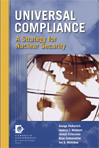 The Carnegie Endowment for International Peace has come up with a liberal counter-proliferation Bible whose selective implementation will likely leave the world more unequal - and dangerous.
 11 October 2005
The Hindu
Neocon lite nuclear agenda
UNIVERSAL COMPLIANCE — A Strategy for Nuclear Security: George Perkovich, et al; Carnegie Endowment for International Peace and India Research Press, B-4/22, Safdarjung Enclave, New Delhi-110029. Price not stated.
Ask international security experts to identify the principal nuclear threat facing the world today and most would likely say Iran or North Korea, or perhaps even India and Pakistan. Apart from terrorists getting hold of nuclear weapons, the `danger' posed by the spread of technology to enrich uranium (for use as fuel to power civilian power reactors) would also figure near the top of the list since the same technology, once mastered, could be used to produce highly-enriched uranium for nuclear bombs. Few experts, however, would be willing to point their finger at the U.S. and the other four `official' nuclear weapon states (NWSs), which maintain arsenals big enough to blow us all up many times over, and then some.
Of these, the U.S., in particular, poses a unique threat as it is actively developing new, more `effective' nuclear weapons, and adheres to a doctrine and force posture which emphasises the use of nuclear weapons. Its missile defence programme also raises the prospect of a new nuclear missile race as well as the militarisation of space. Moreover, the doctrines of `pre-emptive war' and `regime change' propounded by the Bush administration in the wake of its aggression against Iraq in 2003 have degraded the security environment - particularly in Asia - to the point where the nuclear option has begun to look attractive for some states once again. A case in point is North Korea, which sees the possession of nuclear weapons as a hedge against any aggressive U.S. designs.
Proliferation scenario
In Universal Compliance, George Perkovich and his colleagues at the Carnegie Endowment for International Peace have taken a step towards recognising the integrated nature of the proliferation problem — and the negative role that current U.S. nuclear weapons policies play. And yet, their study falls short. Principally, the authors fail to appreciate that much of the Bush administration's policies worldwide are driven less by genuine proliferation concerns and more by a wider set of hegemonic impulses which are vitiating the security scenario around the globe, particularly in Asia. This naïveté on the part of Perkovich, et al leads them to recommend measures to restrict the right of sovereign countries to peaceful nuclear technology, as well as an expansion in the role of the five permanent members of the U.N. Security Council as global enforcers. The authors don't fully see eye to eye with some of Washington's current policies but, at the end of the day, have come up with Counterproliferation Lite, a slightly less mad version of the neocon agenda minus the mini-nukes and space-based missile interceptors.
The book's title refers to the authors' desire for universal compliance with "the norms and rules of a toughened nuclear nonproliferation regime." (original emphasis) This, in turn, involves six obligations: make non-proliferation irreversible, by banning the acquisition of nuclear fuel cycles by additional states and making it difficult for countries to quit the NPT; devalue the political and military currency of nuclear weapons by diminishing the role of such weapons in security policies; secure all nuclear materials through robust standards of accounting and monitoring of fissile material; stop illegal transfers; commit to conflict resolution so that the states involved have no reason to pursue nuclear weapons; solve the `three-state problem' of accommodating India, Pakistan and Israel as de facto nuclear weapon states by persuading them to accept non-proliferation obligations.
After dealing with strengthened enforcement through the institutionalisation of tough (and endless) inspection mechanisms of the kind seen in Iraq (Unscom/Unmovic), and the use of force, the book moves on to the importance of `Blocking Supply'. This section consists, inter alia, of recommendations on stopping the spread of enrichment technology, and the use of the Proliferation Security Initiative to interdict shipping on the high seas.
Twin goals
In the chapter on `Abating Demand', Perkovich, et al state that the twin goals of U.S. nuclear policy should be "to prevent new actors from acquiring nuclear weapons and to reduce toward zero the risk that those who have these weapons will use them." They then ask how these two goals should be pursued. "Two radically different approaches have been advanced: to acquire new nuclear weapons with more usable characteristics, thus to dissuade proliferators; and to de-emphasise and devalue nuclear weapons, thus to strengthen the norm against their acquisition and use." The authors favour the second approach, though their recommendations have absolutely zero traction with either the Bush administration or the Congress.
Turning to specific regional issues, Perkovich, et al recommend that India and Pakistan be encouraged to "cease uranium enrichment and plutonium separation, in return for ending international restrictions on nuclear technology and fuel service cooperation." They also call on the U.S. to "promote stable conventional force balances in the subcontinent" and between India and China, and to "not provide U.S. weaponry capable of delivering nuclear weapons such as fighter-bombers or of destabilizing the strategic balance, such as ballistic missile defence." On missile defence and fighter-bombers, the authors are clearly out of sync with the Bush administration, though their suggestion on plutonium separation echoes the recent call made by analysts close to the Bush administration to use the July 18 Indo-U.S. nuclear deal to wean India away from its plutonium-breeding three-stage nuclear power programme. Incredibly, Perkovich et al also argue that India and Pakistan should be denied access to new safeguarded reactors unless they sign the NPT as non-nuclear weapon states.
Limiting proliferation
If there is one flaw in the book's analysis, it is the preoccupation with controlling the nuclear fuel cycle as a key means of halting proliferation. As the authors themselves note, no less than 46 countries today have stocks of weapon-usable uranium. The list includes Argentina, Australia, Belgium, Germany, Italy, Japan, Netherlands, South Africa, South Korea, Vietnam and many others. The fact that only nine have made weapons suggests the key to limiting proliferation lies in creating a stable security environment so that countries with the capacity have no conceivable incentive to go down the weapon route. In other words, the original sin is not proliferation but aggression or the threat of aggression — a subject the U.S. is quite familiar with.
Is Iran pursuing enrichment in order to build a bomb? International inspections have found nothing though, technically, the jury is still out. Perkovich, et al counsel the U.S. to tell the Iranian Government that it "will not pursue regime change through military action" if Tehran "verifiably forswears acquisition of capabilities to produce materials that can be used in nuclear weapons." In other words, Iran must give up its legal rights to technology put to verifiable civilian use or else face military action. Even if Iran accepts this, the authors are not prepared to rule out regime change through non-military means such as subversion or sanctions. How such an approach can be called a "strategy for nuclear security" is beyond comprehension.
© Copyright 2000 - 2005 The Hindu
01 October 2005
A revealing transcript
The full transcript of the House International Relations Committee on the Indo-U.S. nuclear deal surely provides a key part of the backstory to India's astonishing vote against Iran in the International Atomic Energy Agency last week.
Despite the open threats and insults hurled at the Indian leadership -- Congressman Tom Lantos abused the Indian foreign minister for making what he considered were pro-Iran statements during a visit to Tehran in the beginning of September -- New Delhi finally caved in. "Dense", "sickening" and "Stalinist" were some of the epithets used against the Indian minister. My prize for the most revealing quote is a statement by Dana Rohrabacher, the Republican Congressman from California, who said of countries like India, "They are going to choose either to go independently of the United States, and perhaps against the United States, in their overall relationship in the world, or they are going to be on our side, and be our friends." The "strategic partnership" India has entered with the U.S. is such that it will not be allowed independently to structure its relationship with the world. If you're not with the U.S. on everything, you'll be against them.
Postscript: Lantos has obviously tasted blood. On 1 October he told another House panel:
1 October 2005
The Hindu
India, Iran and the Congressional hearings on the Indo-U.S. nuclear deal
In the wake of its vote against Iran in the International Atomic Energy Agency, the Indian Government said "nothing could be further from the truth" than the suggestion that there was any "linkage" between its decision and the Indo-U.S. nuclear deal. The two issues got explicitly linked for the first time at the House International Relations Committee hearings, on the July 18 agreement, in early September. Though some remarks of Congressmen like Tom Lantos were reported at the time, the full transcript of the September 8 hearings has only recently become available. The Hindu reproduces excerpts:
REP. TOM LANTOS (D-CA): When the administration called me asking for my support for the issue we are now about to discuss, I gave it, and I continue to do so. But there is a degree of reciprocity we expect of India, which has not been forthcoming.
The policy of India towards Iran is a matter of great concern to many of us, as is the policy of Russia towards Iran. [T]he United Kingdom, France and Germany, along with us, are prepared to refer the issue to the United Nations Security Council for action. Russia has publicly stated they will object to that. I would not like to see a similar set of developments with respect to India whereby we agree to undertake a tremendous range of path-breaking measures to accommodate India, while India blithely pursues what it sees should be its goal and policy vis-à-vis Iran. There is quid pro quo in international relations. And if our Indian friends are interested in receiving all of the benefits of U.S. support we have every right to expect that India will reciprocate in taking into account our concerns.
So to repeat in a nutshell, I support the policy, as will be apparent in a minute, but I expect India to recognise that there is reciprocity involved in this new relationship, and without reciprocity, India will get very little help from the Congress. If we are turning ourselves into a pretzel to accommodate India, I want to be damn sure that India is mindful of U.S. policies in critical areas such as U.S. policy towards Iran. India cannot pursue a policy vis-à-vis Iran which takes no account of U.S. foreign policy objectives.
I am particularly concerned over recent remarks by the Indian Foreign Minister that India will not support the U.S. drive to refer Iran's nuclear weapons effort to the U.N. Security Council. This position is contrary to what we understood the administration was trying to achieve in forging this arrangement. I want the administration to hear clearly from this committee. New Delhi must understand how important their cooperation and support is to U.S. initiatives to counter the nuclear threat from Iran. That includes supporting our efforts to refer Iran's 18 years of violations of the NPT to the U.S. Security Council. Anything less than full support will imperil the expansion of U.S. nuclear and security cooperation with New Delhi. It is reportedly the intent of the administration to assist India in becoming a great power. But with great power comes great responsibility. India must decide where it will stand: with the ayatollahs of terror in Tehran or with the United States.
REP. ROBERT WEXLER: There's one aspect of this that troubles me, and I'd be curious if you could respond. Here we are taking this enormous step with India. If my understanding is correct regarding India's position relative to our policy regarding Iran, and potentially the referral of that scenario to the U.N. and the Security Council, how is it that we embark on such a positive policy with India, and at the same time, possibly India be opposed to what seem to be our goals regarding Iran? Is it improper to couple the two? Should we expect India to support our objectives? I'd be curious to hear your thoughts.
UNDERSECRETARY NICHOLAS BURNS: I think it's a fair question. I believe India does not wish Iran to become a nuclear weapon state, and I believe the Indian government has gone on the record to say that. We have had, over the last several weeks, and specifically the last few days, a series of conversations with the Indian government about the best way to achieve that, to prevent Iran from becoming a nuclear weapon state. We continue to discuss this with the Indian government. I can't speak for the Indian government. But I can say that this is an issue where we intend to have further discussions with them next week at the U.N. General Assembly in New York. I know that Secretary Rice will be raising this with the Indian Foreign Minister. I will be doing so with the Indian Foreign Secretary.
UNDERSECRETARY ROBERT JOSEPH: Let me just add that at last month's meeting of the board of the IAEA India did join in the resolution on Iran, which expressed serious concerns about Iranian activities, specifically, the resumption of work at its conversion facility at Isfahan, and also called on Iran to stop that activity. Since then, there have been a number of disconcerting statements made not only by India, but by a number of other governments. Again, it's — it's an uphill battle for us. But we are fully engaged, as Undersecretary Burns says, in winning that battle.
Attack on Natwar
REP. LANTOS: I want to commend the administration for new thinking vis-à-vis India. My concern does not relate to the administration. My concern relates to the insensitive thinking that I see coming out of New Delhi.
It is incomprehensible to me that people as sophisticated and as knowledgeable as our Indian counterparts should not be aware of how significant their position vis-à-vis Iran is to this Congress. And I hope that this hearing will make them aware, at least tangentially, that they may be destroying far more significant relationships than the ones they are having with Teheran unless they become sensitive to our views on that subject.
The Iran issue is not a side issue for this Congress. It is the single most important international threat we face: a reckless Iranian government proceeding arrogantly with the development of nuclear weapons. Only an imbecile would believe that they are developing a nuclear program for peaceful purposes only. And it's an insult to the intelligence of Congress that they keep repeating this. Every time they repeat it, they add to the number of members of Congress who are totally cynical of what they're saying.
But they do what they do. But to have the Indian Foreign Minister — and I will find a quote here — with respect to his recent meeting with the Iranians say, "They really don't care what we think," to have the Indian Foreign Minister say this and expect support from the United States for permanent membership on the U.N. Security Council, which I think is long overdue, or legislative changes with respect to the nuclear issue that we are discussing, shows a degree of denseness that occasionally very intelligent people are burdened with.
They're brilliant and they're dense. They're brilliant, which is obvious, but they are simply dense because they are incapable of comprehending that other countries have very important concerns. And my hope is, Mr. Secretary, that those of us who support the administration's policy, as I do, will be able to assist you in bringing reality to Indian thinking.
My bottom line is that I do not oppose the administration's policy. I support it. But I believe the administration will have to make a maximum effort — and we offer, at least some of us, our services to help you — to make the Indians aware of the fact that nothing will fly in this body unless they become as sensitive to our concerns as we have been to theirs. Now, may I ask you specifically, Mr. Secretary, what discussions have you had, or has Secretary Rice had, with the Indians concerning their Tehran policy?
MR. BURNS: Congressman Lantos, thank you very much. And I — we share your concern. I discussed this issue with the Indian government over the last two weeks on two occasions, and again yesterday with the Indian government. I'll have another conversation tomorrow morning. I know that Secretary Rice will be meeting with both the Indian Prime Minister and the Indian Foreign Minister in New York during the UNGA meetings, and I'm sure she will raise this issue with him as well. [W]e believe that India shares our goal of preventing Iran from becoming a nuclear weapons power. And now, what we're discussing with the Indian government this week is tactics: how do we do that.
REP. LANTOS: May I — I found my quote, and I will ask you to comment on it. The Indian Foreign Minister — this was three days ago at a meeting with the Iranian President, the new Iranian President, Mahmoud Ahmadinejad, in a meeting on Saturday. The visiting Indian Minister of External Affairs said the following. His country supports resolution of Iran's nuclear issue within the IAEA framework and opposes sending the file to the U.N. Security Council.
Singh lamented — I want to read this very closely because this is sickening, literally sickening. This is Stalinist rhetoric, which we don't accept from the Indian Foreign Minister.
Singh lamented the inclination to infuse injustice in international relations, reiterating that, I quote, "India's relations[hip] with Iran is not predicated on positions and views attributed to some government." That's you, Mr. Secretary. Now, the injustice that he refers to is the judgment of this country, both the administration and Congress, that given the record of cheating and lying on the nuclear issue by Iran over a protracted period of time, we won't accept their statements at face value. At face value. The Indian Foreign Minister considers this injustice.
This pattern of dealing with us will not be productive for India. And they have to be told this in plain English, that this great new opening — which I support, I think we all support — is predicated on reciprocity. In this case, they are not only opposing our views, they're opposing the views of the Brits and the French and the Germans. If they persist in this, this great dream of a new relationship will go down the tubes. I'd be grateful if you'd comment.
MR. BURNS: Thank you, Congressman Lantos. What I should say is that we have seen the same quote that you have. What I cannot know, given the vagaries of the international press, particularly coming out of Iran, is whether that's an accurate statement. So what we have done is, we've registered our concern with the Indian government, of course. And we've said to the Indians that we hope that they will retain support for the decision that they helped us to take on August 11th in the IAEA board of governors. And we are working very hard to see that by September 19th we might have a united international community.
REP. LANTOS: The question is, if you fail, what will the Indian position be at that point? Because if India at that point will tell us, "Go fly a kite," the goodwill will dissipate, and they will pay a very heavy price for their total disregard of U.S. concerns vis-à-vis Iran. It just will not fly in this body. And they need to be told that in plain English — in plain English, not in diplomatic English. And I know they have people in this room who will carry this message.
Either with us or against us
REP. DANA ROHRABACHER: The Indians need to know this is another time of choosing. In the past, they chose to be in a closer relationship with the Soviet Union during the Cold War. And this is a time of realignment again, and a period of choosing for them. They can choose to be in a closer relationship with this outlaw mullah regime in Iran and radical Islam, or they can chose to be in closer tie[s] with the people of the United States of America. That's their choice. And I would hope that the Indians — now, we know that India needs energy. We know that it's going to need oil and gas. And we know how much that's playing on the Indian decision-makers. But we can make up with that, and that's why this is such an important strategic move on the part of the administration to offer some help in the civilian nuclear energy field to help offset that need for energy from perhaps unsavoury regimes like that of Iran. So I applaud the administration for having the foresight and the strategic manoeuvre here of trying to make India less dependent on the mullahs for energy, and perhaps achieving the other goal at the same time.
MR. JOSEPH: In terms of being a time of choice, I couldn't agree with you more. It's a time of choice not just for India, but for many other states — for Russia, for China, for others who are on the fence right now on the issue of Iran, and specifically, referring Iran to the Security Council.
REP. ROHRABACHER: By the way, I don't believe those countries are on the fence about Iran. They're on the fence about the United States of America. That's what this is all about. They are going to choose either to go independently of the United States, and perhaps against the United States, in their overall relationship in the world, or they are going to be on our side, and be our friends. That is what is being decided here.
MR. JOSEPH: I agree with that.
© Copyright 2000 - 2005 The Hindu
Despite the open threats and insults hurled at the Indian leadership -- Congressman Tom Lantos abused the Indian foreign minister for making what he considered were pro-Iran statements during a visit to Tehran in the beginning of September -- New Delhi finally caved in. "Dense", "sickening" and "Stalinist" were some of the epithets used against the Indian minister. My prize for the most revealing quote is a statement by Dana Rohrabacher, the Republican Congressman from California, who said of countries like India, "They are going to choose either to go independently of the United States, and perhaps against the United States, in their overall relationship in the world, or they are going to be on our side, and be our friends." The "strategic partnership" India has entered with the U.S. is such that it will not be allowed independently to structure its relationship with the world. If you're not with the U.S. on everything, you'll be against them.
Postscript: Lantos has obviously tasted blood. On 1 October he told another House panel:
"There was a tremendous hop-up in the Indian media, and the government reacted strongly. But last Saturday, India voted with us in Vienna because it decided that it is more important to maintain its relationship with us than accommodate the Ayatollahs in Tehran. This is an abject lesson. And I think it's important for all of our friends and other countries abroad to understand that there will be a growing emphasis on quid pro quo in US foreign policy... The age of naпve idealism, I think, is over..."I don't think we've seen the last of him yet.
1 October 2005
The Hindu
India, Iran and the Congressional hearings on the Indo-U.S. nuclear deal
In the wake of its vote against Iran in the International Atomic Energy Agency, the Indian Government said "nothing could be further from the truth" than the suggestion that there was any "linkage" between its decision and the Indo-U.S. nuclear deal. The two issues got explicitly linked for the first time at the House International Relations Committee hearings, on the July 18 agreement, in early September. Though some remarks of Congressmen like Tom Lantos were reported at the time, the full transcript of the September 8 hearings has only recently become available. The Hindu reproduces excerpts:
REP. TOM LANTOS (D-CA): When the administration called me asking for my support for the issue we are now about to discuss, I gave it, and I continue to do so. But there is a degree of reciprocity we expect of India, which has not been forthcoming.
The policy of India towards Iran is a matter of great concern to many of us, as is the policy of Russia towards Iran. [T]he United Kingdom, France and Germany, along with us, are prepared to refer the issue to the United Nations Security Council for action. Russia has publicly stated they will object to that. I would not like to see a similar set of developments with respect to India whereby we agree to undertake a tremendous range of path-breaking measures to accommodate India, while India blithely pursues what it sees should be its goal and policy vis-à-vis Iran. There is quid pro quo in international relations. And if our Indian friends are interested in receiving all of the benefits of U.S. support we have every right to expect that India will reciprocate in taking into account our concerns.
So to repeat in a nutshell, I support the policy, as will be apparent in a minute, but I expect India to recognise that there is reciprocity involved in this new relationship, and without reciprocity, India will get very little help from the Congress. If we are turning ourselves into a pretzel to accommodate India, I want to be damn sure that India is mindful of U.S. policies in critical areas such as U.S. policy towards Iran. India cannot pursue a policy vis-à-vis Iran which takes no account of U.S. foreign policy objectives.
I am particularly concerned over recent remarks by the Indian Foreign Minister that India will not support the U.S. drive to refer Iran's nuclear weapons effort to the U.N. Security Council. This position is contrary to what we understood the administration was trying to achieve in forging this arrangement. I want the administration to hear clearly from this committee. New Delhi must understand how important their cooperation and support is to U.S. initiatives to counter the nuclear threat from Iran. That includes supporting our efforts to refer Iran's 18 years of violations of the NPT to the U.S. Security Council. Anything less than full support will imperil the expansion of U.S. nuclear and security cooperation with New Delhi. It is reportedly the intent of the administration to assist India in becoming a great power. But with great power comes great responsibility. India must decide where it will stand: with the ayatollahs of terror in Tehran or with the United States.
REP. ROBERT WEXLER: There's one aspect of this that troubles me, and I'd be curious if you could respond. Here we are taking this enormous step with India. If my understanding is correct regarding India's position relative to our policy regarding Iran, and potentially the referral of that scenario to the U.N. and the Security Council, how is it that we embark on such a positive policy with India, and at the same time, possibly India be opposed to what seem to be our goals regarding Iran? Is it improper to couple the two? Should we expect India to support our objectives? I'd be curious to hear your thoughts.
UNDERSECRETARY NICHOLAS BURNS: I think it's a fair question. I believe India does not wish Iran to become a nuclear weapon state, and I believe the Indian government has gone on the record to say that. We have had, over the last several weeks, and specifically the last few days, a series of conversations with the Indian government about the best way to achieve that, to prevent Iran from becoming a nuclear weapon state. We continue to discuss this with the Indian government. I can't speak for the Indian government. But I can say that this is an issue where we intend to have further discussions with them next week at the U.N. General Assembly in New York. I know that Secretary Rice will be raising this with the Indian Foreign Minister. I will be doing so with the Indian Foreign Secretary.
UNDERSECRETARY ROBERT JOSEPH: Let me just add that at last month's meeting of the board of the IAEA India did join in the resolution on Iran, which expressed serious concerns about Iranian activities, specifically, the resumption of work at its conversion facility at Isfahan, and also called on Iran to stop that activity. Since then, there have been a number of disconcerting statements made not only by India, but by a number of other governments. Again, it's — it's an uphill battle for us. But we are fully engaged, as Undersecretary Burns says, in winning that battle.
Attack on Natwar
REP. LANTOS: I want to commend the administration for new thinking vis-à-vis India. My concern does not relate to the administration. My concern relates to the insensitive thinking that I see coming out of New Delhi.
It is incomprehensible to me that people as sophisticated and as knowledgeable as our Indian counterparts should not be aware of how significant their position vis-à-vis Iran is to this Congress. And I hope that this hearing will make them aware, at least tangentially, that they may be destroying far more significant relationships than the ones they are having with Teheran unless they become sensitive to our views on that subject.
The Iran issue is not a side issue for this Congress. It is the single most important international threat we face: a reckless Iranian government proceeding arrogantly with the development of nuclear weapons. Only an imbecile would believe that they are developing a nuclear program for peaceful purposes only. And it's an insult to the intelligence of Congress that they keep repeating this. Every time they repeat it, they add to the number of members of Congress who are totally cynical of what they're saying.
But they do what they do. But to have the Indian Foreign Minister — and I will find a quote here — with respect to his recent meeting with the Iranians say, "They really don't care what we think," to have the Indian Foreign Minister say this and expect support from the United States for permanent membership on the U.N. Security Council, which I think is long overdue, or legislative changes with respect to the nuclear issue that we are discussing, shows a degree of denseness that occasionally very intelligent people are burdened with.
They're brilliant and they're dense. They're brilliant, which is obvious, but they are simply dense because they are incapable of comprehending that other countries have very important concerns. And my hope is, Mr. Secretary, that those of us who support the administration's policy, as I do, will be able to assist you in bringing reality to Indian thinking.
My bottom line is that I do not oppose the administration's policy. I support it. But I believe the administration will have to make a maximum effort — and we offer, at least some of us, our services to help you — to make the Indians aware of the fact that nothing will fly in this body unless they become as sensitive to our concerns as we have been to theirs. Now, may I ask you specifically, Mr. Secretary, what discussions have you had, or has Secretary Rice had, with the Indians concerning their Tehran policy?
MR. BURNS: Congressman Lantos, thank you very much. And I — we share your concern. I discussed this issue with the Indian government over the last two weeks on two occasions, and again yesterday with the Indian government. I'll have another conversation tomorrow morning. I know that Secretary Rice will be meeting with both the Indian Prime Minister and the Indian Foreign Minister in New York during the UNGA meetings, and I'm sure she will raise this issue with him as well. [W]e believe that India shares our goal of preventing Iran from becoming a nuclear weapons power. And now, what we're discussing with the Indian government this week is tactics: how do we do that.
REP. LANTOS: May I — I found my quote, and I will ask you to comment on it. The Indian Foreign Minister — this was three days ago at a meeting with the Iranian President, the new Iranian President, Mahmoud Ahmadinejad, in a meeting on Saturday. The visiting Indian Minister of External Affairs said the following. His country supports resolution of Iran's nuclear issue within the IAEA framework and opposes sending the file to the U.N. Security Council.
Singh lamented — I want to read this very closely because this is sickening, literally sickening. This is Stalinist rhetoric, which we don't accept from the Indian Foreign Minister.
Singh lamented the inclination to infuse injustice in international relations, reiterating that, I quote, "India's relations[hip] with Iran is not predicated on positions and views attributed to some government." That's you, Mr. Secretary. Now, the injustice that he refers to is the judgment of this country, both the administration and Congress, that given the record of cheating and lying on the nuclear issue by Iran over a protracted period of time, we won't accept their statements at face value. At face value. The Indian Foreign Minister considers this injustice.
This pattern of dealing with us will not be productive for India. And they have to be told this in plain English, that this great new opening — which I support, I think we all support — is predicated on reciprocity. In this case, they are not only opposing our views, they're opposing the views of the Brits and the French and the Germans. If they persist in this, this great dream of a new relationship will go down the tubes. I'd be grateful if you'd comment.
MR. BURNS: Thank you, Congressman Lantos. What I should say is that we have seen the same quote that you have. What I cannot know, given the vagaries of the international press, particularly coming out of Iran, is whether that's an accurate statement. So what we have done is, we've registered our concern with the Indian government, of course. And we've said to the Indians that we hope that they will retain support for the decision that they helped us to take on August 11th in the IAEA board of governors. And we are working very hard to see that by September 19th we might have a united international community.
REP. LANTOS: The question is, if you fail, what will the Indian position be at that point? Because if India at that point will tell us, "Go fly a kite," the goodwill will dissipate, and they will pay a very heavy price for their total disregard of U.S. concerns vis-à-vis Iran. It just will not fly in this body. And they need to be told that in plain English — in plain English, not in diplomatic English. And I know they have people in this room who will carry this message.
Either with us or against us
REP. DANA ROHRABACHER: The Indians need to know this is another time of choosing. In the past, they chose to be in a closer relationship with the Soviet Union during the Cold War. And this is a time of realignment again, and a period of choosing for them. They can choose to be in a closer relationship with this outlaw mullah regime in Iran and radical Islam, or they can chose to be in closer tie[s] with the people of the United States of America. That's their choice. And I would hope that the Indians — now, we know that India needs energy. We know that it's going to need oil and gas. And we know how much that's playing on the Indian decision-makers. But we can make up with that, and that's why this is such an important strategic move on the part of the administration to offer some help in the civilian nuclear energy field to help offset that need for energy from perhaps unsavoury regimes like that of Iran. So I applaud the administration for having the foresight and the strategic manoeuvre here of trying to make India less dependent on the mullahs for energy, and perhaps achieving the other goal at the same time.
MR. JOSEPH: In terms of being a time of choice, I couldn't agree with you more. It's a time of choice not just for India, but for many other states — for Russia, for China, for others who are on the fence right now on the issue of Iran, and specifically, referring Iran to the Security Council.
REP. ROHRABACHER: By the way, I don't believe those countries are on the fence about Iran. They're on the fence about the United States of America. That's what this is all about. They are going to choose either to go independently of the United States, and perhaps against the United States, in their overall relationship in the world, or they are going to be on our side, and be our friends. That is what is being decided here.
MR. JOSEPH: I agree with that.
© Copyright 2000 - 2005 The Hindu
Subscribe to:
Posts (Atom)