5 September 2003
The Times of India
The Times of India
Food for Justice
An interiew with S.R. Sankaran
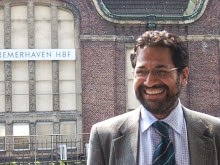
Supreme Court hearings on the right to food have been held at regular intervals during the past two years. The court recently appointed retired IAS officer S R Sankaran as a second commissioner in charge — in addition to the existing commissioner, N C Saxena — of monitoring its orders and helping to make the right to food a reality. A cheerful and unassuming man, he spoke to Siddharth Varadarajan about this new assignment, one of the most challenging in his long career:
In the light of your experience as a civil servant, how do you view the role of the state in protecting the right to food?
The Indian Constitution sets out unequivocally the role and responsibility of the state in protecting the right to food and eliminating hunger. The right to livelihood is an integral facet of the right to life, guaranteed as a fundamental right under the Constitution. The directive principles speak of the right to adequate means of livelihood, right to work, public assistance in cases of old age and undeserved want, living wage, protection of weaker sections from social injustice, and even of the duty to raise levels of nutrition.
The state has thus a constitutional obligation to eliminate hunger and secure the right to food to the people through right to work and social assistance. These constitutional impe-ratives have not been translated adequately into practice. Undoubtedly, there have been some limited efforts, but the elimination of hunger and the right to food have not been given the overriding priority they deserve in state policies, including resource allocation and administrative mechanisms. There is a deep lack of sensiti-vity to people's hunger and suffering.
The People's Union for Civil Liberties (PUCL) has taken the government to court for failing to protect the right to food. Can we really expect legal action to make a difference?
The primary responsibility for the right to food no doubt lies with the executive. Directives from the country's highest court can, however, make the executive re-order its policies and programmes.
How do you see your role as SC commissioner, and how are you planning to go about your work?
The role of the commissioner is to help the court arrive at a proper appreciation of policies as well as implementation, and to issue appropriate orders or directions. In accordance with the court orders, the commissioners, wherever necessary, can intervene and request the Central or state governments to adopt a particular course of action in the interests of the people. The commissioners can suggest policy changes to the Central and state governments and also seek directions from the court. The commissioners can also be of help to people's movements in ensuring that the constitutional objectives are fulfilled through proper policies and meaningful work on the ground.
What are the key recommendations of the fourth commissioners' report, submitted recently to the SC?
The fourth report focuses on the implementation of earlier orders and seeks fresh directions of the court. These include an employment guarantee programme in backward districts, assured payment of minimum wages, social security arrangements for the destitute and greater transparency in all food-related programmes.
One of the key aspects of your report is the link you have made between the right to food and minimum wages. Tell us a little about the logic.
For a large majority of poor people, labour power is the only productive asset they possess for securing a living. The right to food and the right to work are closely interlinked, as work is the main source of purchasing power. Minimum wage connotes a statutorily laid down wage which is needed to take care of the bare minimum needs for food and other necessities. Any work or employment is related to a wage level and unless a minimum wage is ensured, there can be no safeguarding of the right to food.
What is the relevance of the commissioners' work for grassroots organisations concerned with the right to food?
Grassroots organisations are mobili-sing people, building public opinion and working for securing the right to food. The commissioners are working with the same end in mind. Any efforts made by grassroots organisations will assist the commissioners in formulating appropriate recommendations to the court and advice to governments. In fact, the SC orders also visualise that the commissioners could take the help of suitable organisations.
You are best known for your inspiring work as convenor of the Committee of Concerned Citizens, which sought to end the spiral of state repression and far left violence in Andhra Pradesh. How does that concern fit with your new role as SC commissioner?
The Committee of Concerned Citizens is a collective of individuals who share a deep concern about the climate of escalating violence in the context of the Naxalite movement and the state's response to it. The committee's endeavour is to create a space for democratic resolution of conflicts, reducing violence and loss of lives, and ensuring that common people secure justice, and live and work with dignity. Its aim is to humanise governments, political movements and society and to make them accountable to people. To a large extent, the concern of the commissioners is similar — striving towards the emergence of a society where people are free from hunger and can live with dignity.